About Archichauliodes diversus (Walker, 1853)
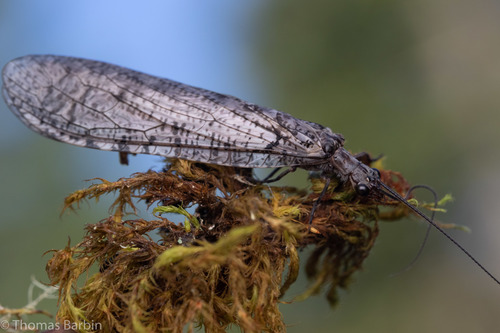
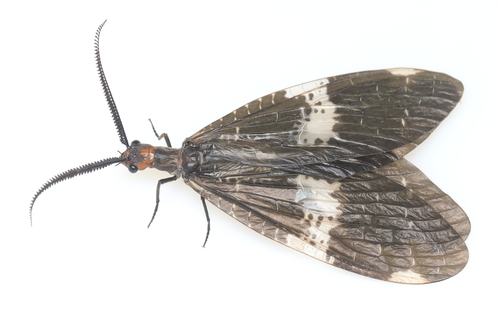
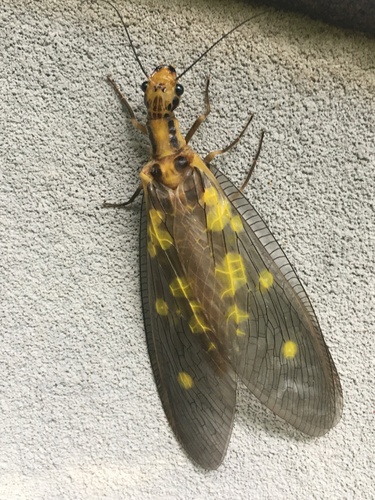
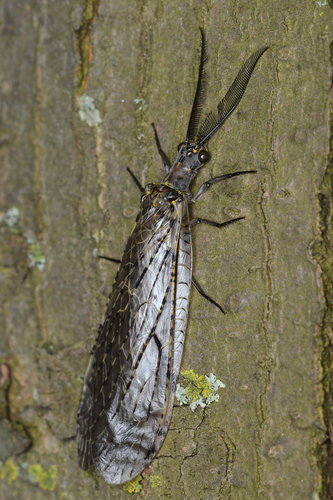
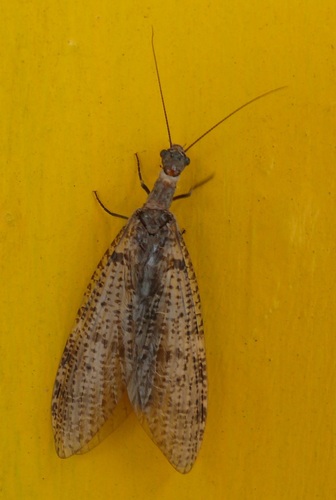
Archichauliodes diversus larvae are among the largest freshwater insects in New Zealand. Their heads and thoraxes are black and flattened, and their heads bear a large pair of mandibles. The larvae are sturdy, with heavily sclerotised heads and thoracic segments. Their abdomens are long and light-colored, with 8 pairs of tentacle-like gills projecting from abdominal segments 1 through 8. Like other fishfly larvae, they have anal prolegs with a pair of terminal hooks that they use to attach themselves to substrate, and they lack a terminal filament. Archichauliodes diversus is the only endemic member of both its genus and family found in New Zealand, and it is common throughout both the North and South Islands. It is common nationwide in streams with moderate to good water quality, and has tolerance values of 7 for hard bottom sites and 7.3 for soft bottom sites. It prefers stony or hard-bottom streams in both bush-covered and farmland areas. It also prefers areas with an overhanging canopy or bush overhead for shelter, and requires large rock pools. It thrives in good quality water. The life cycle of Archichauliodes diversus includes aquatic larval stages and terrestrial adult stages. The species spends most of its life in the aquatic juvenile stage, which lasts 2 to 5 years. A unique feature of this species is that larvae leave the stream between every molt. It has a total generation time of more than one year, and adults are found near streams. The species progresses through five distinct life stages: egg, larval, prepupal, pupal, and imaginal, changing greatly in both size and appearance across stages. A. diversus is nocturnal and is most active at dusk and night. When first laid, eggs are light yellow and cylindrical, then turn dark brown when exposed to air. The egg stage lasts around 30 days. When larvae hatch they are roughly 2.2 mm long, and can grow to around 38.5 mm. They have 8 pairs of gills along the abdomen that function as a respiratory system. The larval stage is the only documented stage in which the species eats, and it occurs year round. In the prepupal third stage, larvae migrate toward the water's edge or banks. This phase occurs from early July to late January and lasts 15 weeks, because prepupae require saturated soil for the next life stage to proceed, which occurs when water levels are at their maximum height. The pupal stage lasts 20 to 24 days, with a longer duration for males than females. Pupation occurs from late October to February. Although pupae resemble adults, they are bulkier and have undeveloped wings. Their color changes from pale to dark brown over the course of hours to days. The final adult, or imago, stage only lives roughly 6 to 10 days. Adults spend most of their time resting on nearby trees. Before dying, females lay several hundred eggs in irregular masses on nearby trees, shrubs, and rocks.