About Archanara dissoluta Treitschke, 1825
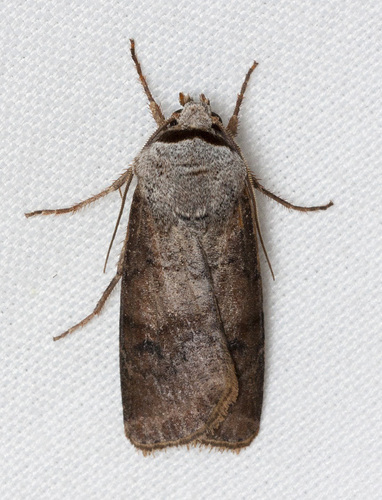
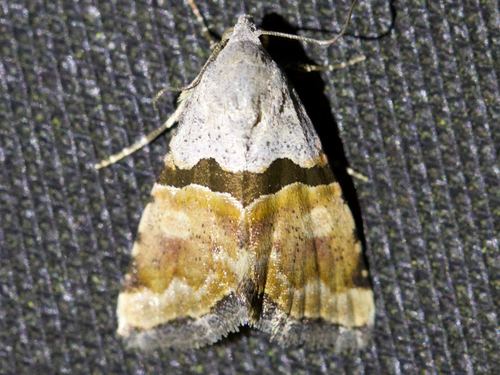
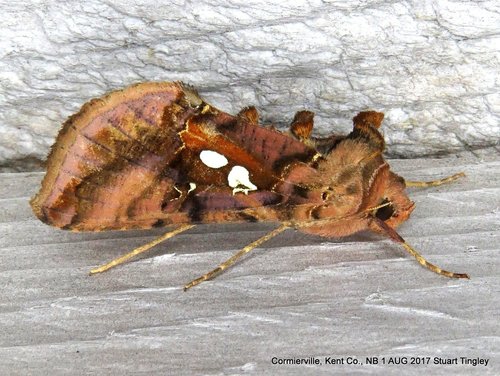
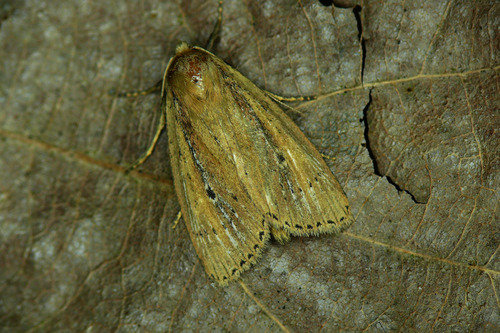
Archanara dissoluta, first described by Treitschke in 1825, has a wingspan of 27–33 mm. It was first described as a comparatively rare dark-reddish suffused form of the much commoner, paler Archanara arundineta Schmidt, which is now considered a synonym of Archanara dissoluta. At least in Britain, the more common general form has greyish ochreous forewings dusted with fuscous. The two folds of the forewing carry a slight reddish tinge, and are separated by a black streak extending from the base below the cell; this streak continues as a more diffuse shade that sometimes reaches the termen. Veins are often dark grey or blackish. The outer line is marked by black vein-dashes. The upper stigmata are interrupted in the middle by the reddish tint of the cell, and their upper portions are marked by black dots. The lower lobe of the reniform spot is filled with black and edged with white scales, and this edging is sometimes complete across the entire spot. A series of black marginal lunules is present, and the hindwing is dirty grey. Females are paler, have narrower wings, and lack any red tinge; they are dusted with grey instead of fuscous, and do not have the strong black median streak. The two folds on female forewings are olive fawn in color. The black marking in the lower lobe of the reniform spot is strong and edged with white in females. Female hindwings are paler, and show a dark outer line and terminal shade more clearly. Both forewings and hindwings have a distinct dark cell spot on the underside. This species inhabits reed beds.