About Archaeolacerta bedriagae (Camerano, 1885)
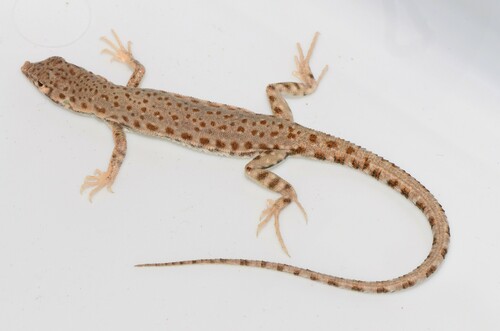
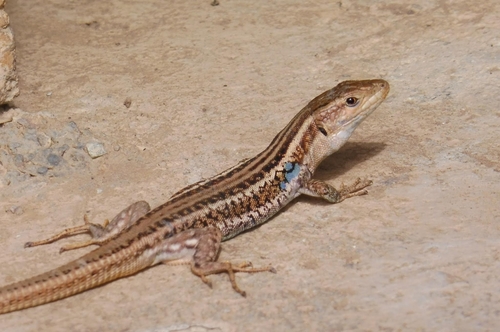
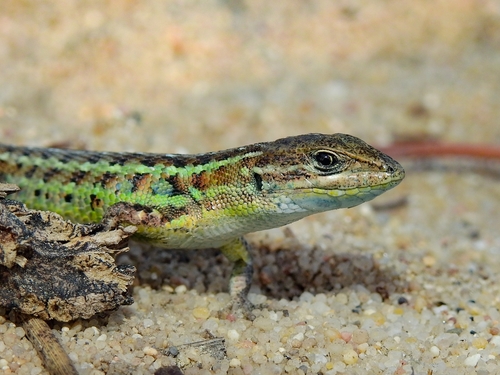
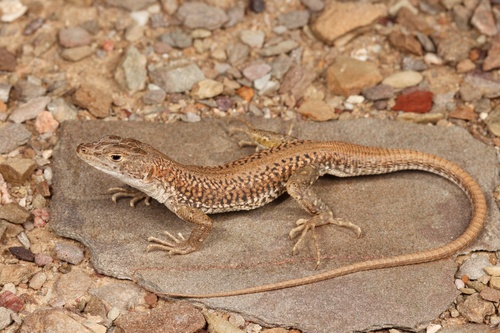
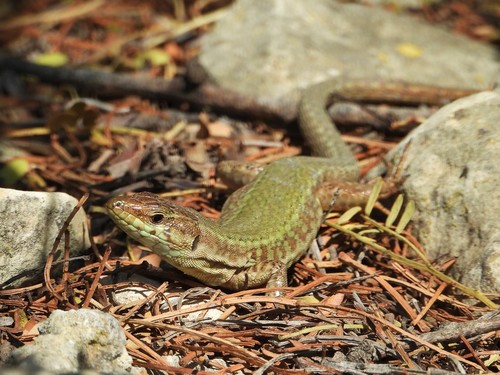
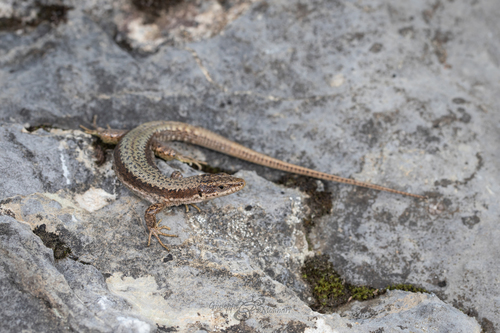
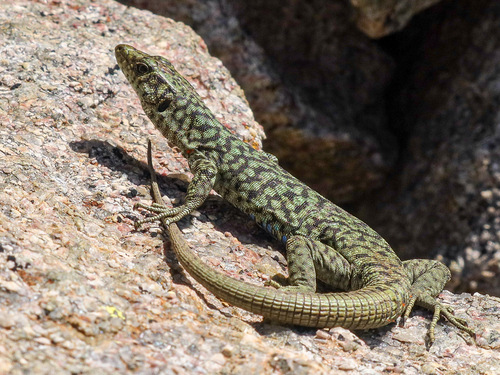
Outside the mating season, adult Archaeolacerta bedriagae are brownish-grey, with a dark, fine-lined net pattern on their backs. Females are browner than males. During the mating season, males develop a blue belly, blue loins, and blue dots on their flanks, and their original netlike pattern shifts into a pattern of white dots. Juveniles can be identified by their bright azure blue tails. Adult males can reach a maximum total length (including the tail) of 30 cm (12 in), though most specimens only grow to a total length of no more than 25 cm (9.8 in).
The natural habitats of Archaeolacerta bedriagae are temperate forests, temperate shrubland, Mediterranean-type shrubby vegetation, rivers, rocky areas, pastureland, and rural gardens.
Bedriaga's rock lizard climbs vertical rocks, cliffs, walls, and ruins. The species occurs in mountainous regions, mostly found between 600 and 1,000 m (2,000 and 3,300 ft) above sea level, but it can also be found along the coast, sunbathing near small streams. When frightened, it sometimes attempts to escape into the water, and it is a good swimmer. Its diet is made up of insects and other small invertebrates. A unique trait of this lizard is that it often jumps off the ground to catch flying insects; most other members of the Lacertidae family cannot make high jumps to catch prey.