About Archachatina marginata (Swainson, 1821)
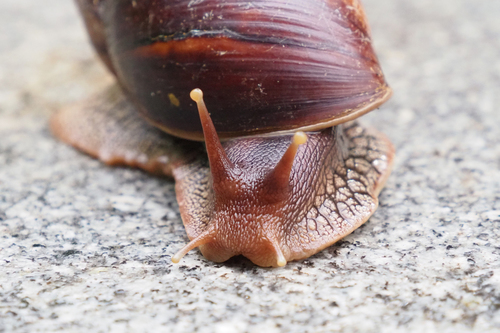
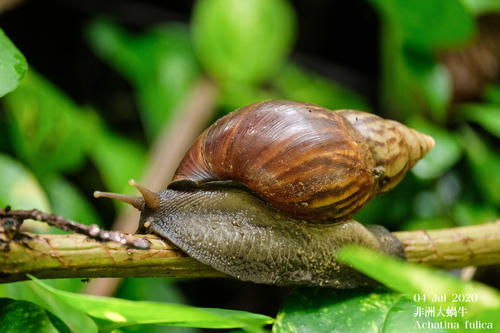
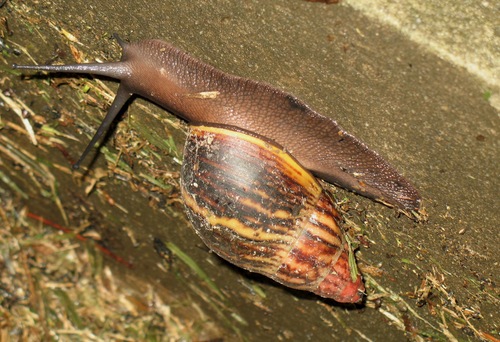
Archachatina marginata (Swainson, 1821) is a species of large snail. The species has a large, bulbous, broad protoconch, with a white or bluish-white columella, parietal wall, and outer lip. Its shell can reach up to 21 cm in height and 13 cm in diameter. When viewed under magnification, the shell has a distinct woven texture. This species is naturally distributed across Western Africa, from Cameroon to the Democratic Republic of the Congo, and also occurs in the Caribbean on the island of Martinique. It is unknown how the species reached Martinique, but it may have been intentionally introduced as a pet, or brought by workers returning from West Africa. The species has a very slow natural rate of spread, but it is commonly spread unintentionally by humans as a source of food and for use in folk medicine. The United States Department of Agriculture routinely checks for this species in the luggage of travelers coming from West Africa, especially travelers from Nigeria, Ghana, and Cameroon. This species has not yet become established in the United States, but it is considered a potentially serious threat as a pest and invasive species. It could negatively impact agriculture, natural ecosystems, human health, or commerce, so it may be assigned top national quarantine significance in the United States. Members of the achatinid group, which includes this species, are nocturnal forest-dwelling organisms, but they can adapt to live in disturbed habitats. They prefer concealed habitats, but may colonize more open habitats if overcrowding occurs. Achatinids are more active during periods of high humidity, and sightings of individuals in broad daylight usually stem from high population density. Achatinid eggs are normally laid in soil, but can also be found under leaves or rocks. This species can produce up to 40 eggs at a time. The eggs are yellow with dark blotches, and have an incubation period of around 40 days.