About Arceuthobium douglasii Engelm.
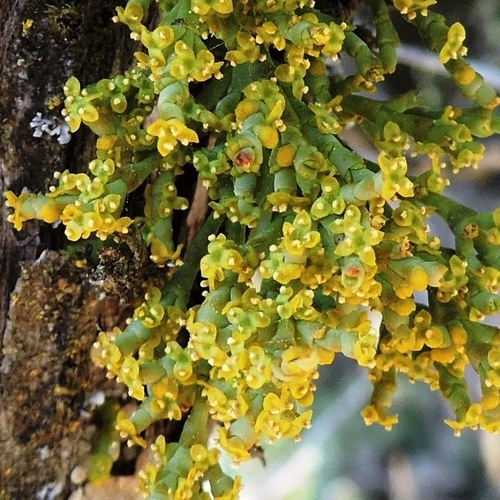
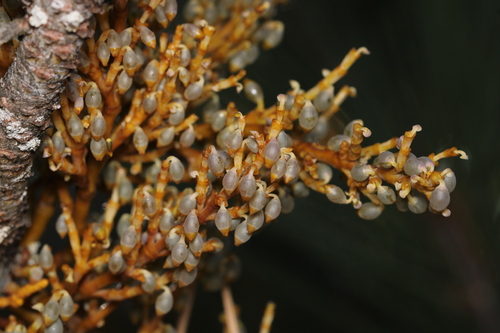
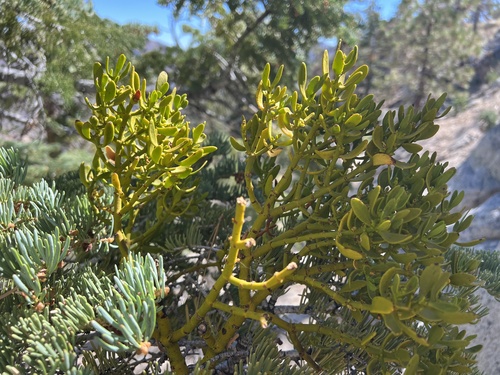
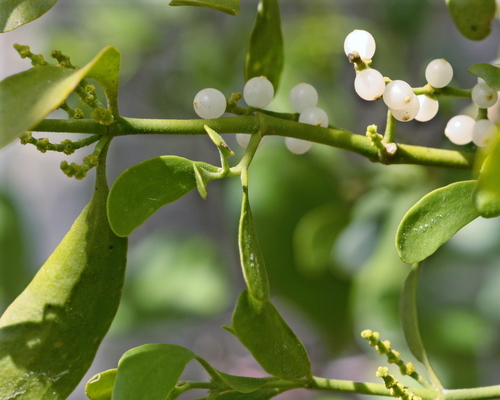
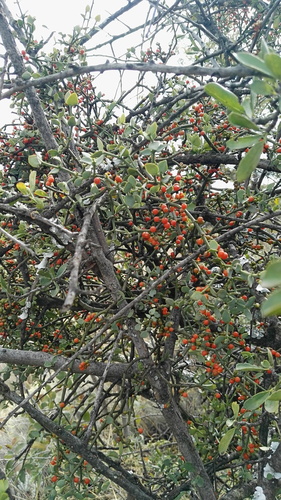
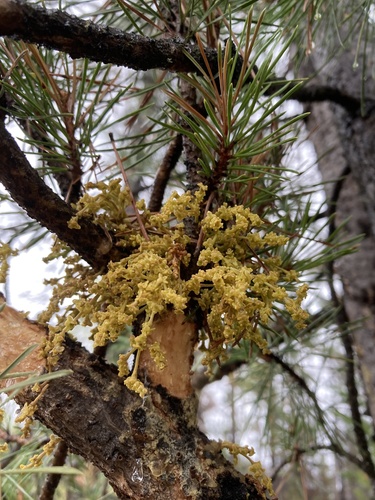
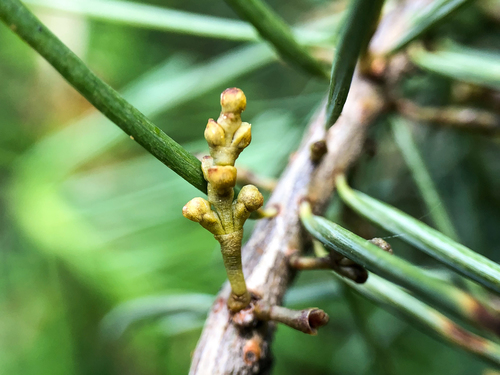
Arceuthobium douglasii Engelm. is a species of dwarf mistletoe commonly called Douglas fir dwarf mistletoe. It is native to western North America, ranging from British Columbia to Texas and California, where it grows as a parasite in forests and woodlands. It most commonly parasitizes Douglas fir (Pseudotsuga menziesii) trees, but can occasionally be found on other fir species (Abies spp.). This mistletoe is a greenish shrub. Only a network of scaly stems grows out from above the bark of its host tree, while most of the mistletoe’s body grows inside the host tree. It attaches to the host with structures called haustoria, which draw water and nutrients from the tree. Its leaves are reduced to small scales on the surface of its stems. The species is dioecious, meaning male and female plants produce separate types of flowers: male plants bear spikes of staminate flowers, and female plants bear spikes of pistillate flowers. Its fruit is a sticky berry a few millimeters long; when mature, the berry explodes to disperse its seeds several meters away from the parent mistletoe and its host tree. Three species of hyperparasitic fungi are known to parasitize Arceuthobium douglasii. Caliciopsis arceuthobii infects the species' female flowers and fruit. Colletotrichum gloeosporioides causes black lesions to form on the mistletoe's stem nodes. Cylindrocarpon gillii causes yellow-white lesions to form along the mistletoe's stems.