About Arca zebra Swainson, 1833
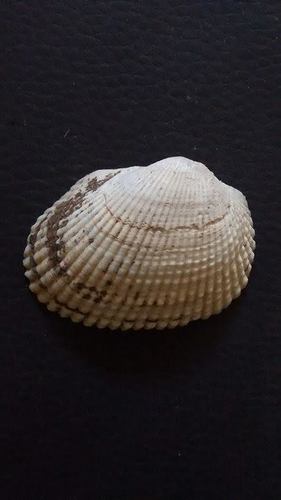
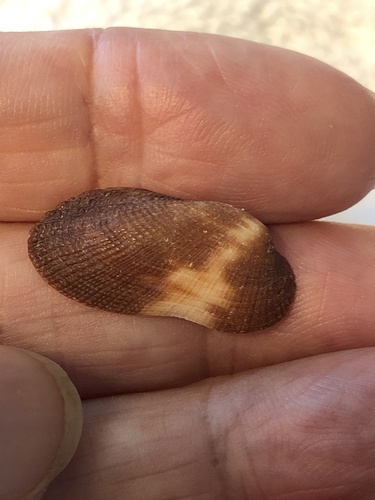
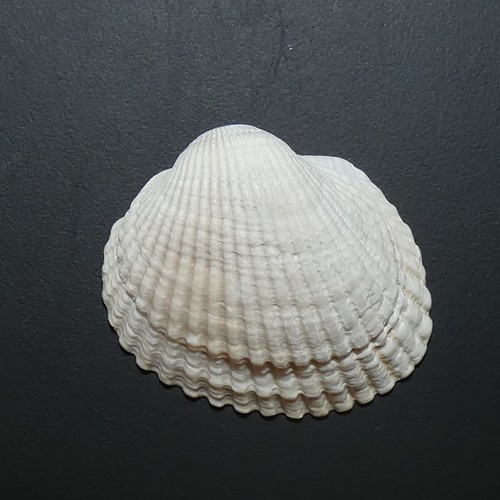
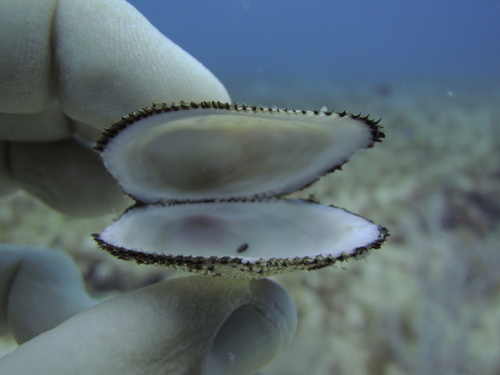
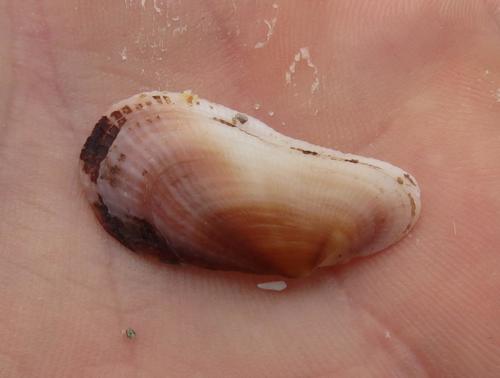
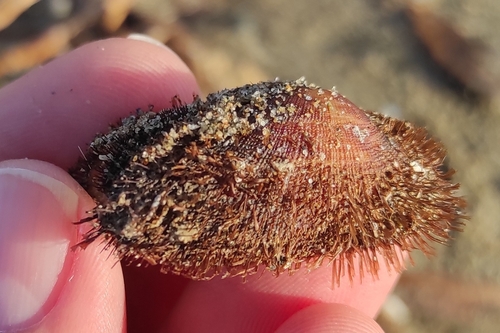
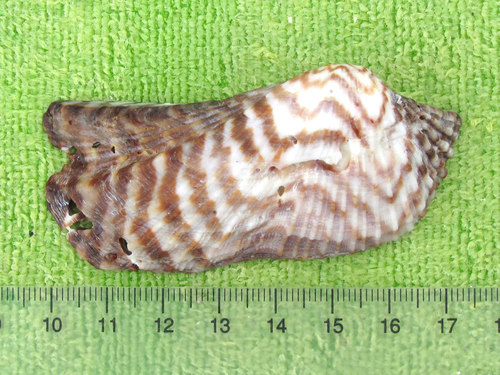
Morphology. The shell of Arca zebra has bold brown and white stripes, giving it a resemblance to a wild turkey’s wing. When its two valves are closed together, the whole shell has been compared to Noah’s Ark. It is a sturdy shell that reaches a maximum length of 4 inches (10 cm) and a maximum width of 2 inches. The umbones are separated by a shallow depression, while the hinge is long and straight and holds around 50 small teeth. Coarse sculpturing fans out from the umbones. The inside of the shell is whitish or pale mauve. Distribution. This species occurs along the Atlantic coast of North America, with its range extending from North Carolina to the West Indies and Bermuda. It uses byssus threads to attach itself to rocks and other hard substrates in shallow water. Reproduction. Arca zebra is a protandric hermaphrodite, a form of sequential hermaphrodite where all individuals begin life as males, and later develop female reproductive function as they mature. Its reproductive cycle depends on food availability and seasonal changes. The mass of the species’ gonad tissue changes over the course of the year. The proportion of total somatic tissue mass made up by gonad tissue rises sharply from roughly 4% to 40% between May and late September, then drops sharply from roughly 40% to 3% between October and January. The proportion increases slightly again from about 3% to 12% in February, before decreasing back to around 4% between March and April. The highest reproductive activity takes place from July through late September, when gonad mass is at its largest. Gonad development starts when Arca zebra shells reach 18-20mm in length. Full sexual maturity is reached when shells reach 50-55mm in length. Larger individuals produce more offspring. Arca zebra has two separate reproductive periods each year: one from June to July, and a second in September. During each spawning event, females can release up to four million eggs. Trochophore larvae, a planktonic larval form, start developing twelve hours after eggs are fertilized. Six days after fertilization, the larvae begin to develop the shape of adult Arca zebra. Eyespots form seven days after fertilization, and the foot develops shortly afterwards. Around the same time that the foot develops, bottom-dwelling food-seeking behavior in the ocean floor substratum sediment can be observed. Twelve days after fertilization, the larvae begin to settle onto substrate; approximately 45% of larvae survive to reach this settling stage. After larvae reach adulthood, most growth occurs in the summer, with summer growth roughly three times as fast as winter growth.