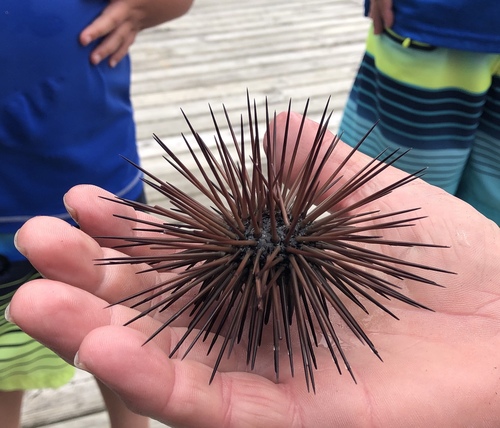
About Arbacia punctulata (Lamarck, 1816)
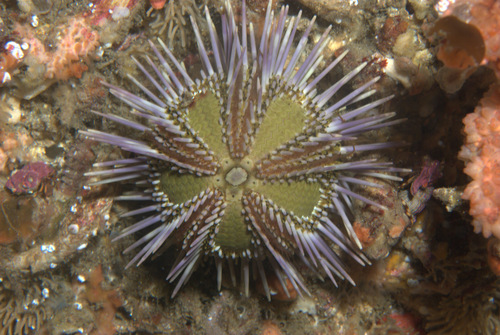
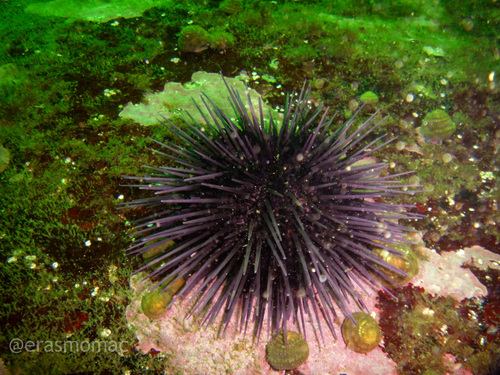
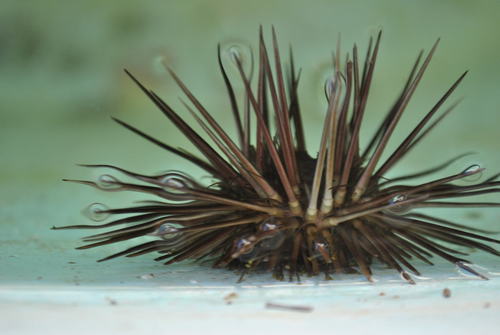
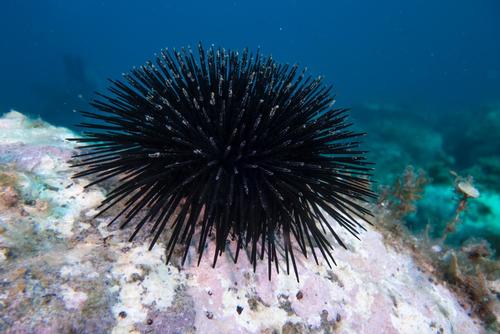
Arbacia punctulata, commonly called the Atlantic purple sea urchin, is a species of sea urchin with a spherical body and dark purple spines, and it has a nearly flat oral face. It can grow up to 8 centimetres in diameter. It is native to the North Atlantic Ocean. Its natural habitat lies in the western Atlantic Ocean. A. punctulata occurs in shallow water along a wide range of coasts: from Massachusetts to Cuba and the Yucatan Peninsula, from Texas to Florida in the Gulf of Mexico, and from Panama to French Guiana, as well as in the Lesser Antilles. It is usually found on rocky, sandy, or shelly seabeds. A. punctulata is omnivorous and eats a wide variety of prey, though Karlson classified it as a generalized carnivore. In the brown algae Fucus vesiculosus, galactolipids and an uncharacterized carbohydrate (but not phlorotannins) have been found to act as deterrents to herbivory by A. punctulata. For over a century, developmental biologists have used this sea urchin as a valued experimental model organism. The eggs of this sea urchin are transparent and easy to manipulate in a laboratory setting. They can be fertilized easily, and then develop rapidly and synchronously. For decades, sea urchin embryos of this species have been used to research and confirm the chromosome theory of heredity, describe centrosomes, and study parthenogenesis and fertilization. Over the last 30 years, research using this organism has helped identify key biological phenomena including stable mRNA and translational control, allowed for the isolation and characterization of the mitotic apparatus, and confirmed that microtubules are the major structural proteins of the mitotic apparatus. Studies using A. punctulata also provided the first evidence of actin in non-muscle cells. In addition to developmental biology research, Arbacia punctulata is also used as a model organism for studying marine sediment toxicity and for sperm research.