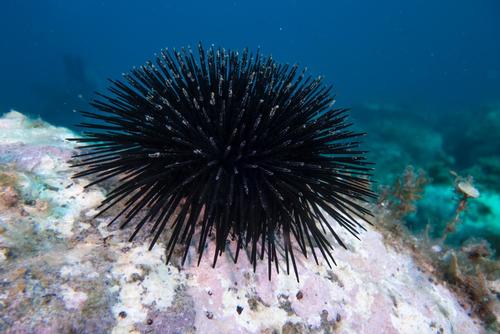
About Arbacia lixula (Linnaeus, 1758)
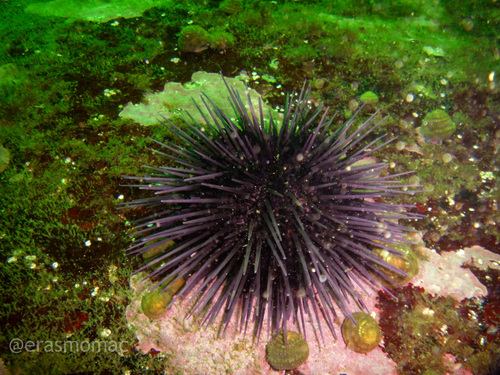
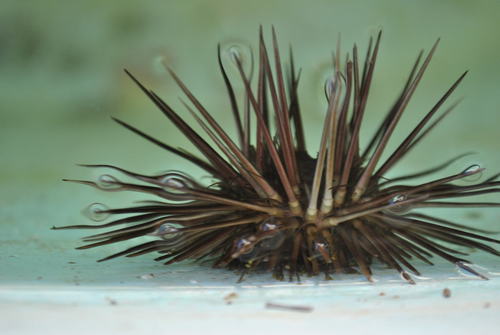
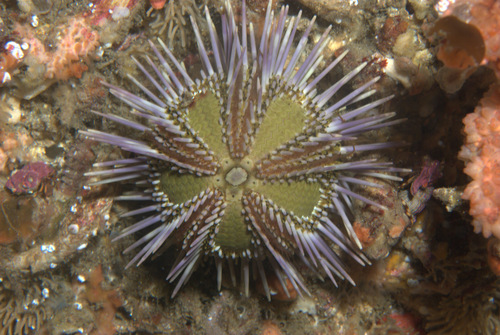
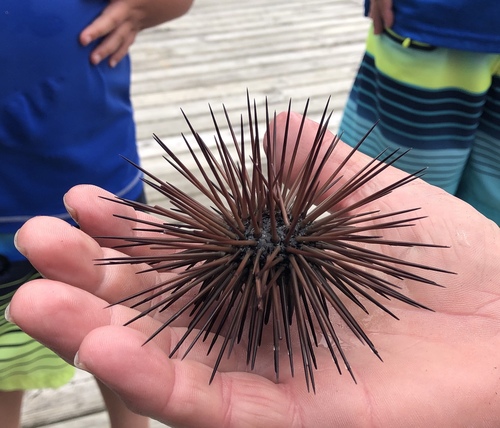
Arbacia lixula (Linnaeus, 1758) is a medium-sized sea urchin that is distinguished by its deep black color and hemispherical shape. All of its spines are roughly the same size, with no secondary spines, and they are held erect, never appearing dishevelled when the animal is in water. The anus, located on the top of the urchin, is surrounded by four plates that form an anal valve. The oral face of this species is nearly naked, with the mouth surrounded by soft, dark-greenish skin. Arbacia lixula can be confused with the purple sea urchin Paracentrotus lividus, but these two species can be told apart by several key traits. Paracentrotus lividus is never truly black, even when it appears very dark, has dishevelled spines of varying lengths, often covers its body with debris, has spines surrounding its mouth, lacks an anal valve, and does not live exposed on cliffs. This sea urchin is found along the coasts of the Mediterranean Sea and the Macaronesian Islands, which include the Azores, Madeira, and the Canary Islands. It occurs less commonly on the Atlantic coast of Western Africa and the Brazilian coast. It typically inhabits shallow rocky shores, at depths ranging from 0 to 30 meters. It has strong attachment to rocks, which gives it good resistance to water movement.