About Aratinga cactorum (Kuhl, 1820)
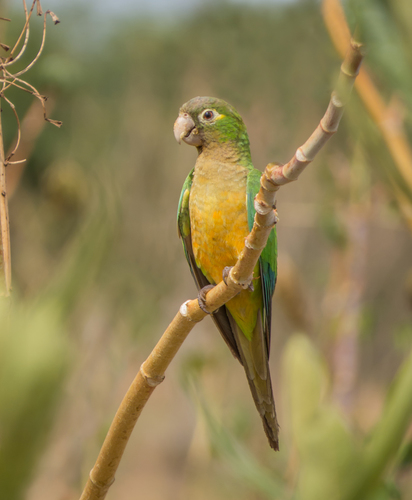
The Caatinga parakeet (scientific name Aratinga cactorum, originally published by Kuhl in 1820) reaches approximately 25 cm (9.8 in) in length, with no visible size or plumage difference between males and females. Adults of the nominate subspecies have pale brown coloration on the forecrown, cheeks, throat, sides of the neck, and breast. Bare whitish skin surrounds the eye. The belly and vent area are yellow-orange, while the nape, ear coverts, upperparts, and tail are green. Most of the wing surface is green, with bluish-tinted flight feathers. Immature Caatinga parakeets closely resemble adults, but differ in having a fully green crown and duller coloration on the underparts. Subspecies E. c. caixana shares the same plumage pattern as the nominate subspecies, but is paler across its entire body. Of the two recognized subspecies, E. c. caixana occupies the more northerly range. It occurs in northeastern Brazil, ranging from Maranhão eastward to the Atlantic Ocean, and extending south as far as northwestern Bahia. The nominate subspecies is found in east-central Brazil, south of the São Francisco River, in the states of Bahia and Minas Gerais. This species lives in both undisturbed and second-growth caatinga, a dry landscape defined by its thorny vegetation, shrubs, and succulents. It can also be found in cerrado and more moist woodland habitats.