About Arachnothera longirostra (Latham, 1790)
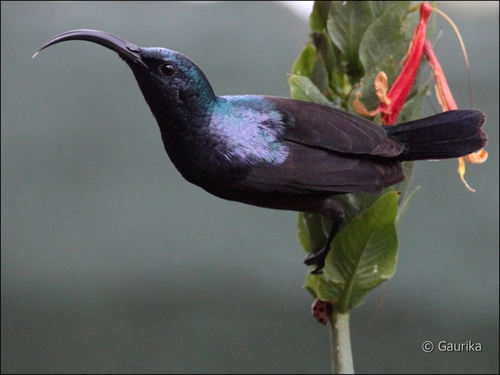
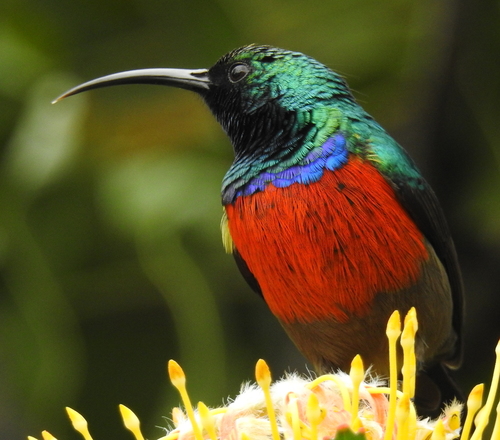
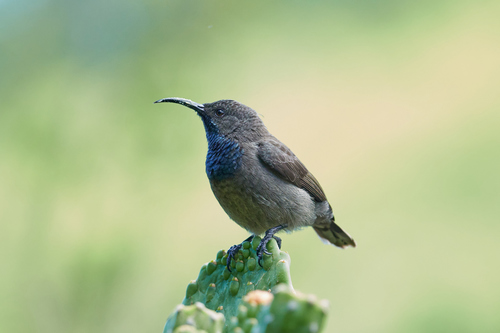
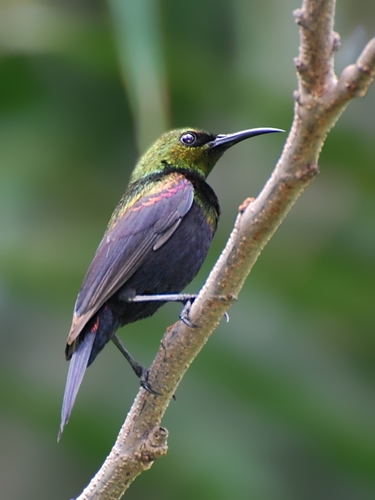
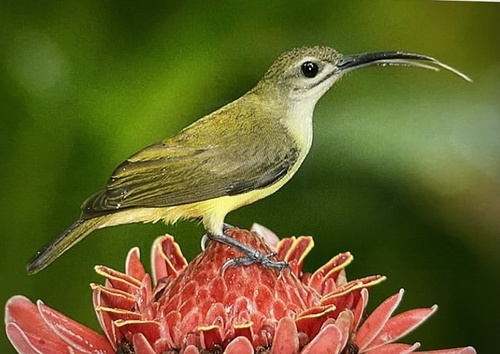
Arachnothera longirostra can be easily distinguished from other sunbirds by its distinctive long beak. The sexes have similar appearance, differing only in the color of the beak: the male has an entirely black beak, while the female has a paler base on the lower mandible. These birds are found near their preferred nectar-producing trees, often wild Musaceae species, or garden flowers. They produce a regular buzzy zick-zick call when disturbed or foraging. Their song consists of a series of rapid chipping notes that can continue for long periods. This species occurs in Bangladesh, Bhutan, Brunei, Cambodia, China, India, Indonesia, Laos, Malaysia, Myanmar, Nepal, Philippines, Thailand, and Vietnam. In India, the main population range covers the northeast, which extends into Southeast Asia, with separate disjunct populations in the Eastern Ghats (from Lamasinghi, Visakhapatnam, and parts of Orissa) and the Western Ghats. A recorded occurrence from the Nicobar Islands is considered doubtful. Its natural habitats are subtropical or tropical moist lowland forests, subtropical or tropical mangrove forests, and subtropical or tropical moist montane forests, and it typically occurs below the forest canopy. It is also found in gardens, where it is especially attracted to nectar-yielding flowers. This species is known to be an effective pollinator of wild banana species and multiple species in the ginger family. It often visits Loranthus sp. (synonymized with Dendrophthoe sp.), Bombax malabaricum, and Erythrina indica to feed on nectar. It is frequently seen in plantations located within forest areas. Though it is most often observed in secondary forests or clearings and appears to tolerate human activity, it has become extinct in some forest fragments; it is locally extinct in Singapore's botanical garden. The breeding season lasts from March to September in northeastern India, with most breeding occurring from May to August, while in southern India breeding occurs from December to August. The usual clutch size is two eggs. The nest is a compact, hammock-like cup attached to the underside of a banana leaf or another similar broad-leafed plant. It is suspended from the leaf using around 150 cobweb and vegetable fibre "pop-rivets", a unique method of using spider silk in animal architecture. In India, Hodgson's hawk-cuckoo and violet cuckoo are suspected to be brood parasites that target this species. A haemosporidian parasite of the genus Leucocytozoon has been recorded in specimens of this species from Malaysia.