About Apus unicolor (Jardine, 1830)
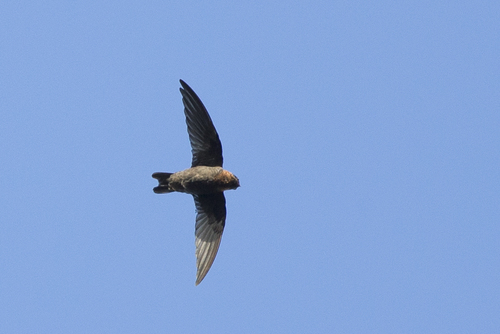
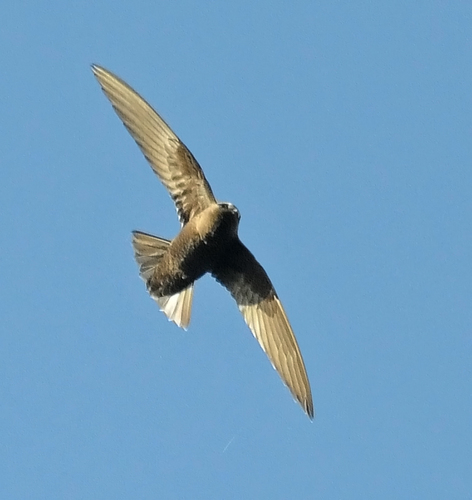
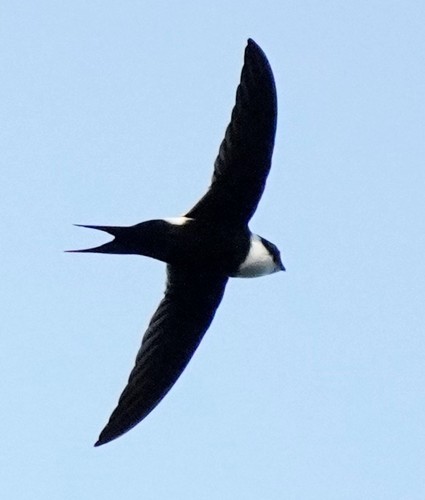
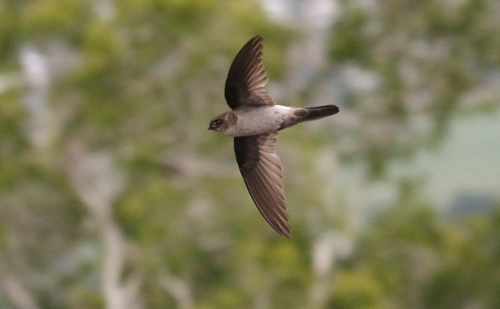
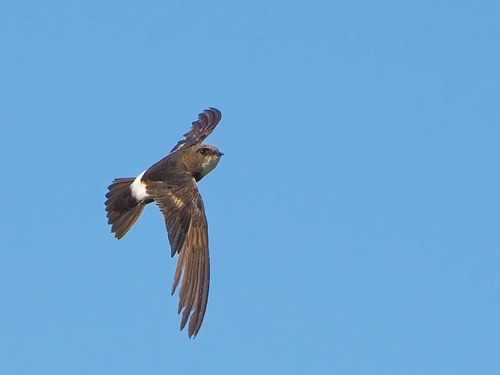
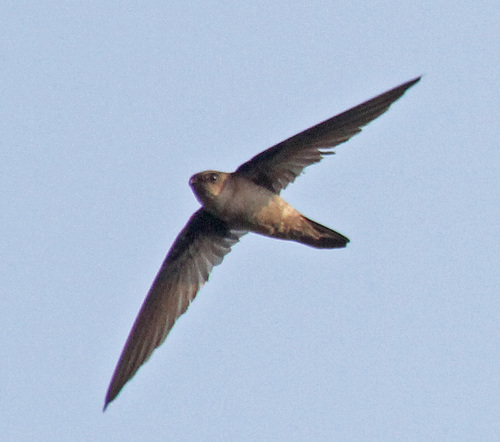
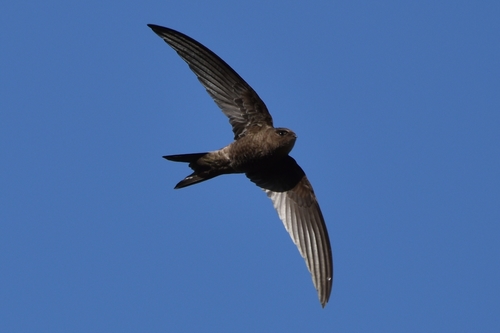
The plain swift (Apus unicolor, first described by Jardine in 1830) is a medium-sized swift. Although it looks similar to barn swallows or house martins at a superficial glance, it is not related to these passerine species. This similarity is a result of convergent evolution, driven by their shared similar lifestyles. Like other swifts, plain swifts have very short legs that they only use to cling to vertical surfaces. They never voluntarily settle on the ground, and spend most of their lives airborne. They feed on insects caught mid-flight with their beaks, and even drink while flying. Plain swifts breed in colonies on cliffs, bridges, and buildings in the Canary Islands and Madeira. They lay two eggs in a saucer-shaped nest constructed from flowerheads glued together with the bird’s saliva. They are partially migratory: many individuals leave their breeding grounds to winter in mainland Africa. Until recently, it was believed that plain swifts wintered on the African coast, but newer research indicates they travel much farther, to the equatorial forests of Liberia and Guinea, a distance of 2,600 kilometres. Small numbers are also thought to breed in Morocco between Agadir and Essaouira, where a colony has been found on coastal cliffs. They may also breed in Mauritania, where the species is sighted frequently. This species measures 14–15 cm in length, and is very similar to the closely related common swift and pallid swift, both of which also live in the Canary Islands and Madeira archipelagos. It can only be distinguished from these relatives when seen in good viewing conditions. Like its close relatives, the plain swift has a short forked tail and very long swept-back wings that look like a crescent or a boomerang. Its plumage is entirely dark apart from an indistinct pale patch on the throat. It is slimmer and more rakish in shape than the pallid swift, it is darker than the pallid swift, and lacks the pallid swift’s obvious white throat. Distinguishing the plain swift from the similarly coloured common swift is much more difficult, although juvenile common swifts can be easily ruled out because they have a white throat. Compared to the common swift, the plain swift is slimmer, appears to have longer wings, and has scaly underparts, a feature that is hard to see except in excellent viewing conditions. The call of the plain swift is a loud dry scream, similar to the call of the common swift, though it is possibly higher in pitch.