About Apus pallidus (Shelley, 1870)
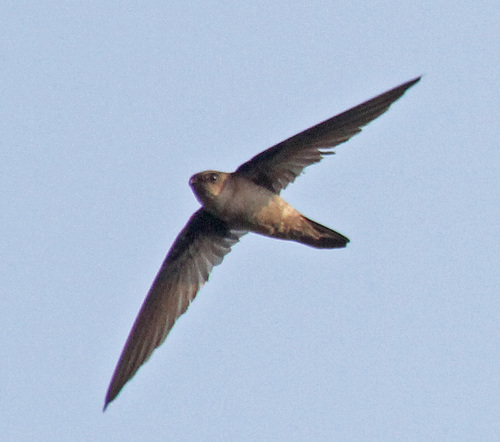
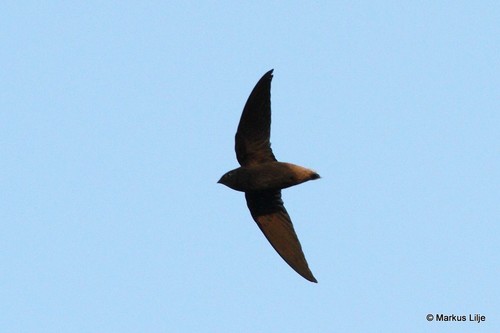
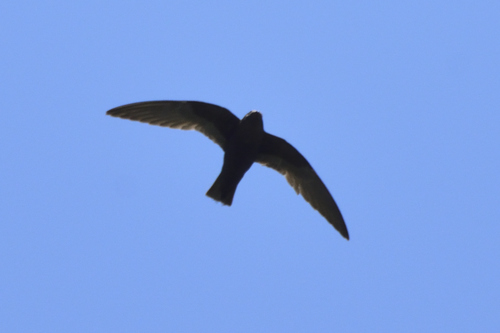
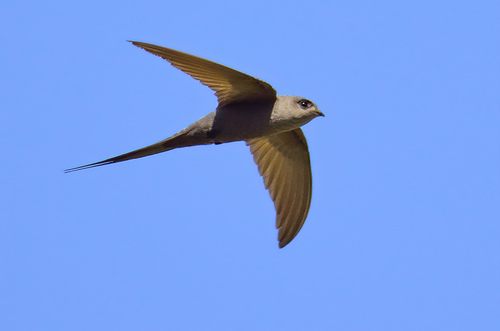
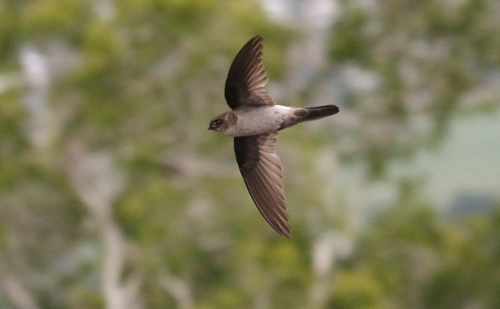
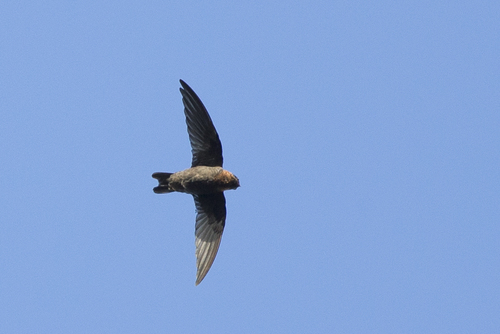
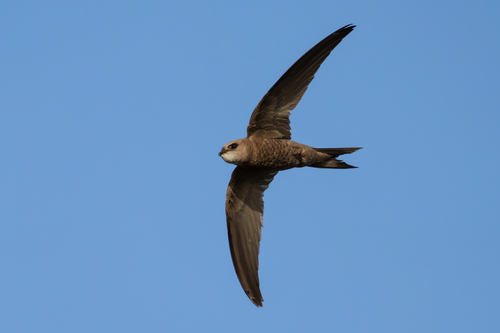
This 16–17 cm (6.3–6.7 in) long species is very similar to the common swift, and the two can only be distinguished with good clear views. Like its relative, it has a short forked tail and very long swept-back wings that resemble a crescent or a boomerang. It is entirely dark except for a large white throat patch which is frequently visible from a distance. It is chunkier and browner than the common swift, and its slightly paler flight feathers, underparts and rump create more contrast than seen in the common swift. It also has a scalier-looking belly and a subtly different flight action. Its call is a loud dry scream similar to that of its relative, though possibly more disyllabic. Pallid swifts breed on cliffs and eaves around the Mediterranean, and on the Canary Islands and Madeira, laying two eggs. They are rare north of their breeding areas, although they are likely to be under-recorded due to identification challenges. Because of its more southerly range, the pallid swift arrives earlier and leaves later than the closely related common swift, so particularly early or late swifts north of the normal range should be carefully observed.