About Aproaerema simplexella
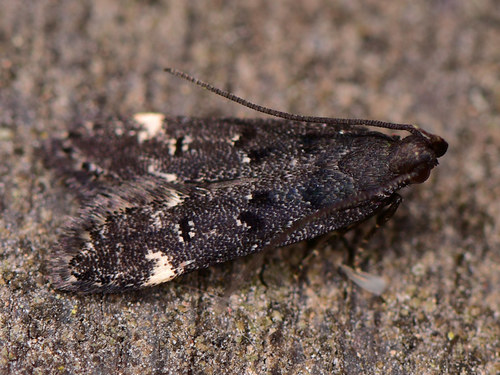
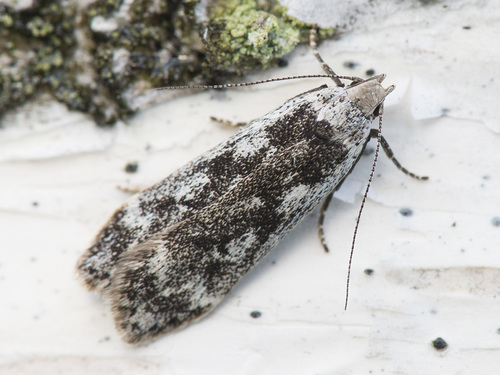
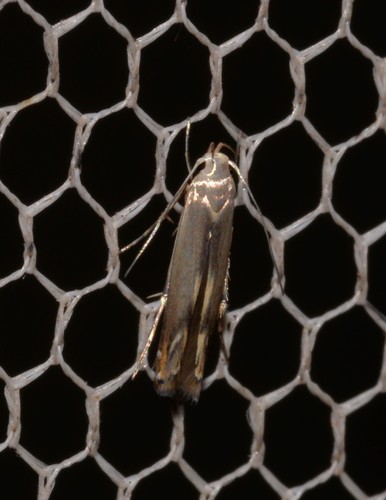
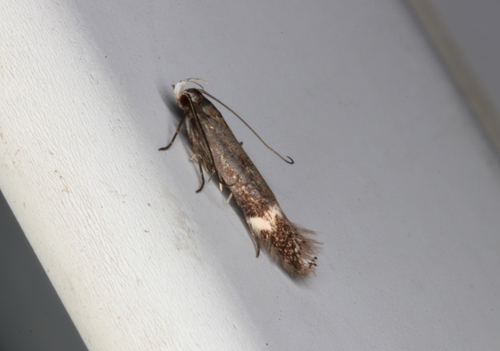
Aproaerema simplexella, commonly known as the soybean moth, is a moth species belonging to the family Gelechiidae. It was first described by Francis Walker in 1864. This species is naturally found in India, China, Australia (including Western Australia, the Northern Territory, Queensland, New South Wales, Victoria, Tasmania, and South Australia), Norfolk Island, and New Zealand. It is an invasive species in Africa, and has been recorded there from the Democratic Republic of the Congo, Malawi, South Africa, and Uganda. The wingspan of adult Aproaerema simplexella ranges from 9 to 12 mm. The forewings are a rather dark bronzy fuscous color. They have an elongate dark fuscous mark on the fold before the middle of the wing; this mark is sometimes interrupted by a ferruginous-ochreous dot, and is sometimes followed by a scattering of whitish scales. An indistinct dark fuscous discal dot is sometimes present in the middle of the forewing. There is a small whitish spot on the tornus, and a larger, clearly defined white subtriangular spot on the costa opposite the tornus; these two spots almost meet. The hindwings are grey, and become darker toward the posterior end.