About Aproaerema anthyllidella (Hübner, 1813)
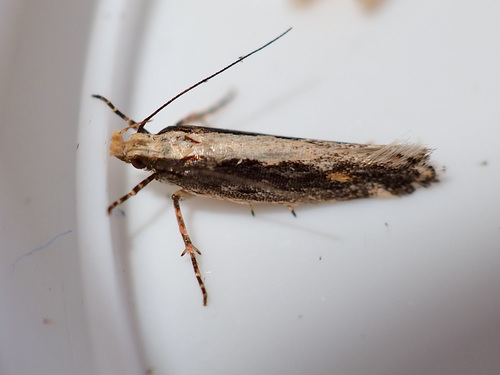
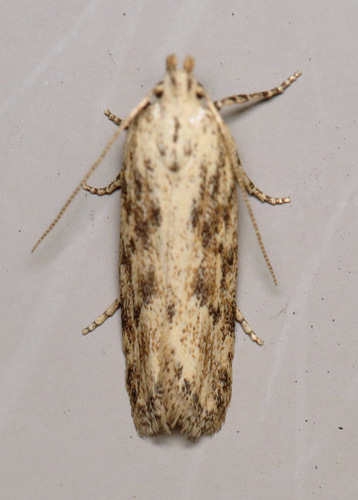
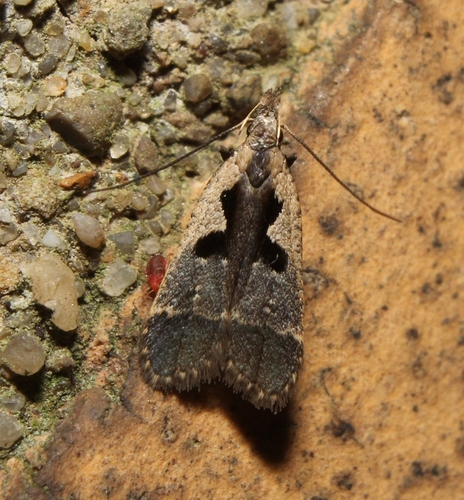
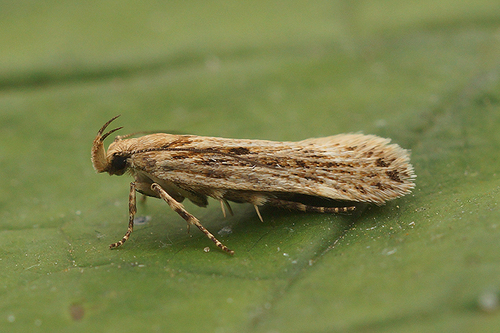
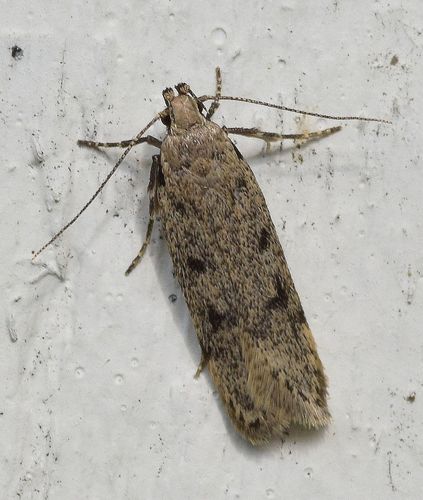
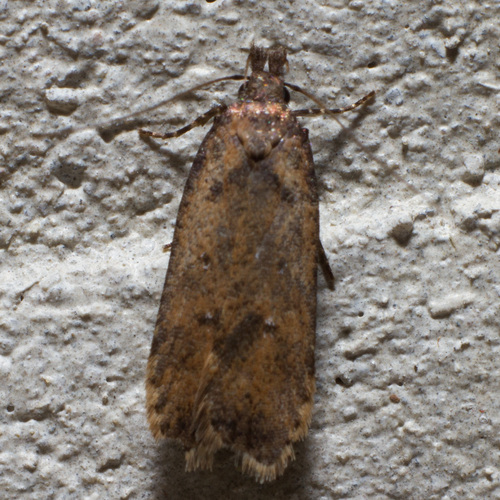
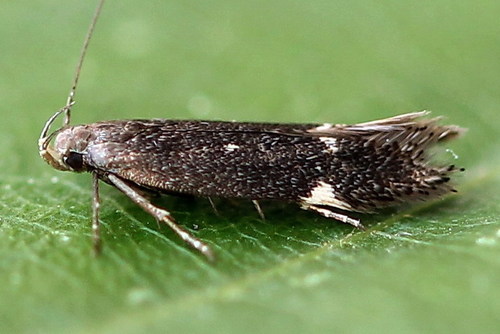
Aproaerema anthyllidella is a species of moth in the family Gelechiidae. This moth can be found across most of Europe, Kyrgyzstan, Iran, and North America. Its wingspan measures 10 to 12 millimeters. The forewings are a dark slaty-fuscous color, often speckled with paler markings, and the wing stigmata are barely visible. A whitish-ochreous dot sits after the plical stigma, and a small, whitish-ochreous triangular spot, usually angled somewhat obliquely outward, is present on the costa two-thirds of the way along the wing; this spot is occasionally absent. Many individuals also have a very small whitish-ochreous spot on the tornus opposite this triangular spot. Vein 6 of the wing originates from vein 7. The hindwings are a fairly light grey. Fully grown larvae are blackish-grey, with an obscurely whitish dorsal line across segments 2 to 4 and whitish segmental incisions. They have a spiracular series of whitish spots, and both the head and the dorsal plate on the second segment are black. Adults are active in two generations per year: from May to June, and again from August to September. The larvae feed on a wide range of herbaceous plant species, including Anthyllis vulneraria, Chamaecytisus, Coronilla, Cytisus, Dorycnium rectum, Galega officinalis, Glycine max, Hymenocarpos circinnatus, Lathyrus pratensis, Lathyrus tuberosus, Lotus corniculatus, Medicago lupulina, Medicago sativa, Melilotus alba, Onobrychis viciifolia, Ononis repens, Ononis rosifolia, Ononis spinosa, Ornithopus, Oxytropis pilosa, Phaseolus vulgaris, Psoralea bituminosa, Trifolium pratense, Trifolium repens, Trigonella monspeliaca, Vicia cracca, and Vicia faba. Larvae of the first generation mine the leaves of their host plants.