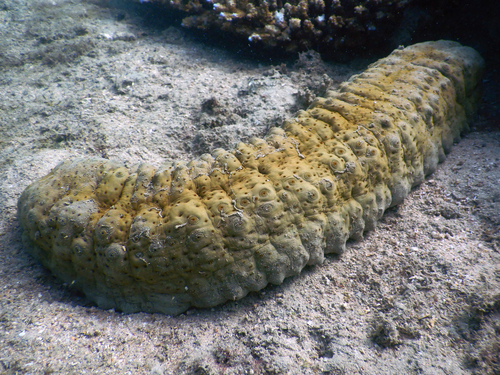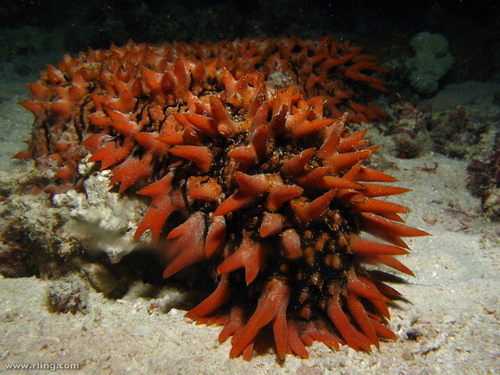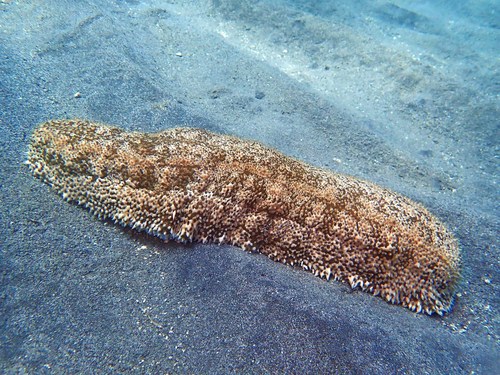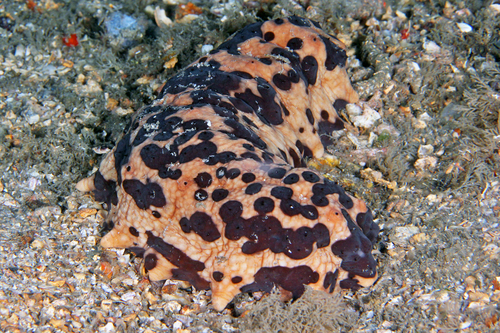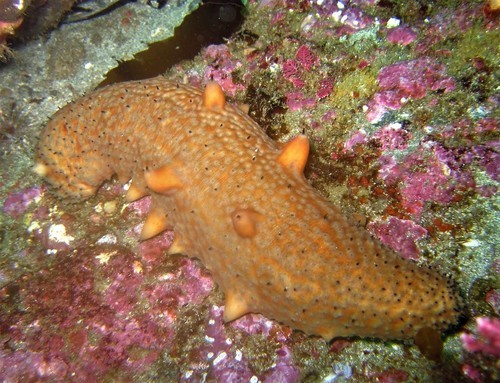
Apostichopus parvimensis (H.L.Clark, 1913) is a animal in the Stichopodidae family, order Synallactida, kingdom Animalia. Not known to be toxic.

Photo of Apostichopus parvimensis (H.L.Clark, 1913) (Apostichopus parvimensis (H.L.Clark, 1913))
🦋 Animalia

Apostichopus parvimensis (H.L.Clark, 1913)

Apostichopus parvimensis (H.L.Clark, 1913)

Apostichopus parvimensis, the warty sea cucumber, is a solitary nocturnal echinoderm with distinct physical and reproductive traits.

Family
Genus
Apostichopus
Order
Synallactida
Class
Holothuroidea

About Apostichopus parvimensis (H.L.Clark, 1913)

Apostichopus parvimensis, commonly known as the warty sea cucumber, can reach a maximum total length of 30 to 40 centimeters, which equals 1 foot 0 inch to 1 foot 4 inches. It has a soft, cylindrical body covered in red-brown to yellowish leathery skin. Numerous grey spots cover its entire body, which is the feature that gives it the common name "warty". It has an endoskeleton located just underneath the skin. Its mouth and anus are positioned on opposite ends of its body. The mouth is surrounded by ten retractable tentacles that the animal uses to collect and bring food inside. Five rows of tube feet run along the body from the mouth all the way to the anus. This species is a solitary, nocturnal animal. When it feels threatened, it can expel its internal organs through its anus and later regrow these lost organs. Warty sea cucumbers have separate male and female individuals, and fertilization of eggs occurs externally. Spawning most often takes place in November, and each female can produce thousands of eggs. After fertilization, a larva develops, and metamorphoses into a mature sea cucumber after a few weeks.
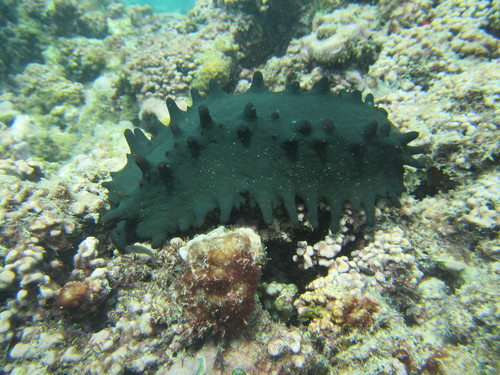
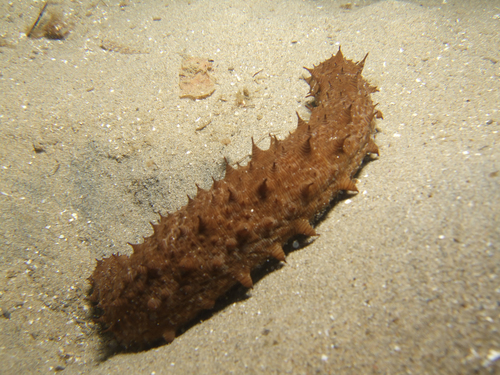
Photo: (c) Comunidad y Biodiversidad A. C., some rights reserved (CC BY-NC), uploaded by Comunidad y Biodiversidad A. C. · cc-by-nc

Taxonomy

Animalia Echinodermata Holothuroidea Synallactida Stichopodidae Apostichopus

More from Stichopodidae

Sources: GBIF, iNaturalist, Wikipedia, NCBI Taxonomy · Disclaimer

Identify Apostichopus parvimensis (H.L.Clark, 1913) instantly — even offline

iNature uses on-device AI to identify plants, animals, fungi and more. No internet needed.

Download iNature — Free

Start Exploring Nature Today

Download iNature for free. 10 identifications on us. No account needed. No credit card required.

Download Free on App Store