About Apostichopus californicus (Stimpson, 1857)
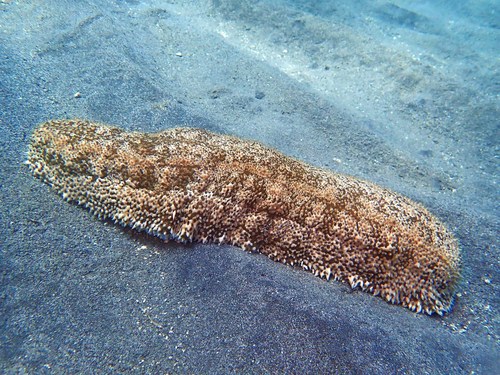
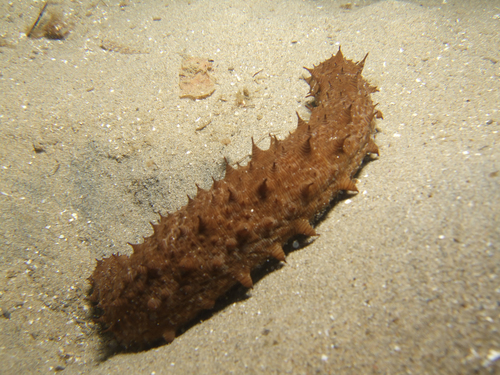
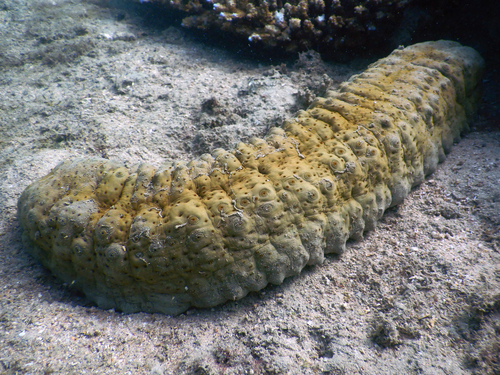
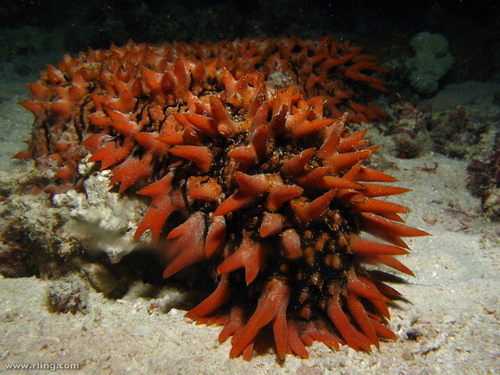
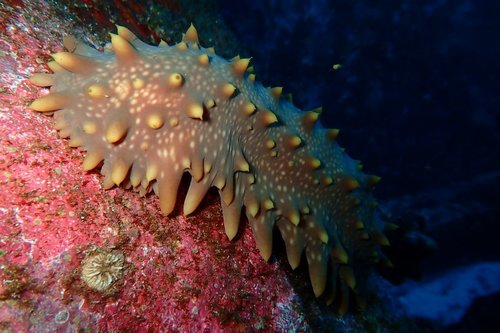
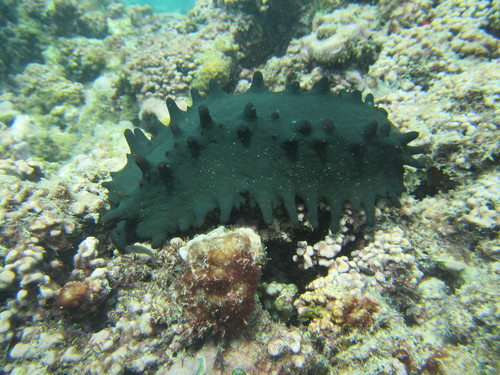
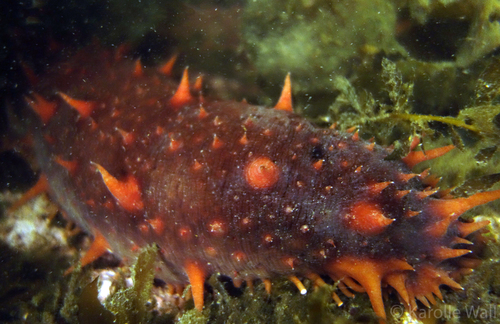
The California sea cucumber, scientifically named Apostichopus californicus (Stimpson, 1857), can reach 50 cm (1 ft 8 in) in length and 5 cm (2 in) in width. It has a soft, cylindrical body covered in red-brown to yellowish leathery skin, with an endoskeleton located just beneath the skin. Its mouth and anus are positioned at opposite ends of the body. The mouth is ringed by twenty retractable tentacles that the animal uses to collect food. Five rows of tube feet run the entire length of the body from the mouth to the anus. Individuals use tube feet located on the underside of their body to attach themselves to rocks.
Apostichopus californicus is a solitary, nocturnal animal. When threatened, it can perform evisceration, expelling its internal organs through its anus. It can also release sticky filaments to trap or confuse predators. This species of sea cucumber has separate sexes, and fertilization of eggs occurs externally. Spawning most often occurs in August, and a single female can produce thousands of eggs. After fertilization, a larva develops that metamorphoses into a mature sea cucumber within a few weeks.