About Apocynum androsaemifolium L.
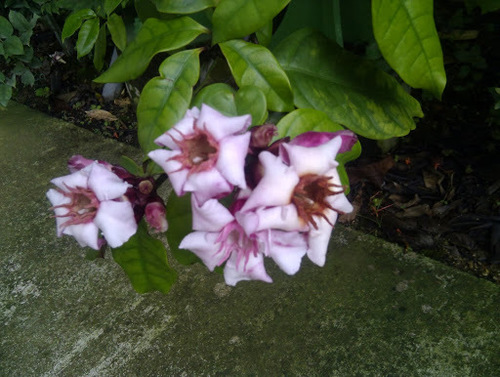
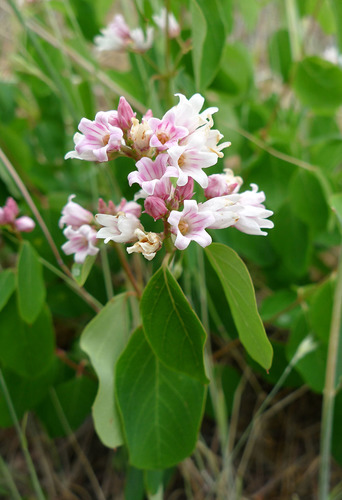
Apocynum androsaemifolium, commonly called spreading dogbane, is a perennial herb with branching stems that are hairless. It has hairs on the underside of its leaves. The plant typically grows 20–30 centimetres (8–12 inches) tall, and can exceptionally reach 50 cm (20 in) in height. Broken stems exude a milky sap. Its leaves are pointed ovals with entire leaf margins and alternate venation. Between June and September, pairs of pink flowers bloom at the ends of stalks. It produces two seed pods 12.5–17.5 cm (5–7 in) long that hold silky-haired seeds. This plant is widespread across most of Canada, most of the United States (including Alaska, but excluding Florida), and northeast Mexico. Its native habitats include forests, woodlands, forest edges, prairies, meadows, and fields. It grows best in dry soils at low to medium elevations. Animals naturally avoid this plant. The plant is poisonous, because it contains cardiac glycosides and resins. Increasing doses of the plant usually cause vomiting and diarrhea. Additional possible symptoms include dizziness, colour hallucinations, cold sweats, and excessive urination. In extreme cases, heart rate may slow before fatal convulsions occur. Young shoots of this plant emerge at the same time as young milkweed shoots, so the two must be distinguished from one another. Native Americans used spreading dogbane for many purposes. Medicinally, it was used to treat a range of ailments including headaches, convulsions, ear ache, heart palpitations, colds, insanity, dizziness, rheumatism, scrofula, and syphilis, and it was also used as a contraceptive. Among the Ojibwe people, the root was used as a gynecological aid, an oral and throat aid, an analgesic for headaches, and a diuretic during pregnancy. The Ojibwe also consumed the root of the plant during the medicine lodge ceremony. The Forest Potawatomi also used the roots medicinally, while the Prairie Potawatomi used the plant's fruits to treat heart and kidney problems. The stem fibers of the plant are very strong, so Native Americans used them as thread for sewing. Outside of the Americas, spreading dogbane was also used to treat heart disease in Europe during the first half of the 20th century.