About Aplysina archeri (Higgin, 1875)
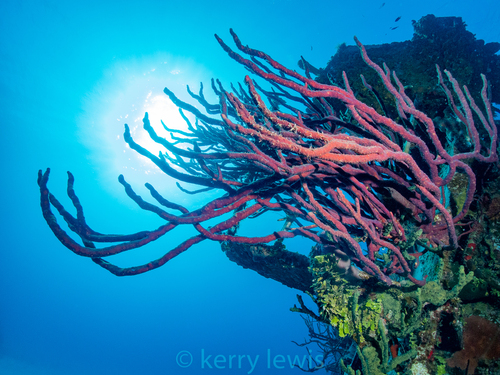
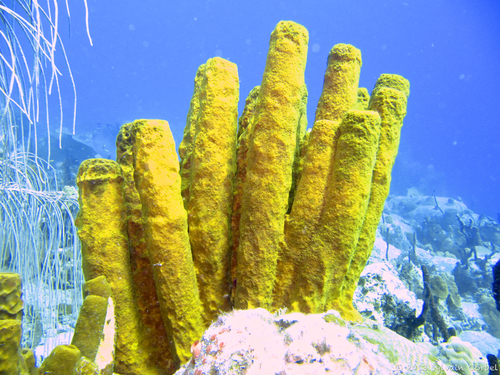
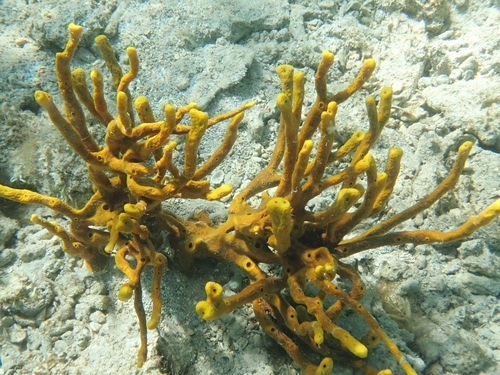
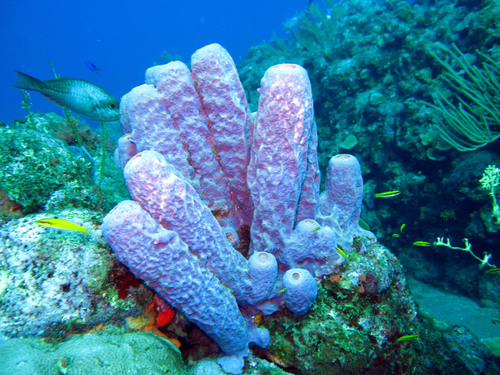
Aplysina archeri is commonly called the stove-pipe sponge, named for its characteristic shape. It is a species of tube sponge that forms long, cylindrical, tube-shaped structures. While individuals can grow as a single tube, they most often grow in large groups containing up to 22 tubes. A single tube can reach 5 feet (1.5 m) in height and 3 inches (7.6 cm) in thickness. This sponge species primarily inhabits the Western Atlantic Ocean, specifically found in the Caribbean, The Bahamas, Florida, and Bonaire. Like most sponges, Aplysina archeri is a filter feeder. It consumes plankton and suspended detritus as water carrying these particles passes through its body. Aside from its feeding ecology and reproductive biology, very little is known about the rest of this species' behavioral patterns. The tubes of Aplysina archeri can come in a range of colors, including lavender, pink, gray, and brown. This species reproduces through both asexual and sexual methods. These sponges grow very slowly, taking hundreds of years to reach full size, and they continue growing throughout their entire lives until they die. One of Aplysina archeri's natural predators is snails. The population density of this sponge is currently decreasing due to threats from oil spills and other forms of pollution.