About Aplysia oculifera A.Adams & Reeve, 1850
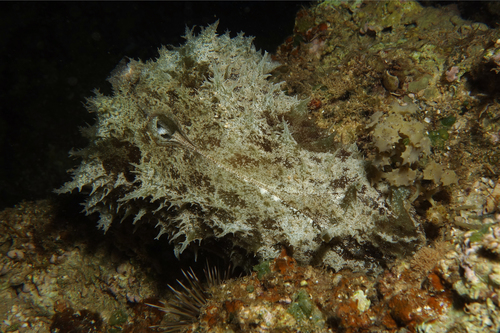
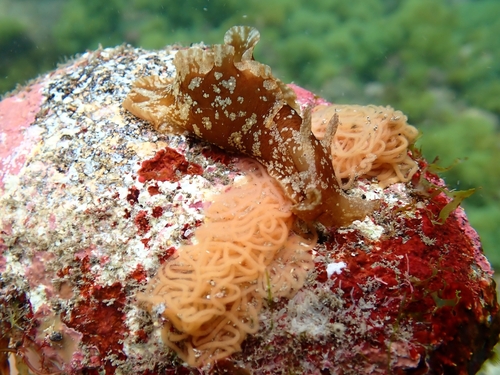
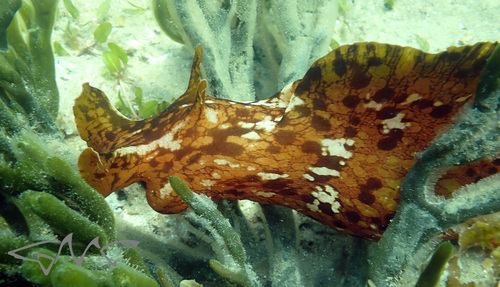
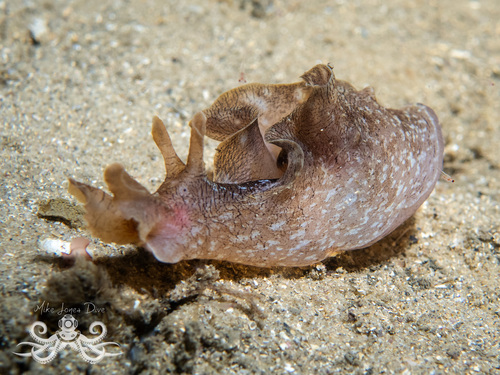
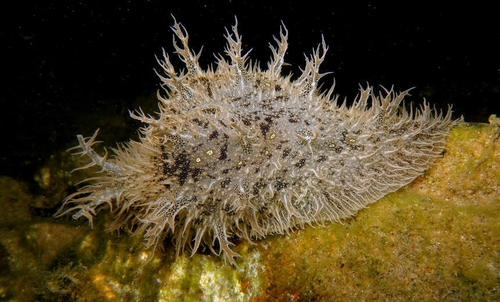
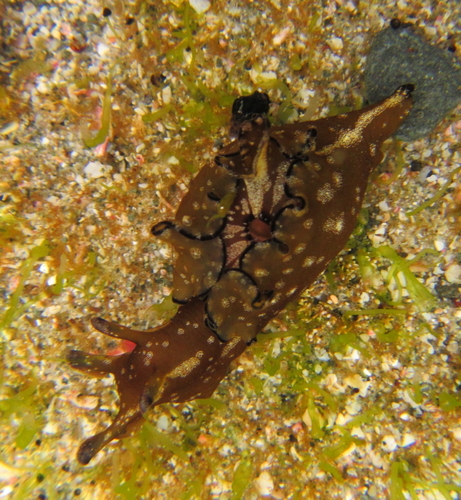
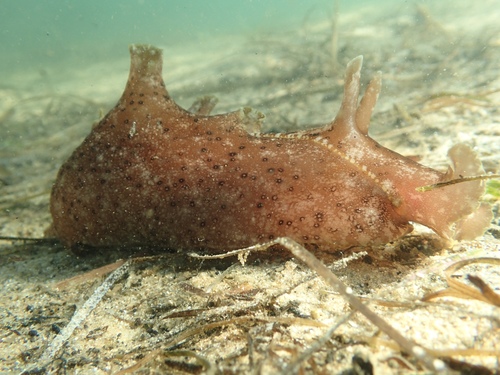
Previous examinations of Aplysia oculifera have documented individuals in a range of colors, including different shades of green, yellow, and brown. Clusters of large white spots are typically distributed across its entire body, and the species lacks any other distinct body patterns. Aplysia oculifera occurs along coasts throughout the Indo-Pacific region, with recorded locations including Hawaii, Japan, and Korea. It has also been spotted on coasts of the Red Sea, where it is reported to be endemic. This species inhabits rocky intertidal zones, where it depends on the presence of marine algae, but it has specific adaptations that allow it to survive when food sources are scarce. Aplysia oculifera is more active during daylight hours when exposed to sunlight than it is during dark hours. While Aplysia species as a group feed on a variety of marine algae species, multiple studies have shown that Aplysia oculifera prefers green algae such as Ulva spp.. Aplysia oculifera is a simultaneous hermaphrodite, meaning a single individual possesses both male and female reproductive structures and can function as either male or female as needed. Like many other Aplysia species, Aplysia oculifera has been observed forming mating chains. It has complex reproductive organs, including an ovotestis, small and large hermaphroditic ducts (tubes that connect different reproductive organs), a nidamental glandular complex, and gametolytic glands. The penis of Aplysia oculifera is external, and large retractor muscles allow it to extend or retract the penis as needed. A trait that distinguishes this species from other Aplysia species is that its gametes contain nurse cells across several life stages, a feature not commonly found in other species that supports successful fertilization and improves offspring health.