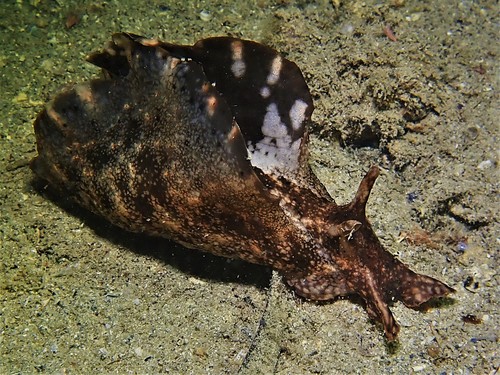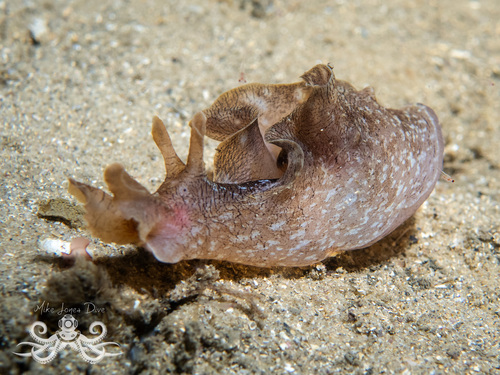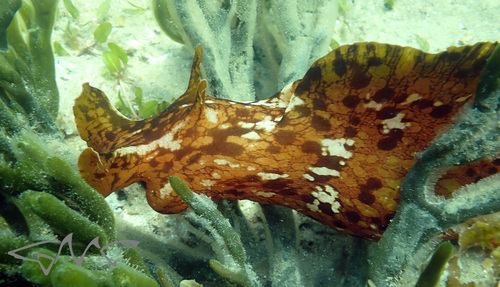
About Aplysia extraordinaria (J.K.Allan, 1932)
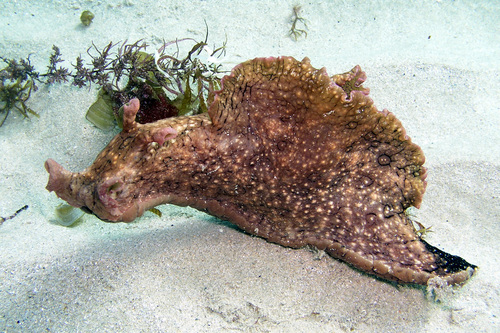
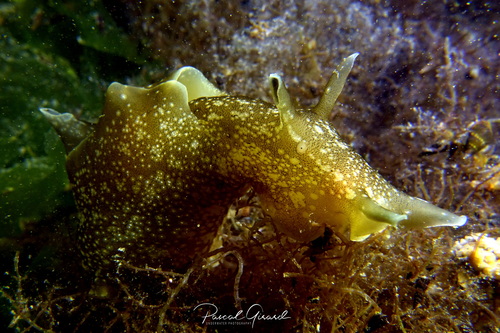
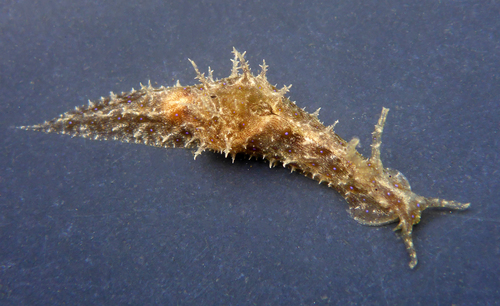
This species is currently classified as Aplysia extraordinaria (J.K.Allan, 1932), and was originally described under the name Aplysia denisoni. The shell of this species reaches 30 mm in length and 27 mm in width. The body is tall with a distinct pedal disk that extends posteriorly into a caudal end. The entire body surface is wrinkled, with a dirty whitish base color and black veining within the wrinkles, which may be caused by staining. Mantle-lobes are moderately sized; they begin anteriorly a distance behind the posterior tentacles, and end slightly ahead of the tail. Anterior tentacles are large, compressed, and noticeably dilated. Posterior tentacles are large, cylindrical; their apical slit does not extend halfway down the outer side, and they are positioned slightly closer to the oral tentacles than to the start of the mantle-lobes. The eyes are very small and located near the outer anterior base of the posterior tentacles. The shell is very thin and straw-colored. This species occurs along the coast of eastern Australia, northern New Zealand, and may have a wider distribution. It is very likely the same species as Aplysia gigantea found off the western coast of Australia, though this has not yet been confirmed.