About Aplodinotus grunniens Rafinesque, 1819
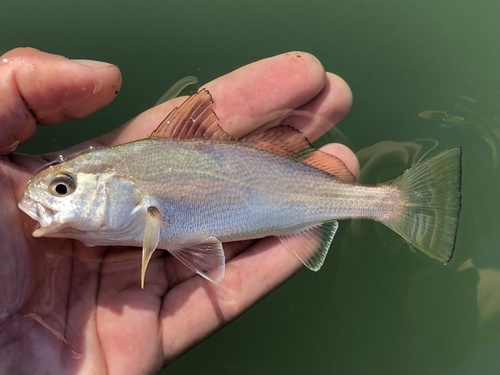
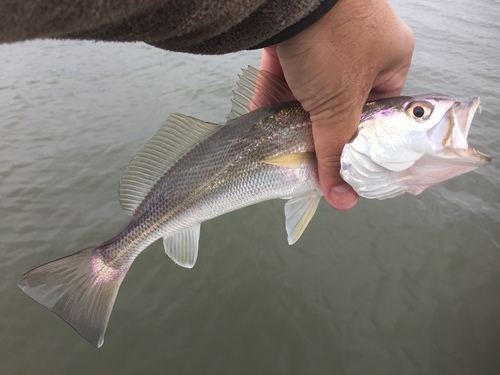
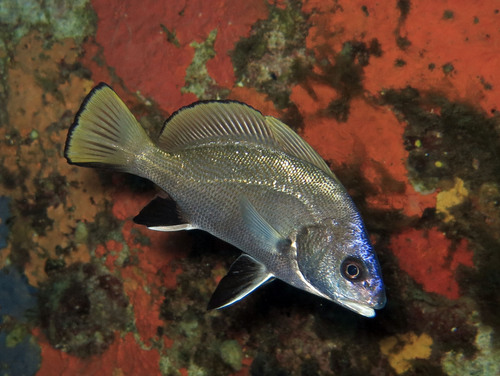
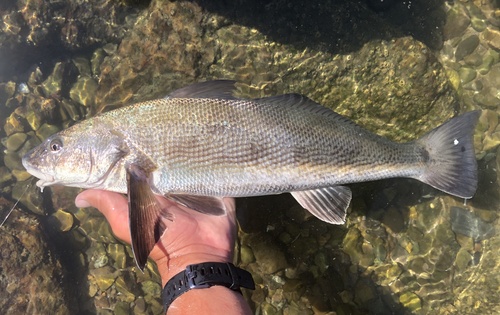
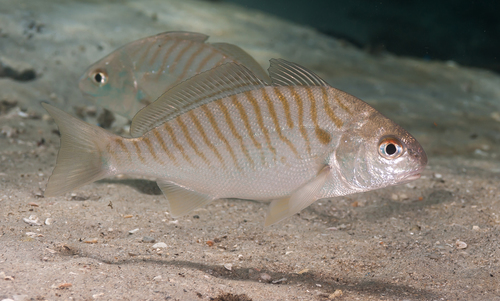
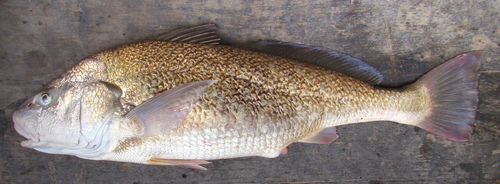
Aplodinotus grunniens Rafinesque, 1819, commonly known as freshwater drum, typically weighs 2.3–6.8 kg (5–15 lb). The world record specimen, caught at Nickajack Lake in Tennessee, weighed 24.7 kg (54 lb 8 oz). Most individuals are gray or silvery, though some populations — most notably that of Lake Erie — may appear more bronze or brown. This is a deep-bodied fish with a divided dorsal fin made up of 10 spines and approximately 30 rays. Its pectoral fins are elongated and pointed, its lateral line extends into the caudal fin, and the caudal fin has a rounded or pointed margin. Like other sciaenids, the eye of the freshwater drum contains a tapetum lucidum within the retinal pigmented epithelium. In other sciaenids, this structure is known to hold packed lipid spherules that give it reflective properties. The fish has extensive upper and lower sets of pharyngeal tooth pads: cardiform and villiform teeth are gradually replaced by molariform teeth as the fish grows larger. Freshwater drum is the only member of its family native to North America that lives exclusively in freshwater; other exclusively freshwater sciaenid genera occur in South America (Pachypops, Pachyurus, Petilipinnis, Plagioscion) and Asia (Boesemania). Its distribution range extends as far north as Hudson Bay, as far south as Guatemala, as far east as the eastern Appalachians, and as far west as Texas, Kansas, and Oklahoma, making it one of the most widely distributed fish species in North America. Freshwater drum prefer clear water, though they can tolerate turbid, murky water. They also favor clean sand and gravel bottom substrates. Their diet is generally benthic, consisting mainly of macroinvertebrates (aquatic insect larvae and bivalve mussels), plus small fish in some ecosystems. The species shows clear seasonal dietary differences: in April and May, around 50 percent of its diet is made up of dipterans, while from August to November, fish (primarily young-of-the-year gizzard shad) make up 52 to 94 percent of its diet. Other common food items include mollusks and crayfish. Freshwater drum competes with multiple other species. In early life stages in Lake Erie, it competes with yellow perch, trout-perch, and emerald shiner. As adults, it competes with yellow perch and silver chub in deep water, and with black bass in shoal areas. Predators of freshwater drum include humans and other fish. During the fish's first year of life, it acts as forage for many predatory fish species, including smallmouth bass, walleye, and other piscivores. After the first year, humans are the primary predator of freshwater drum. The species is an important commercial catch on the Mississippi River, but makes up only a small portion of commercial fishing catches in most other regions. Consistent with other sciaenids, freshwater drum are strongly nocturnal, so most catches from both angling and sampling happen at night. While commercial fisheries exist for this species, market prices are typically quite low, so most harvested freshwater drum are caught as bycatch when targeting higher-value species. Research has been conducted on the impact of freshwater drum on invasive zebra mussels in northern lakes and rivers. Freshwater drum will eat zebra mussels once they reach 25 cm (9.8 in) in length; fish under 35 cm (14 in) only eat small mussels and reject larger ones. Fish larger than 35 cm (14 in) are far less selective and consume zebra mussels in proportion to their local availability. Larger fish are not limited by their ability to crush mussels, but are limited by the size of mussel clumps they can remove. Freshwater drum feeding on zebra mussels causes high individual mussel mortality, but this is not enough to alter the invasive mussels' spread or control their population.