About Apios americana Medik.
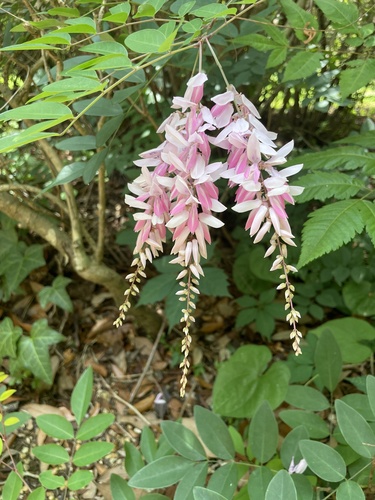
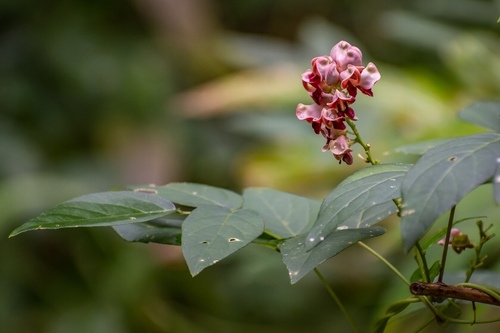
Apios americana Medik., commonly known as American groundnut, is a vine that can reach 1–6 metres (3+1⁄2–19+1⁄2 feet) in length. It produces pinnate leaves 8–15 centimetres (3–6 inches) long, each with 5–7 leaflets. Its flowers are typically pink, purple, or red-brown, and form dense racemes 7.5–13 cm (3–5 in) long. The fruit is a legume pod 5–13 cm (2–5 in) long. Botanically, the edible structures of this species are rhizomatous stems called tubers, not true roots. The natural range of Apios americana Medik. extends from southern Canada (including Ontario, Quebec, and New Brunswick) south to Florida, and west to the Colorado border. It grows in tidal and non-tidal marshes, bottomland forests, wet thickets, and along streambanks. Ecologically, this species acts as a larval host for the butterfly Epargyreus clarus. The only confirmed pollinator of Apios americana Medik. is leafcutting bees from the family Megachilidae, though it has been speculated that flies may also pollinate the plant. Studies conducted on rats indicate that raw tubers of this plant should not be consumed, as they contain harmful protease inhibitors that are broken down and rendered inactive by cooking. Both the tubers and seeds of Apios americana Medik. can be cooked and eaten: tubers are prepared and eaten similarly to potatoes, while seeds are prepared and eaten similarly to peas.