About Aphonopelma chalcodes Chamberlin, 1940
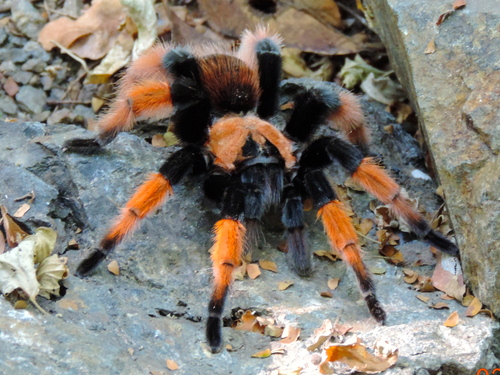
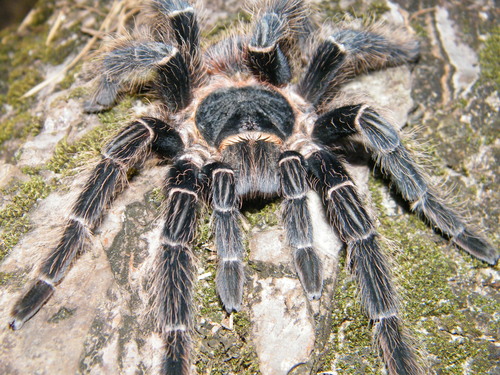
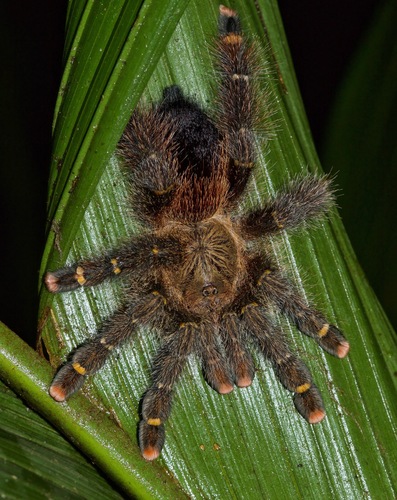
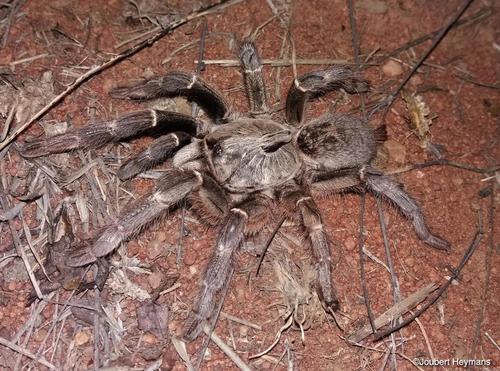
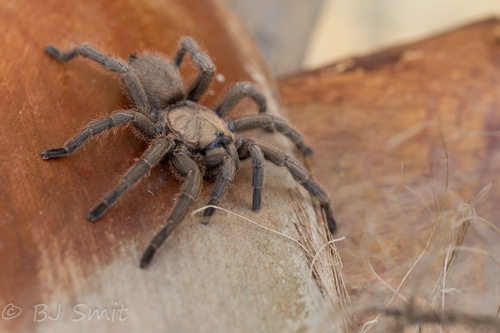
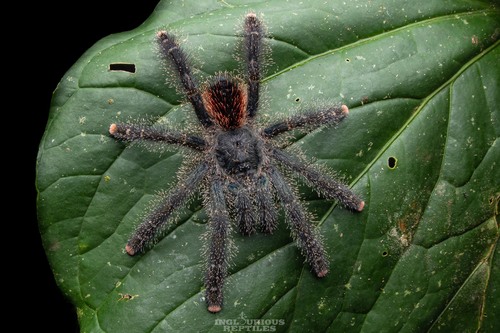
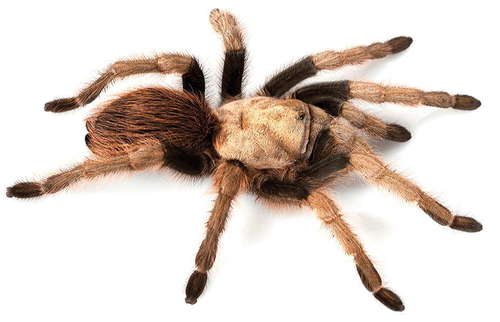
Aphonopelma chalcodes is a large-bodied, burrowing tarantula that ranges from 3 to 5 inches (8 to 13 cm) in total size. Females are usually uniformly tan, reach up to 56 mm in body length, and have a typical life expectancy of 24 to 30 years. Males have black legs, a copper-colored cephalothorax, a reddish abdomen, reach up to 44 mm in body length, and live an average of 5 to 10 years. This species is commonly seen during the summer rainy season in southwestern deserts. Their self-constructed burrows can reach 1 to 2 inches (25 to 51 mm) in diameter, with silk strands stretched across the opening; these burrows are very deep to help the spiders tolerate temperature fluctuations. The silk around the burrow entrance lets the spider detect prey while hiding inside. Spiders will leave their burrows when outdoor temperatures fall between 23°C and 31°C. They dig burrows under stones, or occupy abandoned unused burrows. This species is primarily nocturnal: activity begins when the spider breaks the silk covering over its burrow entrance, triggered by factors like its circadian rhythm, lower light intensity, and cooler surface temperatures. During the night, tarantulas wait for prey at the burrow entrance, and return deep into the burrow at dawn. They are not strictly nocturnal, however, as they can be found in the upper section of the burrow early in the day. A. chalcodes occupies desert soil habitats in the southwestern United States, and is especially common in Arizona and New Mexico. It is adapted to withstand harsh desert weather conditions. This species undergoes late sexual differentiation: all juveniles hatch resembling females, and only develop male traits after several years of growth. Males develop palpal bulbs that store and transfer sperm to the female’s genital opening. Females have abdominal sperm-storage pouches called spermathecae, and retain sperm until they lay fertilized eggs. The average clutch size is 600 eggs, with an average gestation period of six to seven weeks. Multiple lectins (proteins that bind to carbohydrates) have been detected in the serum of this species, and these lectins are able to bind to sialic acid, a molecule with diverse functions including important roles in protein folding, neural development, and metabolism. The biological implications of this binding have not yet been fully investigated. The venom of A. chalcodes contains two neurotoxic compounds named Apc600 and Apc728, which contain the polyamines spermine (involved in cellular metabolism) and 1,3-diaminopropane. These toxins are not well-studied, but they are hypothesized to cause short-term paralysis or immobilization of the spider’s prey. The venom of this species is not highly dangerous to humans; its effect is comparable to a bee sting, and this species is one of the least dangerous tarantulas in the family Theraphosidae.