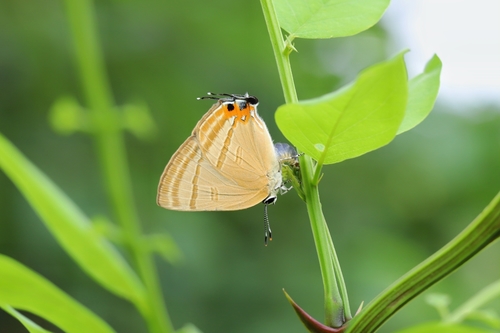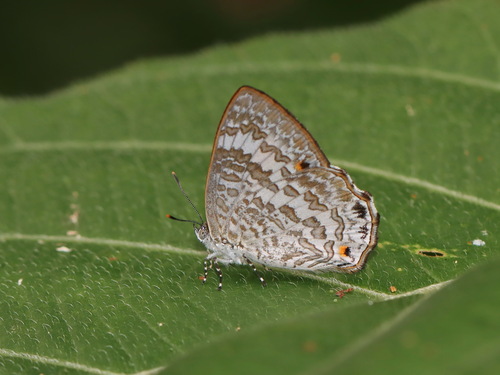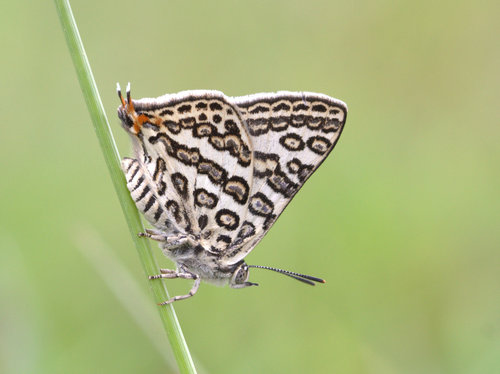
About Aphnaeus lilacinus Moore, 1884
Cigaritis lilacinus, commonly known as the lilac silverline, is a species of lycaenid (blue) butterfly found in Asia. Its distribution range covers India, Myanmar, and northern Thailand. In India, it occurs from Uttarakhand (also called Uttaranchal) and Himachal Pradesh down to southern Karnataka, with single records from Rajasthan and Assam. It has also been recorded in Rawalpindi, Pakistan, and the additional Indian states of Andhra Pradesh, Madhya Pradesh, Punjab, Telangana, Uttar Pradesh, and West Bengal. The only known resident, breeding population of the lilac silverline is located at Hesarghatta Lake in Bengaluru, Karnataka. The lilac silverline has been recorded across a wide variety of habitats. These include protected wildlife reserves such as Daying Ering Wildlife Sanctuary and Kumbhalgarh Wildlife Reserve, a restored institutional campus (the Agastya Campus in Chitoor), and open plains and gram fields in Uttar Pradesh. Except at Hesarghatta Lake, the species has only been observed in very small numbers across all locations, with many observations consisting of just a single individual. While it has been sighted in relatively undisturbed reserves, most sightings occur in areas with ongoing human activities including grazing, agriculture, and regular visits by bird photographers. Caterpillars of the lilac silverline are tended by ants, which protect them from predators and parasitoids. This species is protected under Schedule II of the Indian Wildlife Protection Act. The only identified threat to the species across its range is uncontrolled photographer visits to its Bengaluru breeding habitat: large numbers of vehicles driving indiscriminately across Hesaraghatta Lake appear to be destroying the butterfly's host plant. No other threats have been recognized for this species.