About Apheloria tigana Chamberlin, 1939
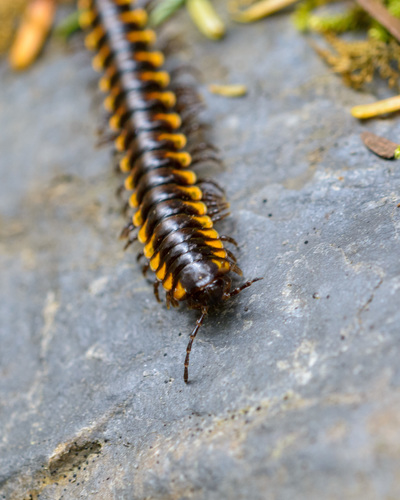
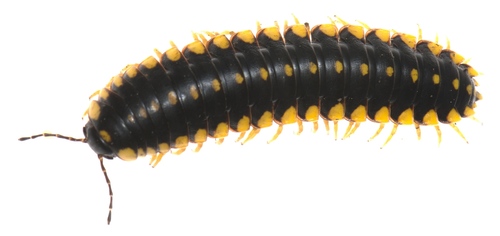
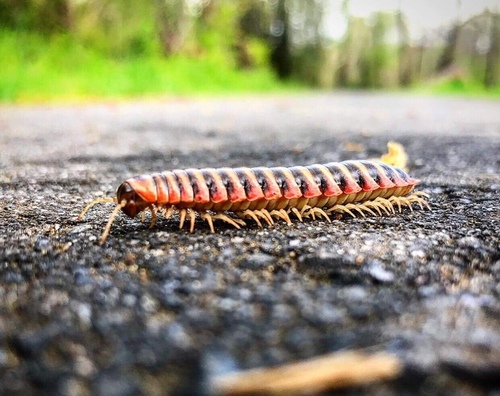
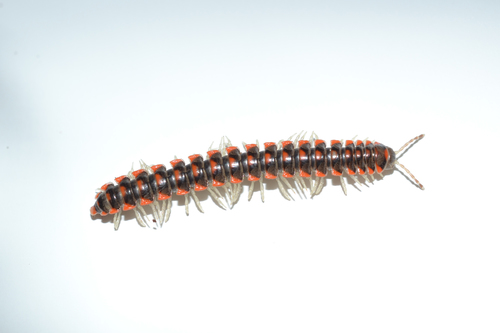
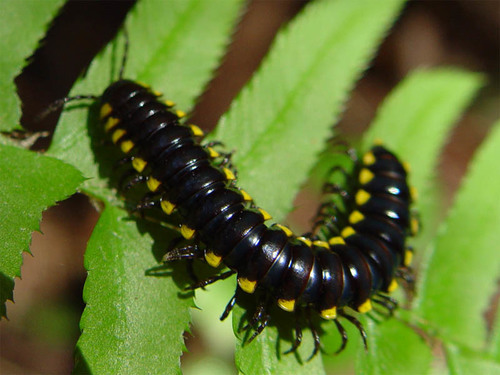
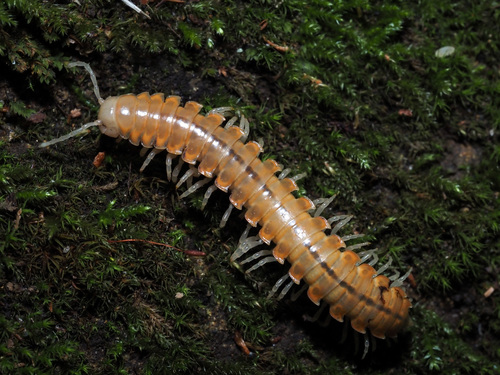
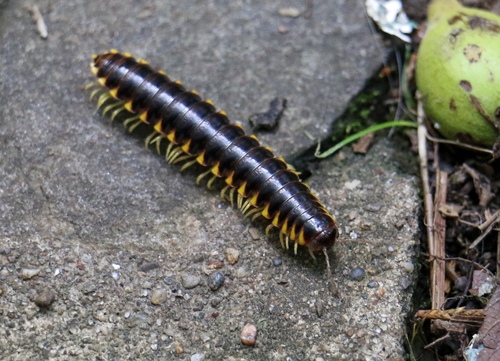
Apheloria tigana, also called the yellow and black flat millipede, was classified as a large, North American flat-backed millipede belonging to the family Xystodesmidae. As a defensive mechanism, this millipede secretes cyanide compounds. These secreted compounds are toxic, and can cause irritation if they are rubbed into the eyes, so experts recommend washing hands after handling these millipedes. The species was characterized by having yellow paranota, which are lateral segmental expansions on the dorsa; a yellow mid-dorsal spot on the anterior margin of the collum, or first segment; and yellow mid-dorsal spots on the last three to five segments. South of the Cape Fear River basin, there is an undescribed Apheloria species that has yellow middorsal marks on most of its segments. Originally, A. tigana was recorded as occurring from coastal southeastern North Carolina to the Blue Ridge Mountains in Franklin and Floyd counties, Virginia. Though A. tigana was once accepted as a valid species, authorities classified it as a junior synonym of another Apheloria species, A. virginiensis, in 2017 based on millipede morphology. In 2025, a molecular phylogenetic analysis of the genus Apheloria confirmed this proposed synonymy, finding that A. tigana is the same species as A. virginiensis.