About Aphelocoma ultramarina (Bonaparte, 1825)
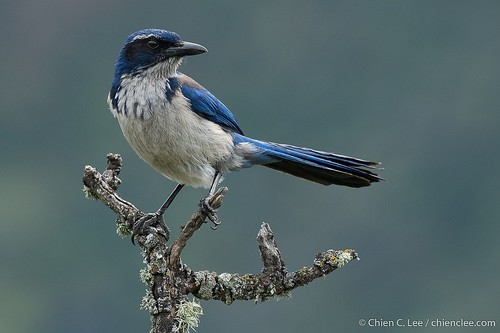
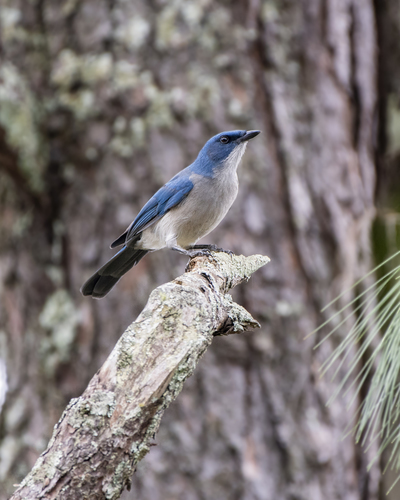
The Transvolcanic jay (scientific name Aphelocoma ultramarina, first described by Bonaparte in 1825) measures 28 to 32 cm (11 to 13 inches) in length, and weighs 120 to 150 g (4.2 to 5.3 ounces). Males and females have identical plumage, though males are slightly larger than females. Adults of the nominate subspecies have a mostly dark bluish head with black lores and a pale grayish throat. Their upperparts are bluish purple, and their underparts are dingy grayish white, which is lightest on the undertail coverts. The subspecies A. u. colimae is slightly smaller than the nominate subspecies, paler overall, and has less purple coloring on its upperparts. Both subspecies have brown irises, a heavy, pointed black bill, and black legs and feet. Juvenile Transvolcanic jays have mouse-gray upperparts with a faint blue wash, a gray to blue-green tail, grayer wings with dark brown feather tips, and a pale bill. The Transvolcanic jay gets its common name from its range, which is located in the Transvolcanic Belt of south-central Mexico. Of the two recognized subspecies, A. u. colimae occurs further west and has a smaller range, found only in Jalisco and northeastern Colima. The nominate subspecies ranges from southeastern Jalisco and northwestern Michoacán eastward to Veracruz. This species inhabits montane pine and pine-oak forest in the subtropical zone, and occurs at elevations between roughly 900 and 3,400 m (3,000 and 11,200 ft).