About Aphaenogaster senilis Mayr, 1853
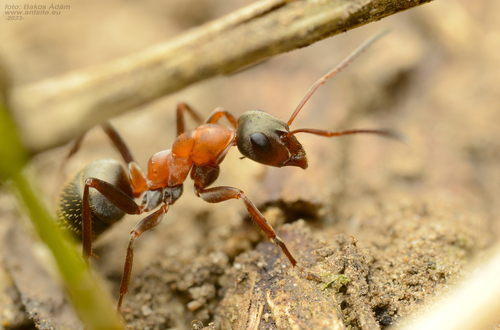
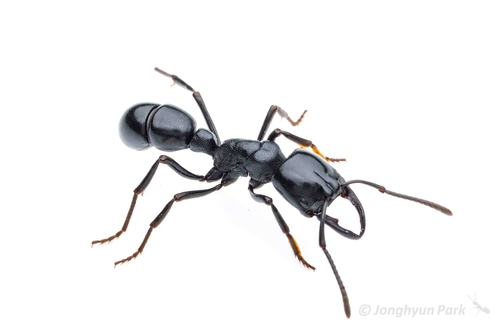
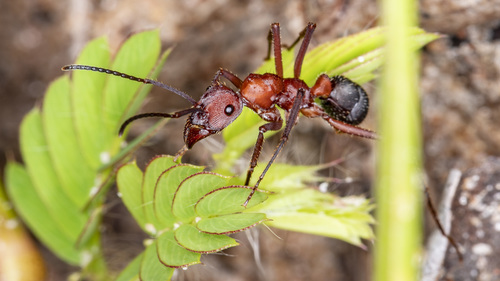
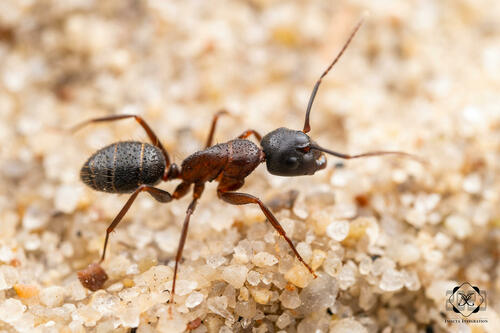
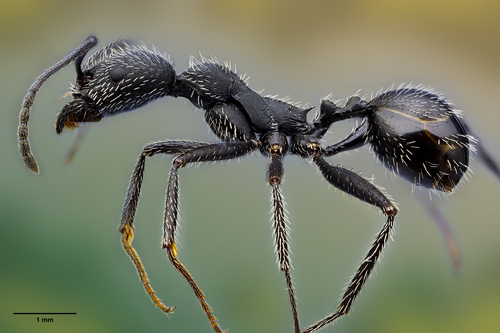
Aphaenogaster senilis Mayr, 1853 is a monogynous, generally monomorphic ant species, with adult body lengths between 5 and 7 mm (0.20 to 0.28 in). Individuals are black with a dull appearance, and while workers are classified as monomorphic, some minor size variation can still be observed across the worker caste. Fine light-colored hairs cover the entire body, and the thorax bears a pair of short spines. Queens of this species have vestigial, non-functional wings that cannot be used for flight. This is an omnivorous diurnal species, and pieces of arthropods, seeds, snail shells, small animal bones, and garbage are frequently found near its anthills. The ants are aggressive, inactive during the coldest months of the year, and are typically found in shady areas during warmer months. Aphaenogaster senilis is native to the western Mediterranean, with a range extending from the southern Mediterranean coast of France and Sardinia south to the Canary Islands and Morocco. It is especially abundant across most of the Iberian Peninsula, excluding the northern region of the peninsula, and has been introduced to the Azores. It can inhabit both humid undergrowth areas, and heavily human-altered environments such as urban car parks and urban gardens.