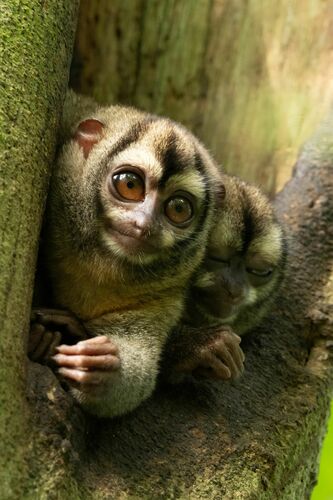
About Aotus griseimembra Elliot, 1912
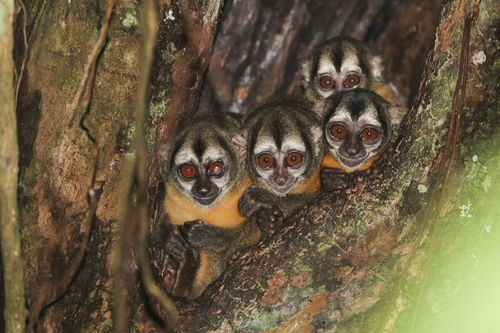
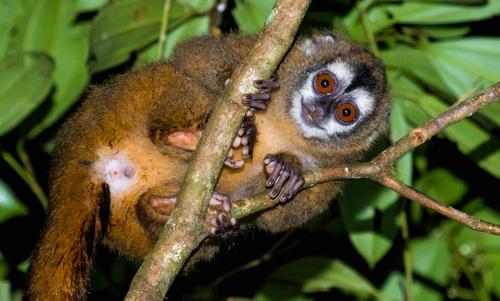
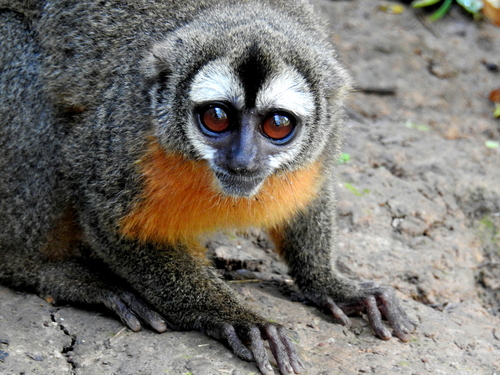
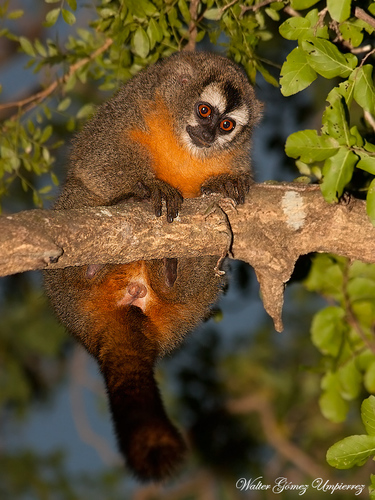
The gray-handed night monkey (Aotus griseimembra) is a night monkey species from the family Aotidae that was formerly classified as a subspecies of the gray-bellied night monkey. Its exact taxonomic classification remains uncertain: some authors treat it as a subspecies of the gray-bellied night monkey (A. lemurinus), while others recognize it as a separate species, A. griseimembra. It is native to parts of Colombia and Venezuela. In Colombia, its range covers the northern part of the country, extending from the Sinú River (or potentially further east) to the Venezuelan border. This range includes the Sierra Nevada de Santa Marta, as well as the valleys of the Magdalena River, Cauca River, and Sao Jorge River. In Venezuela, the gray-handed night monkey occurs west and south of Maracaibo. It is a relatively small monkey: males weigh approximately 1009 grams (35.6 oz), while females weigh around 923 grams (32.6 oz). It has short, dense fur. Its back fur ranges in color from grayish brown to reddish brown, and its belly is yellowish. The hair on the backs of its hands and feet is light coffee-colored with darker tips, which is a key feature that distinguishes it from other subspecies of A. lemurinus. The gray-handed night monkey is arboreal and nocturnal. It, along with all other members of the genus Aotus, belongs to the only group of nocturnal monkeys. Laboratory experiments have shown that the species has lower activity levels even when exposed to light levels matching a full moon. It can be found in multiple forest types, including secondary forest and coffee plantations, though one study noted it prefers highly diverse forests. It lives in small groups of 2 to 6 monkeys, most commonly 2 to 4 individuals. Groups typically consist of an adult pair, one infant, and several juveniles and/or subadults. Groups are territorial, and their home ranges only overlap slightly. Different studies have recorded very different population densities: one found 1.5 monkeys per square kilometer, while another found 150 monkeys per square kilometer in a forest remnant that served as a refuge, which likely explains the extreme high density recorded there. Like other night monkeys, the gray-handed night monkey is one of the few monogamous monkey species. Monogamous pairs usually produce a single infant each year, though twins are occasionally born. The gestation period lasts approximately 133 days. The father carries the infant starting when the infant is one to two days old, only passing it to the mother for nursing. The average interbirth interval for mothers is 271 days. The International Union for Conservation of Nature (IUCN) lists the gray-handed night monkey as Vulnerable. It is thought to be particularly threatened in Colombia, due in part to habitat loss, and also because many individuals were captured in the 1960s and 1970s for use in malaria research.