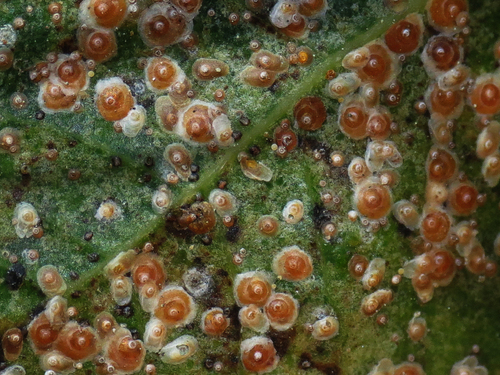
About Aonidiella aurantii (Maskell, 1879)
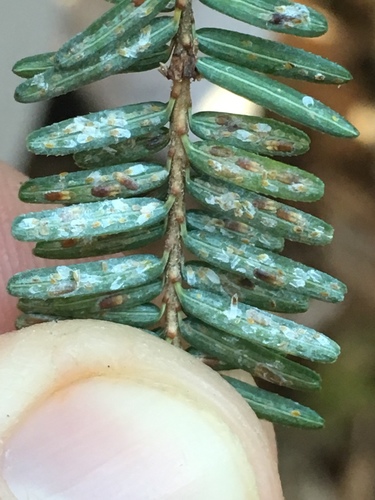
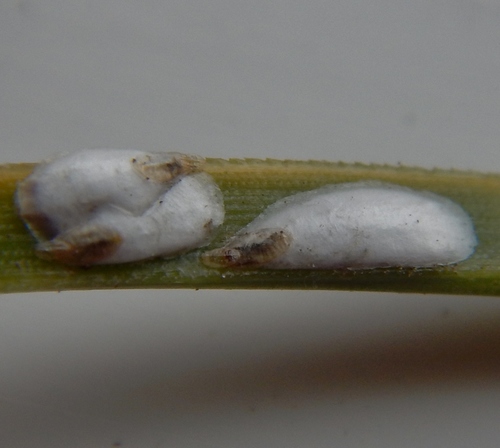
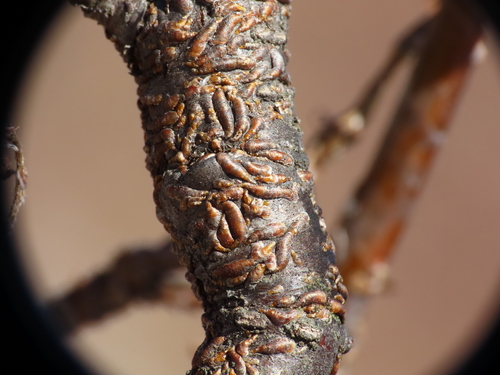
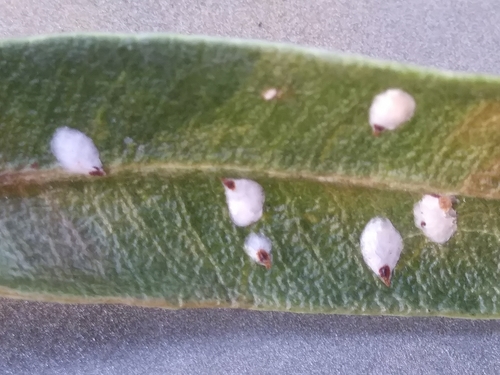
This species is Aonidiella aurantii (Maskell, 1879), a scale insect. The female has a circular, brownish-red cover approximately 1.8 millimetres in diameter. The cover is firmly attached to the surface when the female is moulting or reproducing. The insect body can be seen through the cover; it is oval when young and becomes kidney-shaped at the last instar stage. Females molt twice, exuding the material that forms their cover and creating a concentric ring in the center of the cover with each molt. A characteristic whitish coating on the underside of the female's body separates it from its host plant. Females are viviparous, meaning eggs hatch inside the mother's body. A single female produces a total of 100 to 150 live offspring, with two to three nymphs (also called crawlers) emerging from under the mother's cover each day. Newly hatched nymphs are yellowish, and they search for a suitable spot to settle in depressions on twigs, leaves, or fruits. After settling, they begin feeding by inserting their mouthparts deep into plant tissue to suck sap from parenchyma cells. The saliva they inject into the plant is very toxic to the leaves, twigs, branches, and fruit of citrus trees. Nymphs quickly develop their own round, waxy covers. Male scale insects develop in a similar way until after their second molt. After this point, males become oval, darker than females, around one millimetre in diameter, and have an eccentric cover. The adult male is a small, yellowish two-winged insect that emerges from under its elongated cover after four molts. It lives for approximately 6 hours, and its only function is to mate. It finds unmated females by detecting the pheromones that females release.