About Antrostomus rufus (Boddaert, 1783)
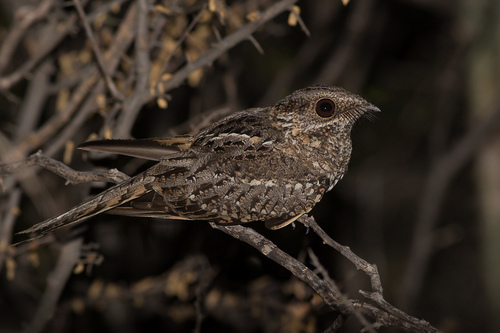
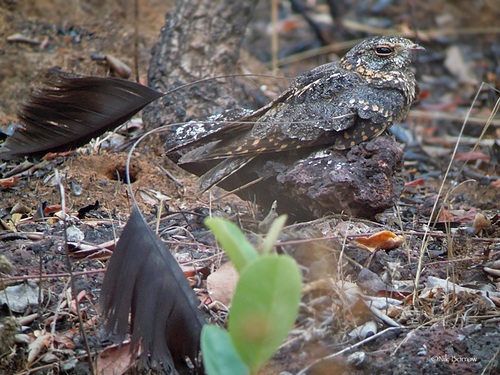
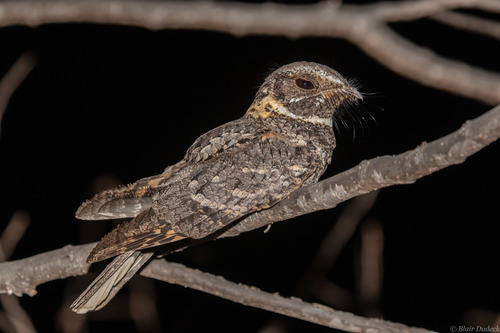
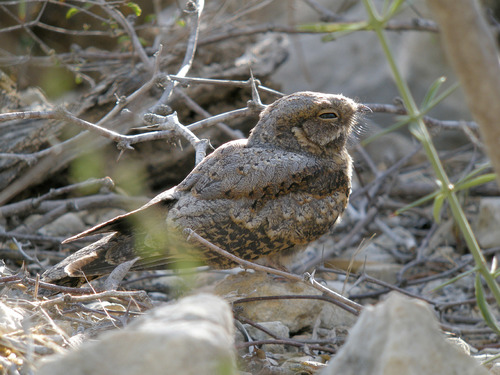
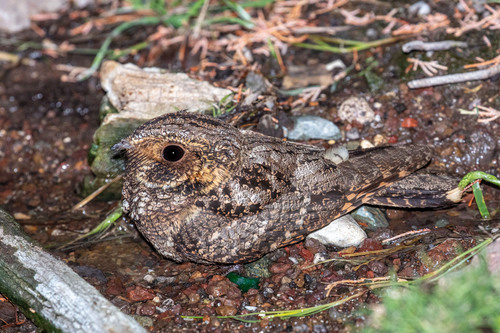
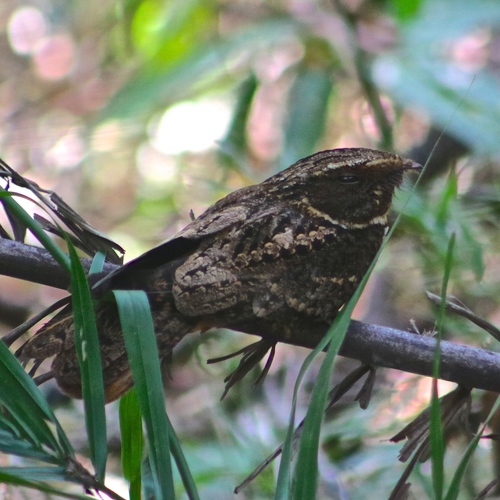
The rufous nightjar, Antrostomus rufus (Boddaert, 1783), measures 25 to 30 cm (9.8 to 12 in) in total length. Males weigh 88 to 98 g (3.1 to 3.5 oz), and females weigh 89 to 98 g (3.1 to 3.5 oz). Its plumage is almost entirely reddish brown, with a buff collar running along the sides and back of the neck, and a white band below the throat. Dark brown streaks mark the upperparts, the wings are spotted and barred with dark brown, and the underparts are speckled with dark brown and white. Unlike the wings of many other species in its family, the rufous nightjar's wings have no white markings. Males have a large white spot at the tip of the outer three pairs of tail feathers, while females have a pale buff tip on these feathers. Subspecies vary slightly in the intensity of their different colors, and in the size and extent of their spots and speckles. The subspecies A. r. saltarius is noticeably grayer than the other subspecies. The rufous nightjar has a highly discontinuous distribution, with the range of each subspecies as follows: A. r. minimus is found in southern Costa Rica, Panama, and east along the Caribbean coasts of Colombia and Venezuela to Trinidad; A. r. rufus is found discontinuously in eastern Venezuela, Guyana, Suriname, and central Brazil; A. r. otiosus is found on St. Lucia in the Lesser Antilles; A. r. rutilus is found in southeastern Bolivia, central Brazil, and south to Paraguay and northeastern Argentina; A. r. saltarius is found in southern Bolivia and northwestern Argentina. The South American Classification Committee of the American Ornithological Society (AOS) also lists the species as present in Ecuador and Peru, but does not note which subspecies occur there. The endemic St. Lucia subspecies A. r. otiosus inhabits dry scrub. Other subspecies inhabit a wide variety of landscapes, from scrublands to primary and secondary forest, ranging in humidity from the dry Gran Chaco to the humid Amazon basin.