About Antrostomus ridgwayi Nelson, 1897
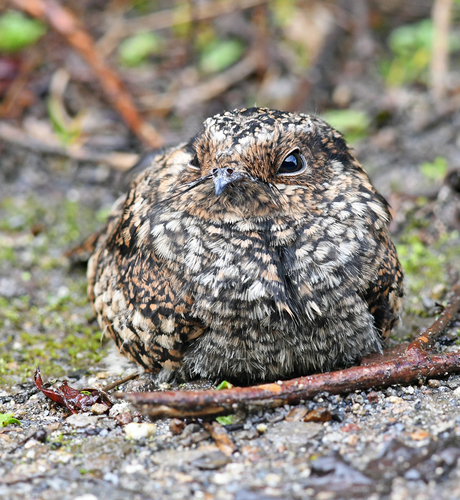
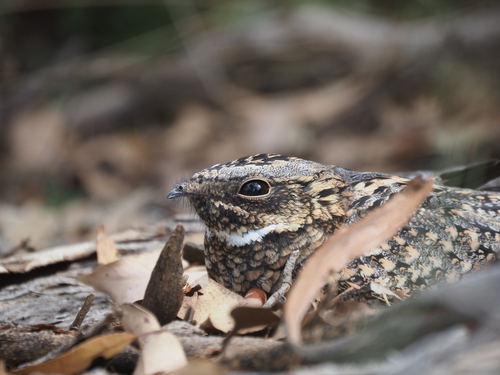
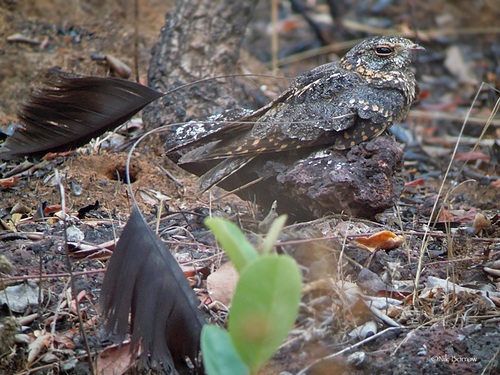
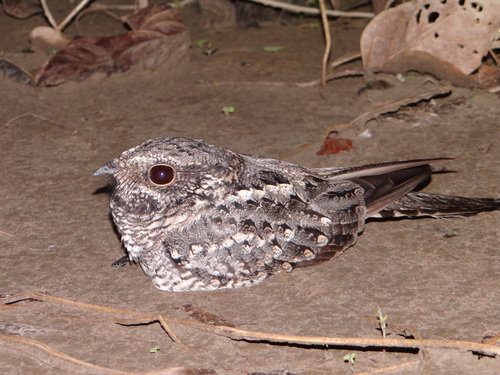
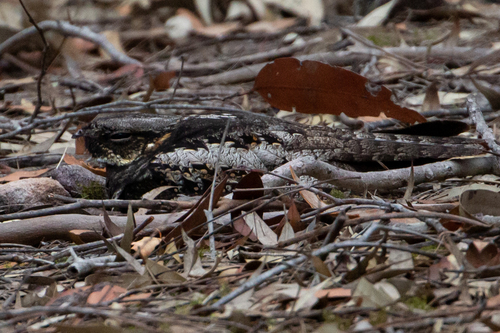
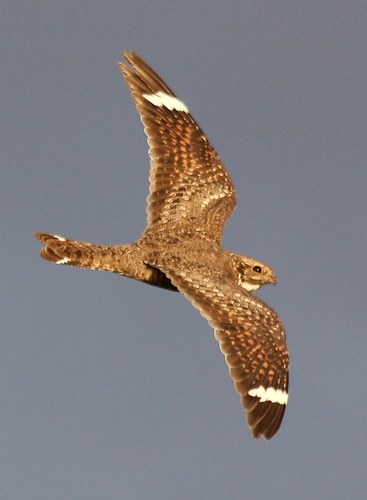
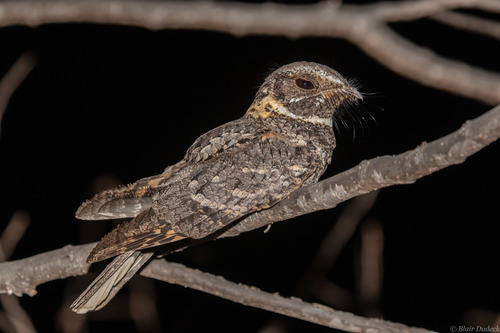
The buff-collared nightjar (Antrostomus ridgwayi Nelson, 1897) measures 22 to 23 cm (8.7 to 9.1 in) in total length. Individuals of the nominate subspecies A. r. ridgwayi weigh between 39.8 and 61.0 g (1.4 to 2.2 oz); a single recorded male of the subspecies A. r. troglodytes weighed 51.0 g (1.8 oz). The species' head, upperparts, and tail are brownish gray, marked with gray, cream, and rust-colored patterning. It has a bright cinnamon buff collar on the hindneck and a narrow buffy white band below the throat. Its wings are brownish black with cinnamon buff bands. The breast is brownish gray, and the belly is tan patterned with dark brown bars. The tips of the two outermost tail feathers have extensive white coloring in males, and only a small amount of buff coloring in females. The nominate subspecies of buff-collared nightjar breeds from southeastern Arizona south through central Mexico to Morelos, and migrates away from this breeding area during winter. It is a year-round resident in western Mexico, ranging from southern Sonora to Chiapas. A. r. troglodytes is a permanent resident of Guatemala, Honduras, and possibly Nicaragua. Buff-collared nightjars inhabit a range of landscapes, including thickly vegetated ravines and canyons in the arid northern part of their range, and thorn scrub and moister pine-oak woodlands in the southern portion. In the United States, the species is typically found between 933 and 1,400 m (3,100 and 4,600 ft) in elevation. In Mexico, its nesting occurs at elevations from sea level up to 3,000 m (9,800 ft), and in Honduras it occurs between 900 and 1,650 m (3,000 and 5,400 ft).