About Antrodiaetus pacificus (Simon, 1884)
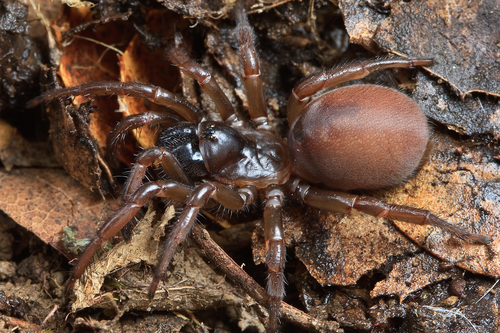
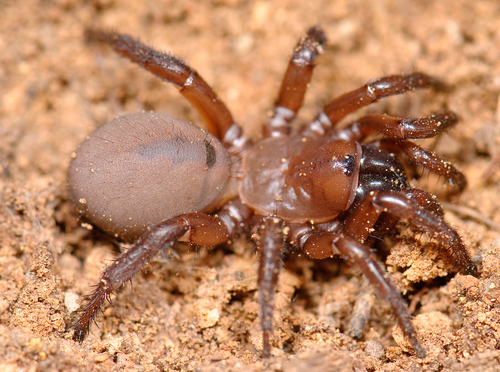
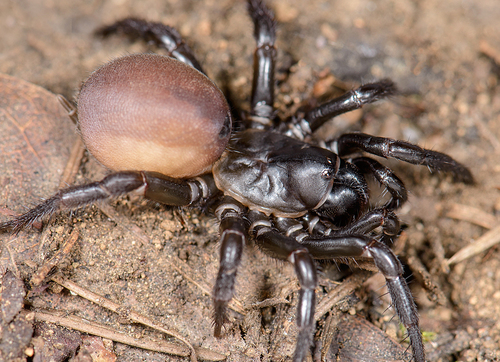
Antrodiaetus pacificus is a species of mygalomorph spider native to the Pacific Northwest of North America. This species was first described by French arachnologist Eugène Louis Simon in 1884, originally published under the name Brachybothrium pacificum. The genus name combines two Greek roots: "antron" (αντρον), meaning cave, and "diaita" (διαιτα), meaning way of life or dwelling, leading to the overall meaning "living in caves". The specific epithet refers to the species' geographic range along the Pacific coast of North America, stretching from San Francisco Bay to Alaska. It is the northernmost species of mygalomorph spider found in North America. Both male and female Antrodiaetus pacificus have a dark brown to black carapace, and two to three sclerotized patches on the abdomen. Females reach roughly 13 millimeters (0.51 inches) in total length, while males reach approximately 11 millimeters (0.43 inches) in length. While this spider is active year-round, most of its activity takes place between late July and early September. Mating season occurs between early June and late November, which is the peak of its activity. These spiders inhabit cool, damp forests, where they build burrows in soft substrates, most commonly sand, moss, or decaying wood. They use these burrows to brood their eggs and to overwinter. During daylight hours, they keep the entrance to their burrow closed. After sunset, when conditions are sufficiently dark, they open the burrow entrance and wait there for prey to pass by. Their predominant prey type is beetles.