About Antipterna trilicella Meyrick, 1885
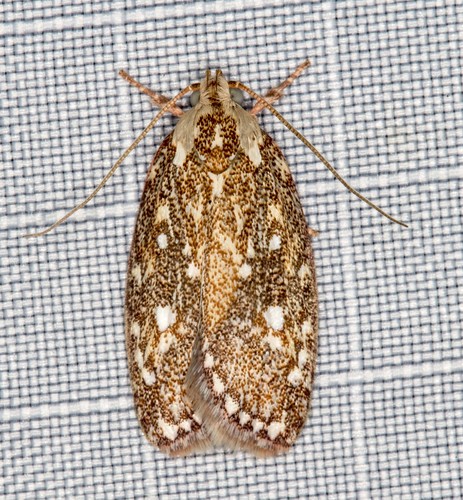
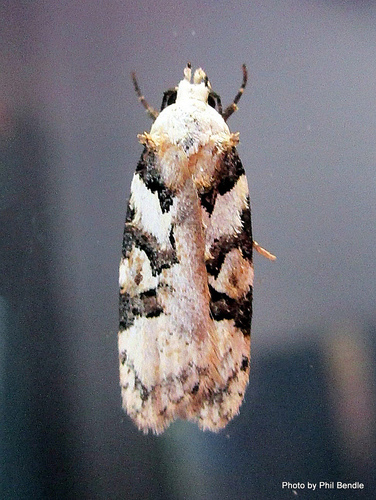
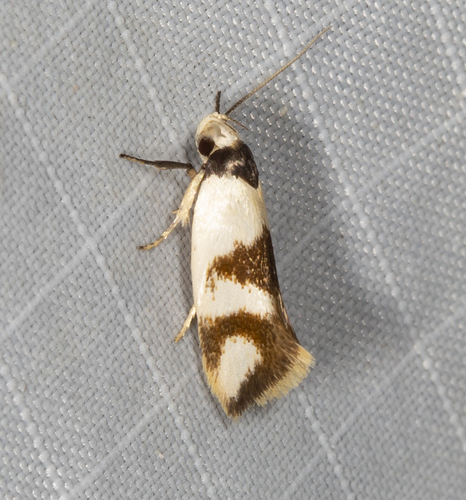
This species is Antipterna trilicella, first described by Meyrick in 1885. The original description by Meyrick covers both male and female adult specimens, which have a body size range of 14 to 18 mm. The head and palpi are white; the lower front half of the second palpal joint is suffused with dark grey, and the terminal palpal joint is three-quarters the length of the second. Antennae are whitish, with ciliations measuring 4. The thorax is dark fuscous. The abdomen is ochreous-whitish. Legs are ochreous-whitish; the anterior pair of legs are dark fuscous, and the middle pair are suffused with fuscous. Forewings are elongate, with a moderately arched costa, a round-pointed apex, a sinuate, very oblique hindmargin. Forewings are white, with a slight ochreous tinge, and feature ochreous-brown markings: an erect triangular spot sits on the middle of the inner margin, extending more than halfway across the wing, and its apex is sometimes produced obliquely forwards. A moderate inwards-curved fascia runs from two-thirds of the costa to the anal angle. An irregular line follows the hindmargin. Forewing cilia are ochreous-whitish, with the basal half colored ochreous-fuscous. Hindwings are broad-lanceolate, moderately sharply pointed, with veins 3 and 4 originating from the same point. Hindwings are light grey, with pale whitish-ochreous cilia that have a greyish tinge at the base around the apex. Four specimens have been collected from Sydney and Blackheath (3500 feet elevation), New South Wales, in the months of September, December, and January.