About Anticarsia gemmatalis Hübner, 1818
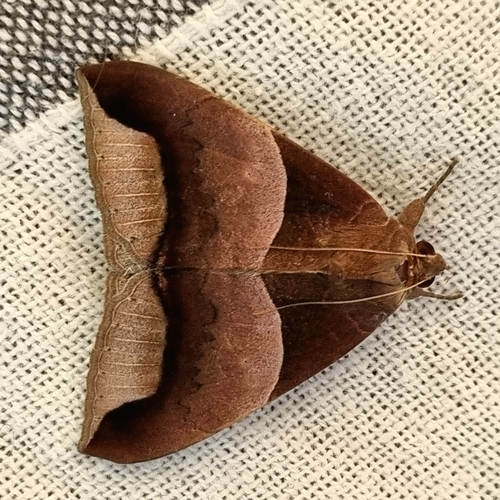
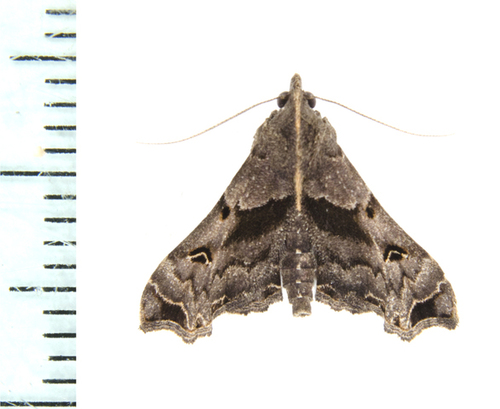
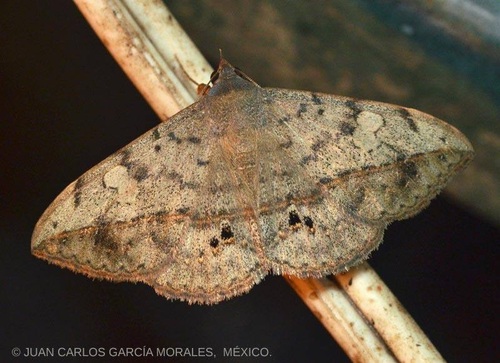
Anticarsia gemmatalis, commonly known as the velvetbean caterpillar and velvetbean moth, is a tropical species of moth and caterpillar that migrates north each season. It is commonly found in the Gulf states of the United States, and can range as far north as Wisconsin. Adult moths have grayish brown wings marked with crossing brown or black zigzag lines. Caterpillars are black or green, with narrow lighter stripes running along their back and sides. When disturbed, caterpillars spit out a brownish substance, leap into the air, and wriggle vigorously. This species feeds on velvet beans, peanuts, soybeans, cotton, kudzu, alfalfa, cowpeas, horse beans, snap beans, lima beans, and coffeeweeds. In experimental observations across three generations, egg viability of Anticarsia gemmatalis was highest at 25 °C (77 °F), and no adaptation to higher temperatures was observed. This suggests that global warming will reduce damage to soybeans caused by A. gemmatalis in tropical areas that are already around 25 °C, while increasing damage to soybeans in areas that are currently cooler than this temperature, resulting in only a shift of the geographic area affected by this species.