About Anthus trivialis (Linnaeus, 1758)
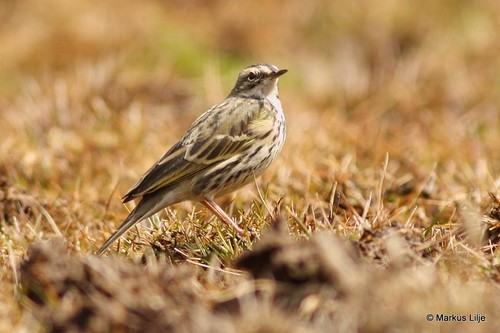
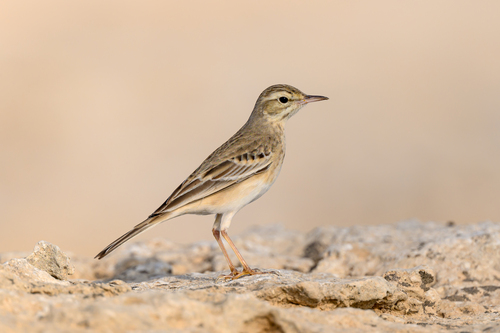
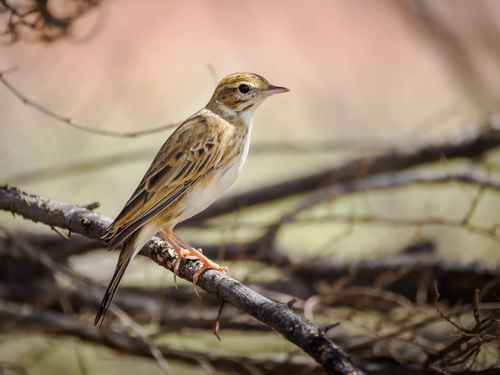
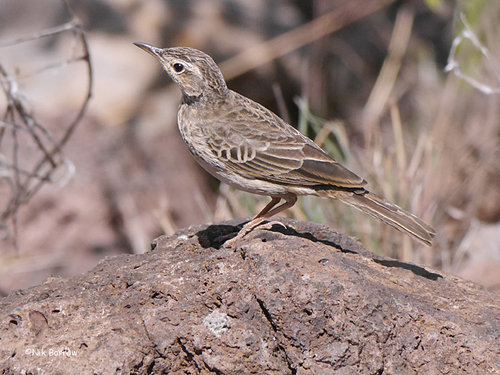
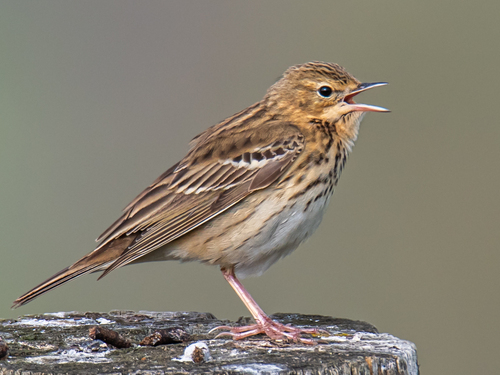
This is a small pipit species that resembles the meadow pipit. It has a plain, unremarkable appearance: it is brown with striping on its upperparts, and has black markings on its white underparts, with a buff-colored breast. It can be told apart from the slightly smaller meadow pipit by its heavier bill and the greater contrast between its buff breast and white belly. Compared to related pipits, tree pipits are more likely to perch in trees. Its call is a strong 'spek', which differs from the weak call of the meadow pipit. Its song flight is highly distinctive: the bird rises a short distance up from a tree, then parachutes down on stiff wings, with its song becoming more drawn out as the flight ends. For breeding, the tree pipit occupies habitats that include some tree cover, such as lowland heath and coppice. It is most common in open woodland that borders moorland, or in open-structured oak woodland, which requires heavy thinning to create an open, gappy layout. It prefers medium-sized trees with a low canopy, growing alongside low scrub and brambles under 2 metres tall, which keeps horizontal visibility relatively good. It favors a mosaic of grass and bracken, and avoids heavily grazed short turf, so it prefers areas with light to moderate grazing. In its annual cycle, the tree pipit lives in sub-Saharan Africa from mid-September to mid-April. It migrates and arrives in breeding areas such as the United Kingdom between mid-April and early May. Its breeding season runs from early May to August, during which it produces two broods. It then migrates back to sub-Saharan Africa between August and mid-September.