About Anthus pallidiventris Sharpe, 1885
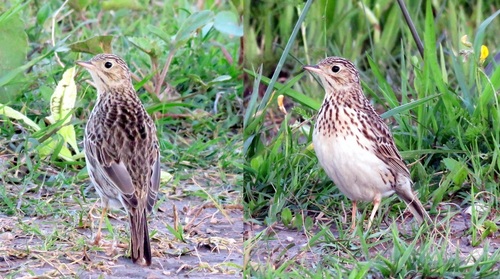
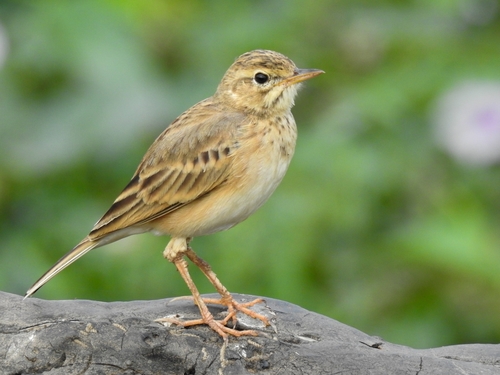
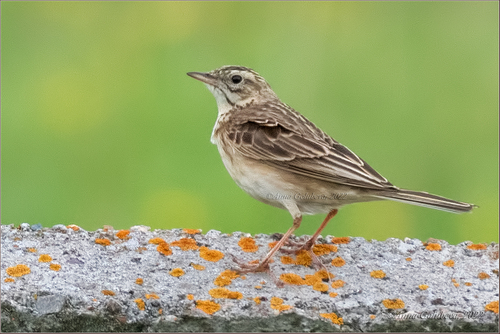
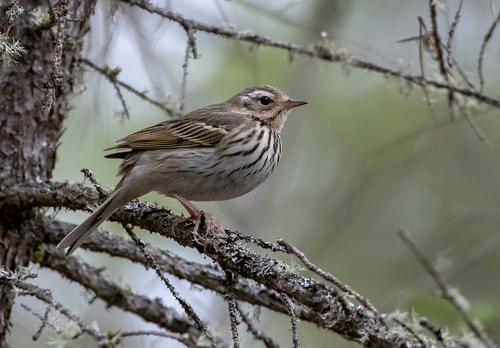
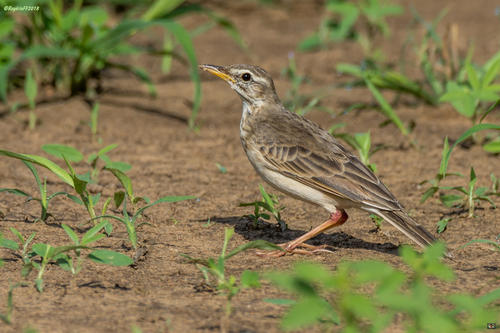
This species, commonly called the long-legged pipit, is appropriately named for its stilt-like legs and tall body. Its beak is also relatively long. It has distinctive olive-gray plumage, with a prominent moustache stripe, very little streaking on the chest, and an unstreaked back. Within its range, it is the only pipit species present during summer, but it may mix with other pipit species in winter. Even when mixing with other species, its long legs, minimal chest markings, and unstreaked back remain key identifying features. Its song is a repetitive "tit-tidii", and its calls include a "psip" contact call, a harsh "ptic-ptic" call, and a "poui-titit" flight call. The long-legged pipit occurs in natural grasslands, and can also be found in pastures, farmland, airfields, and bare areas around villages and towns. Its diet is made up of small grasshoppers and other flying insects, and also includes spiders. It forages on the ground, but can also jump up to catch flying insects. The pipit walks and runs with an upright stance, and constantly wags its tail up and down.