About Anthus leucophrys Vieillot, 1818
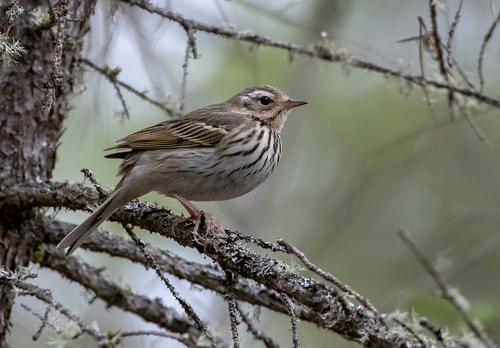
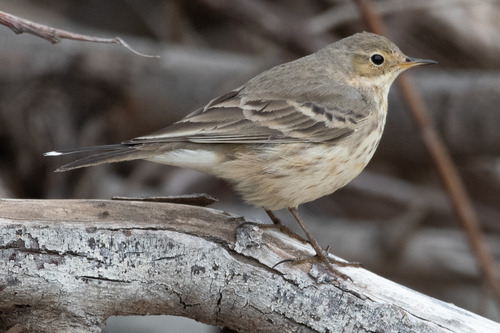
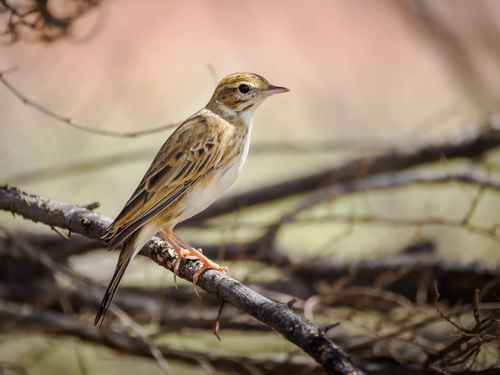
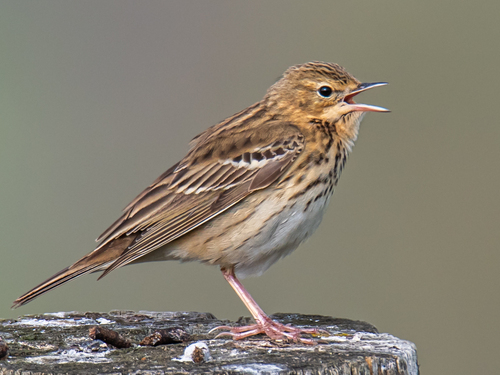
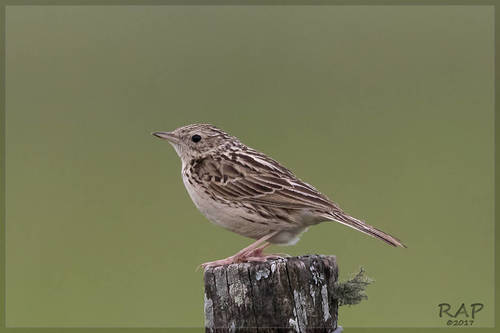
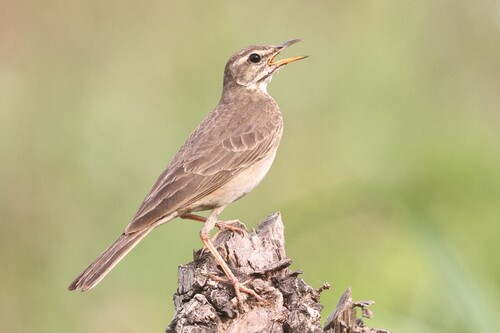
The plain-backed pipit, also called the plain pipit (scientific name Anthus leucophrys Vieillot, 1818), is a medium-sized passerine bird. It is a resident breeding species found across Africa south of the Sahara Desert, where it inhabits open environments, particularly short grassland and cultivated land. This species builds a cup-shaped nest on the ground, and typically lays three eggs per clutch. Like other pipits, the plain-backed pipit feeds exclusively on insects. It is a large pipit, measuring 17 cm in length, and is otherwise an undistinguished-looking species. It has faintly streaked grey-brown plumage on its upperparts, and pale underparts with light streaking on the breast. It has a prominent white supercilium (stripe above the eye), dark moustachial stripes, long legs, a long tail, and a long dark bill. Males and females have similar plumage, while juveniles have warmer brown upperparts. Care is required to tell plain-backed pipits apart from wintering tawny pipits (Anthus campestris). The plain-backed pipit is sturdier and darker than the tawny pipit, and holds itself in a more upright posture. The clearest distinguishing feature is likely the plain-backed pipit's characteristic "ssissik" call, which is quite different from the tawny pipit's "tchilip" call.