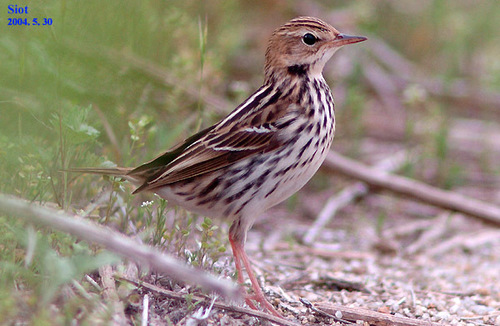
About Anthus gustavi Swinhoe, 1863
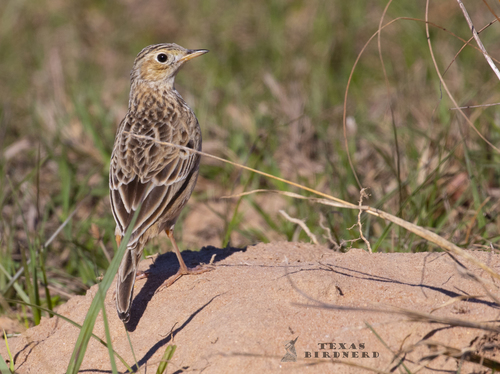
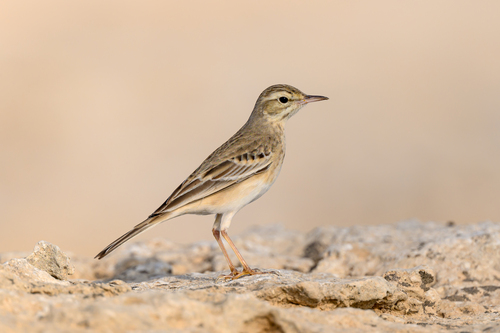
Anthus gustavi is a small pipit whose plumage is somewhat similar to that of non-breeding red-throated pipits. It has heavy brown streaks across its upper body, whitish stripes on its mantle, and black markings on a white belly and a buff-colored breast. It can be told apart from red-throated pipits by its heavier bill, whiter mantle stripes, and the visible contrast between its buff breast and white belly.
This species moves through long grass by creeping, and it is reluctant to fly even when it is disturbed. Its call is a distinctive electrical zip. While this call is generally useful for identifying pipits, Anthus gustavi calls far less often than most other pipit species. This infrequent calling, combined with its secretive skulking habits, makes this species very difficult to find and identify outside of its Arctic breeding grounds.
In western Europe, where this species is a rare vagrant, the best location to see Pechora pipit is Fair Isle, Shetland. There is very little cover on this small island, which makes it easier to spot skulking passerines like this pipit. Its breeding habitat consists of damp tundra, open forest, or marshland. It builds its nest on the ground, and lays four or five eggs per clutch. Like its close relatives, it is insectivorous.