About Anthus cinnamomeus Rüppell, 1840
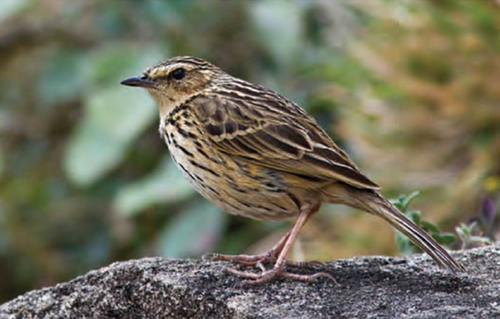
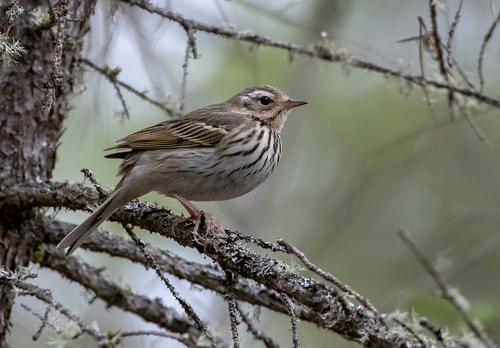
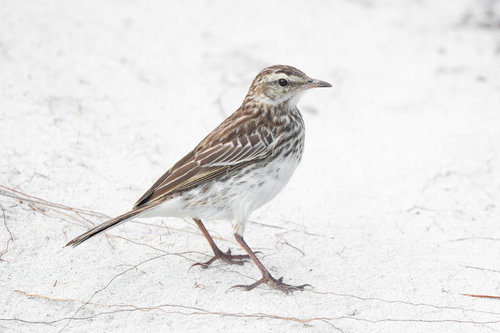
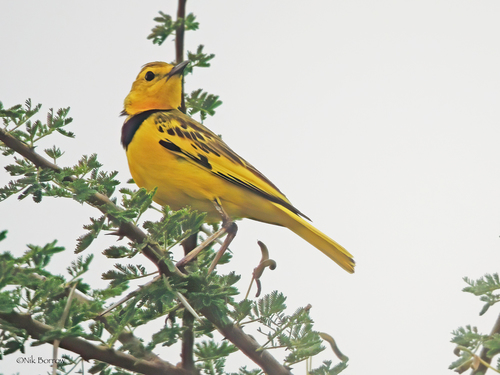
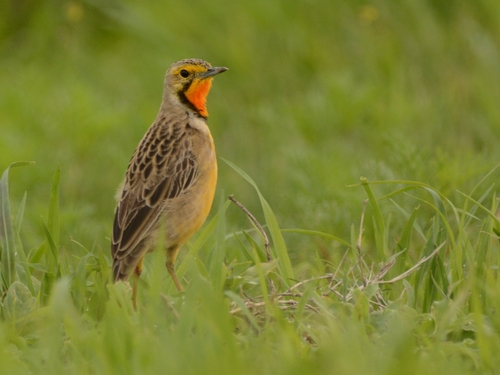
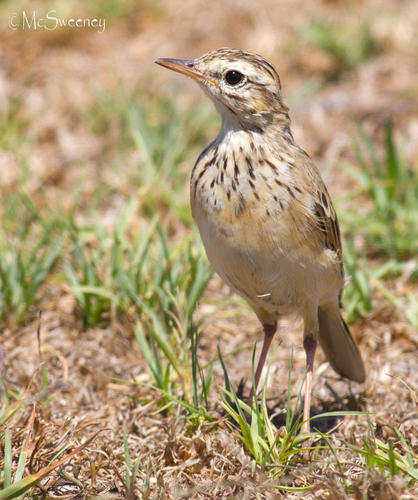
The African pipit, formally Anthus cinnamomeus Rüppell, 1840, is 15 to 17 cm (5.9 to 6.7 in) in length. It is a slender bird with an erect stance. Its upperparts are buffy-brown and marked with darker streaks. The underparts are white or pale buff, with streaking across the breast and plain unmarked belly and flanks. The face has a bold pattern, including a pale stripe over the eye and a dark malar stripe. The outer tail-feathers are white. It has long, pinkish legs, and a slender dark bill with a yellowish base on the lower mandible. Juvenile African pipits have a blotched breast, scalloped patterning on the upperparts, and some streaking on the flanks. Its song is a repeated series of twittering notes, produced during an undulating song-flight or from a low perch. The Cameroon pipit, a related form sometimes considered a separate species, is slightly larger and darker than the typical African pipit, and has buff underparts. This species lives in grassland and open fields across Southern, Central, and East Africa, occurring southeast of a line that runs from Angola through the Democratic Republic of the Congo to Sudan. It is also found in south-western Arabia. There is an isolated population in the Cameroon highlands, which is often treated as the separate species Cameroon pipit, Anthus camaroonensis.