About Anthus berthelotii Bolle, 1862
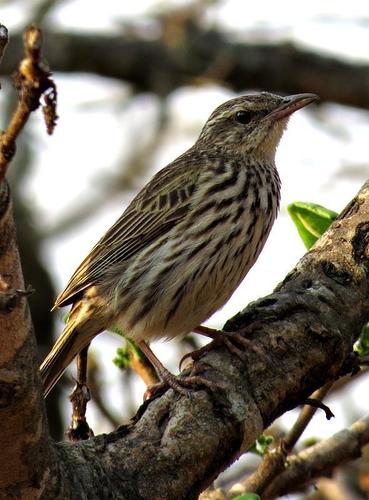
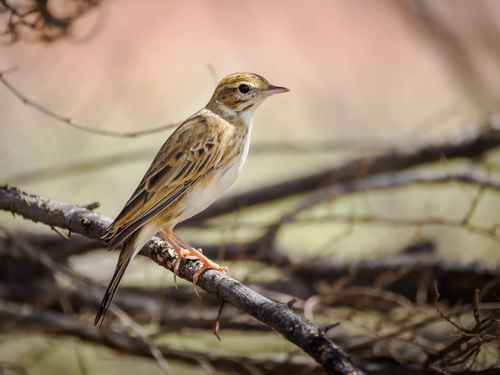
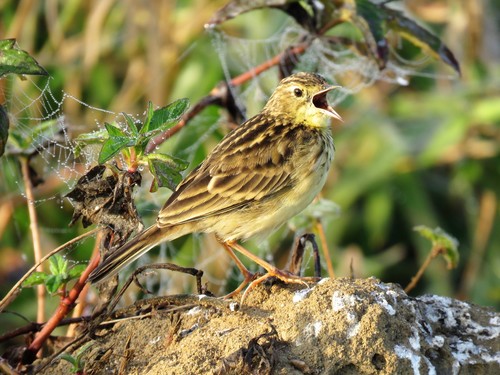
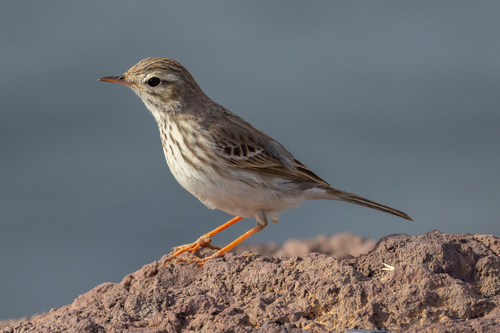
Berthelot's pipit, with the scientific name Anthus berthelotii Bolle, 1862, is a small passerine bird. It breeds in Madeira and the Canary Islands, and is a common resident in both of these archipelagos. This bird occupies open country habitats. It builds its nest on the ground, and lays a clutch of 3 to 5 eggs. As a small pipit species, it measures 13–14 centimetres (5.1–5.5 in) in total length. When on the ground, it has a plain, unremarkable appearance: it is mainly grey on its upperparts, whitish on its underparts, and shows faint streaking across the breast. It has a whitish supercilium, a whitish eyering, and dark stripes along its eye and moustachial area. Male and female Berthelot's pipits look identical to one another, while juvenile birds are browner in overall coloration than adult birds. Compared to the meadow pipit, this species has a shorter tail and a larger head. Its call is a "schrip" sound, identical to the call of the yellow wagtail. Its song, performed during flight, is a chattery sequence of "tsivrr tsivrr tsivrr tsivrr". This species was named by Carl Bolle in honor of Sabin Berthelot, a French naturalist who once lived on the Canary Islands.