About Anthus australis Vieillot, 1818
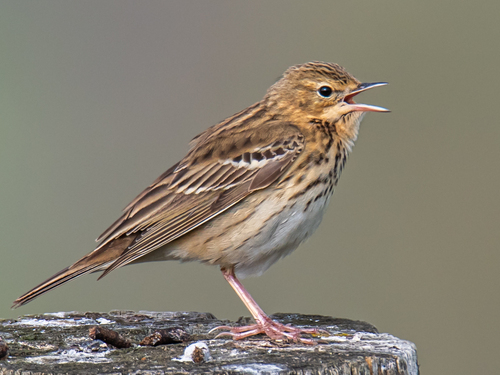
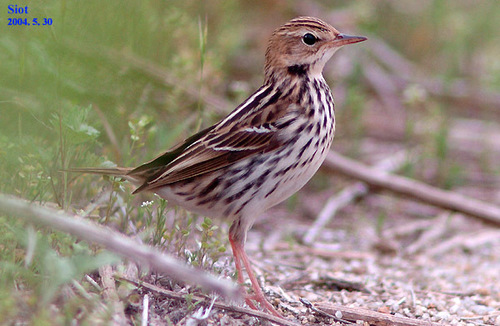
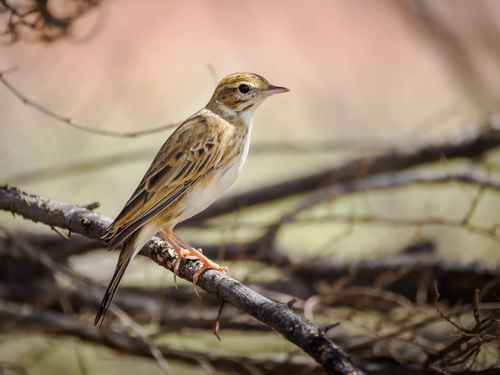
Anthus australis Vieillot, 1818 is a slender bird, measuring 16 to 19 cm in length and weighing approximately 40 grams. Its upper plumage is pale brown with dark streaks, while its underparts are pale, with additional streaks on the breast. It has a pale stripe running above the eye, plus dark malar and moustachial stripes. Its long tail has white outer feathers, and the bird often wags this tail up and down. It has long, pinkish-brown legs, a slender brownish bill, a sparrow-like chirruping call, and a drawn-out tswee call.
This species occupies open habitats including grassland, farmland, roadsides, dry river beds, sand dunes, and open woodland. It forages on the ground for small invertebrates such as beetles, spiders, and insect larvae, and will also eat seeds, particularly grass seeds. Its breeding season starts in August. The female builds a cup-shaped nest out of grass, placing the nest at the base of vegetation or in the shelter of a stone. The species lays 2 to 5 eggs per clutch, with 3 or 4 eggs being the most common. The eggs are buff-white with brown blotching, and are incubated for 14 to 15 days. Both parents feed the hatchlings, and the young birds are able to fly 14 to 16 days after hatching.