About Anthrenus verbasci (Linnaeus, 1767)
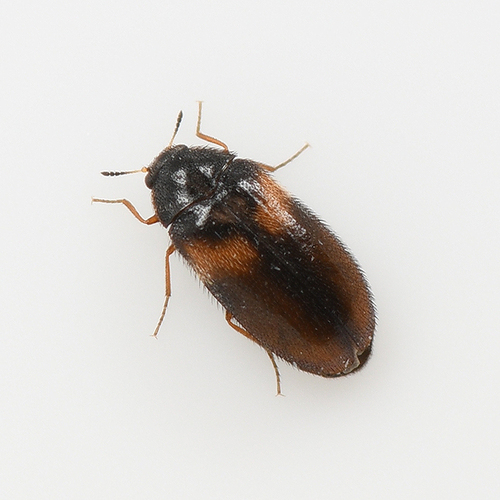
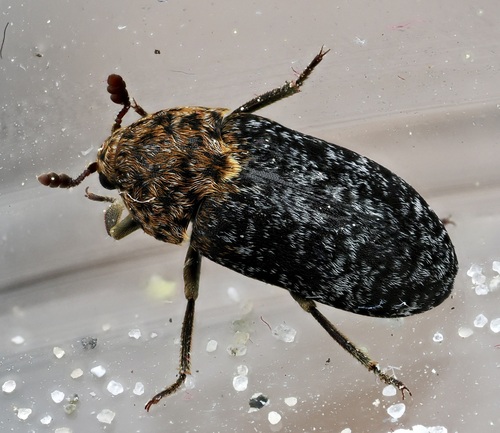
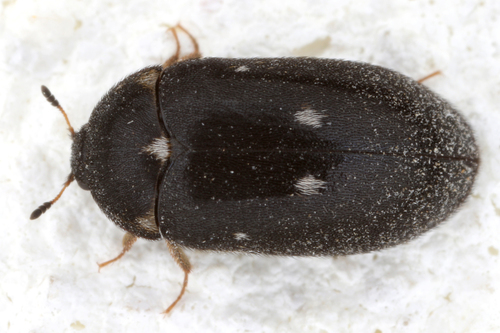
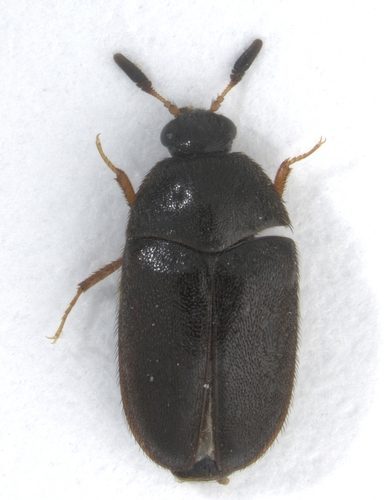
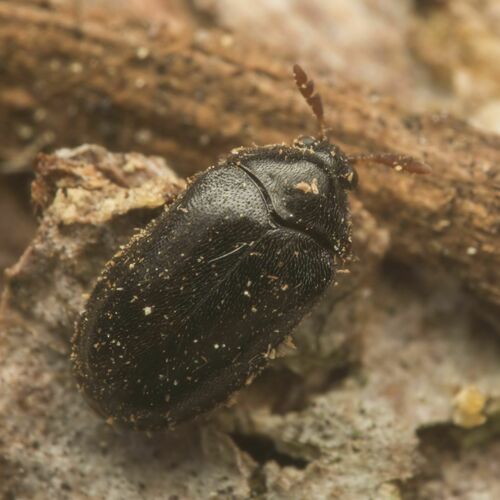
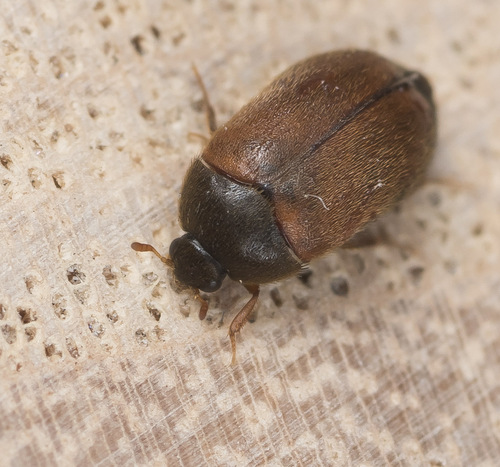
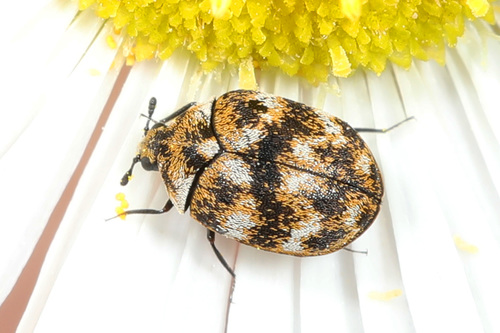
Adult Anthrenus verbasci range in length from 1.7 to 3.5 mm (0.07 to 0.14 in). They have a rounded, almost spherical body. The elytra and pronotum are covered in fine scales of different colors, which form an irregular pattern of white, brownish, and yellowish patches. White scales are concentrated along the lateral margins of the pronotum and on the elytra, where they create three bright, wavy transverse bands. In addition to these physical traits, their antennae are 11-segmented, with a 3-segmented club. Anthrenus verbasci does not have strict habitat preferences, and can be found in many locations. Like many other species in its genus, it occurs both indoors and outdoors. Its typical habitat is open areas with abundant flowers and trees, but it can also be found in houses, bird nests, and other locations. This species is present across most of Europe, the eastern Palearctic realm, the Near East, the Nearctic realm, North Africa, North Asia, and the Neotropics. The life cycle of A. verbasci lasts between 1 and 3 years, depending on environmental conditions. A 1958 study found that temperature affects larval development, concluding that the length of A. verbasci's incubation and pupation periods decrease as temperature increases, meaning a moderate rise in temperature speeds up the life cycle. Pupation duration decreased from 89 days at 10 °C to 9 days at 25 °C, while relative humidity was found to have very little effect. Larvae hatch from eggs in spring and early summer, most often in bird nests (including nests of the house sparrow and house swift) or around stored fabrics. In England, adults emerge between late May and early August, after which they fly to flowering plants to feed on pollen and nectar. Adult beetles have a life expectancy of about two weeks. During this period, they mate and lay eggs, either near human settlements or in dry locations such as bird nests and tree hollows where larvae can access food, before the cycle begins again.