About Anthrenus museorum (Linnaeus, 1761)
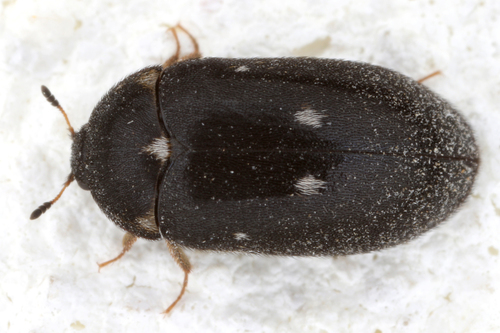
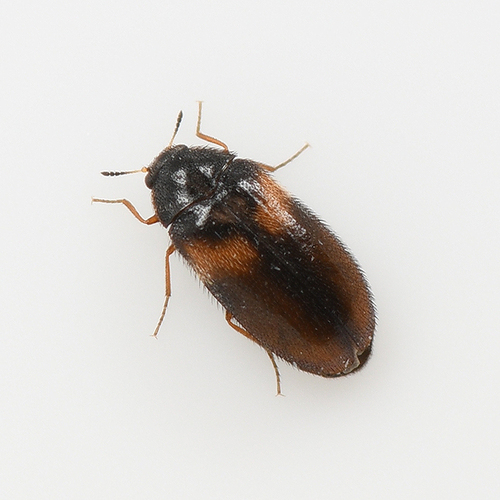
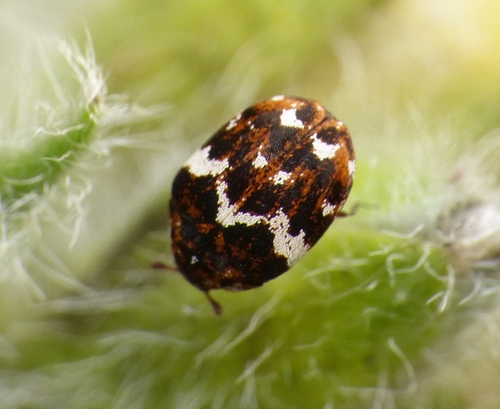
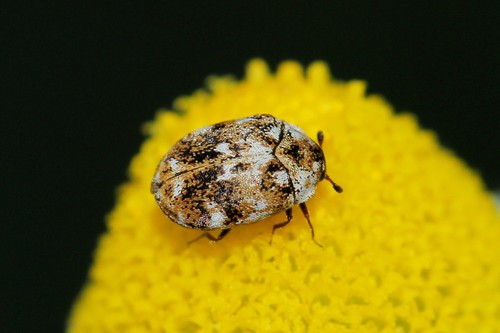
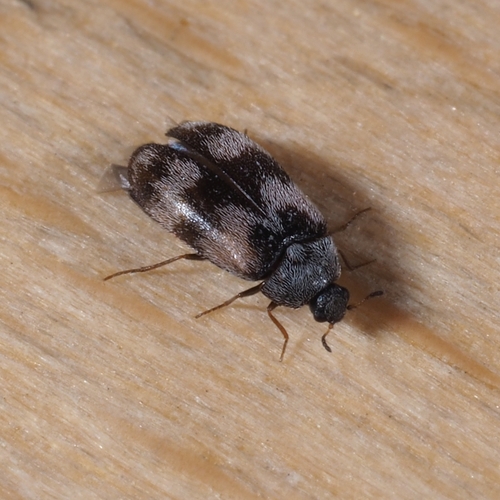
Anthrenus museorum, commonly known as the museum beetle, is a species of beetle originally recorded from the Palearctic (including Europe), the Near East, and the Nearctic, and is generally considered cosmopolitan, with confirmed presence in Europe, North America, Asia, Africa, and Australia. In Europe, it has been recorded from Albania, Austria, Belarus, Belgium, Bosnia and Herzegovina, Bulgaria, Croatia, the Czech Republic, mainland Denmark, Estonia, Finland, mainland France, Germany, Great Britain including the Isle of Man, mainland Greece, Hungary, mainland Italy, Kaliningrad, Latvia, Liechtenstein, Lithuania, Luxembourg, Moldova, North Macedonia, mainland Norway, Poland, mainland Portugal, Romania, Russia, Sardinia, Slovakia, Slovenia, mainland Spain, Sweden, Switzerland, the Netherlands, Ukraine, Turkey, and Yugoslavia. It is classified as a pest, because its larval stage causes damage. Larvae damage all forms of dry skin and hair, and will occasionally also eat dry cheese, flour, or cocoa. Notably, larvae damage the taxidermied skin of museum specimens such as polar bears and big cats. Mature larvae are yellowish, hairy, and reach 4.5 millimetres (0.18 in) in length. The dorsal surface of the larval prothorax is brownish, and the larva has three pairs of long antennae at its rear end. Adult museum beetles measure 2 to 4 mm in length, have a rounded body shape, and have dark elytra marked with bright colored spots. Adults live outdoors on plants for one to two weeks, and prefer feeding or residing on the flowers of Asteraceae, Apiaceae, and Scrophulariaceae. To lay eggs, females search for sheltered spots such as nooks, carpets, flooring, or wool that also provide a food source for hatching larvae. Females lay one clutch of forty eggs per year.