About Anthopleura michaelseni (Pax, 1920)
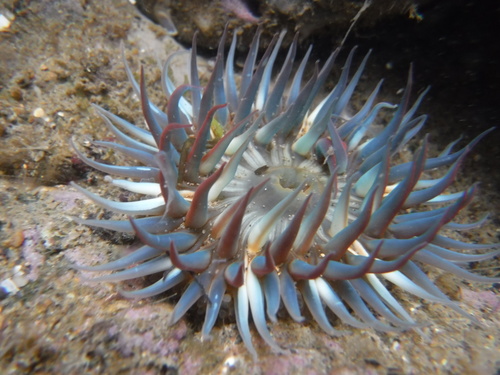
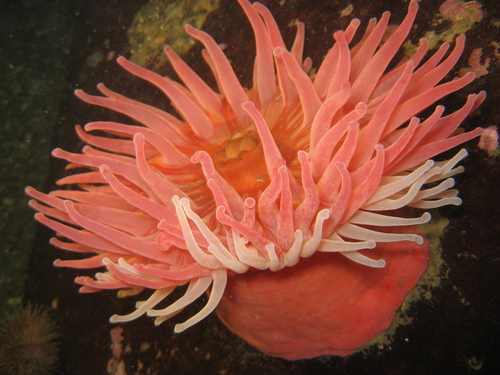
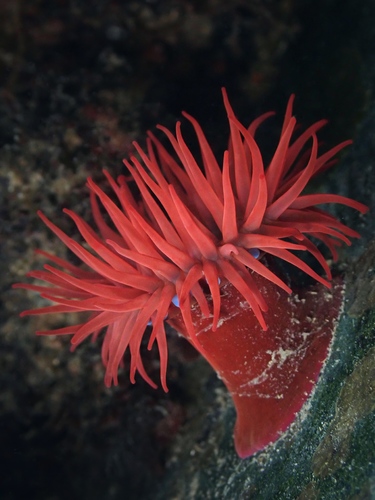
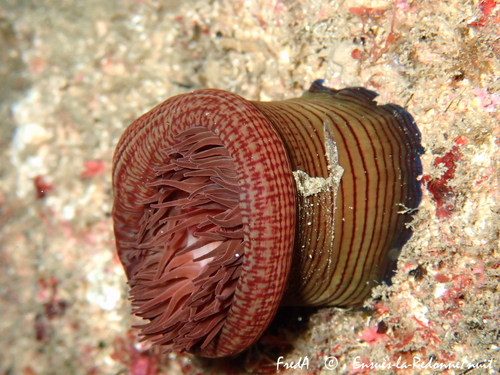
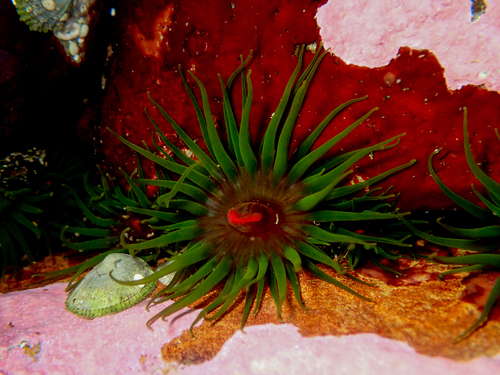
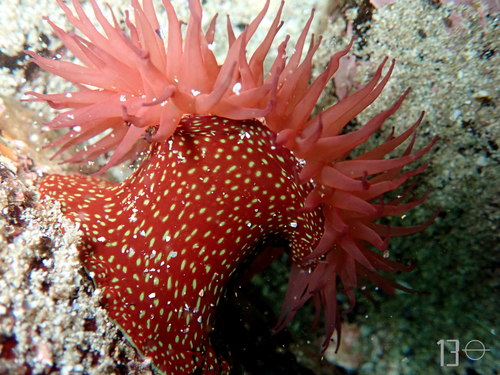
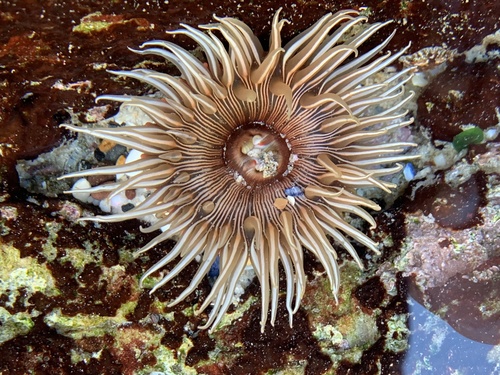
Commonly called the long-tentacled anemone, this is a large sea anemone species that can reach up to 15 centimeters in diameter. Its body column features large sticky pads that trap and hold sand and debris particles. Dark stripes extend from the mouth across the oral surface out toward the tentacles. This species has 96 long tentacles, each with small round protrusions called spherules at their base. The long-tentacled anemone is found exclusively along the southern African coast, ranging from Luderitz to Durban. It inhabits areas from the mid-shore zone down to a depth of 10 meters, and is most often found partially buried in sand within rock crevices. Unlike typical cnidarians, sea anemones do not have a free-swimming medusal stage in their life cycle. The long-tentacled anemone reproduces by producing eggs and sperm; a fertilized egg develops into a planula larva that drifts as part of plankton, before settling on the seabed and growing directly into a juvenile sea anemone.