About Anthocoris nemorum (Linnaeus, 1761)
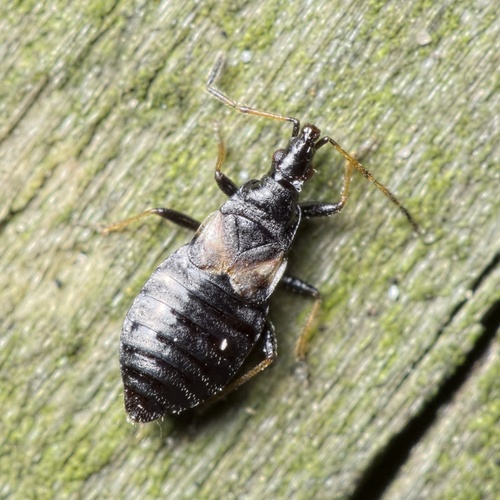
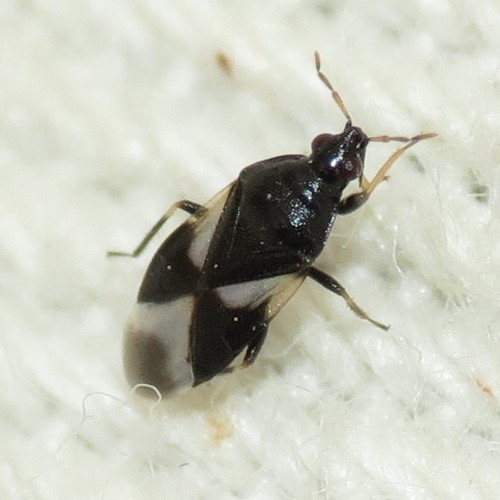
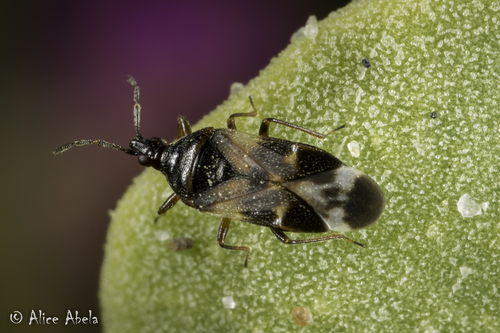
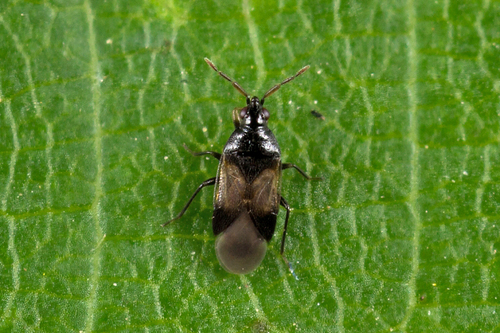
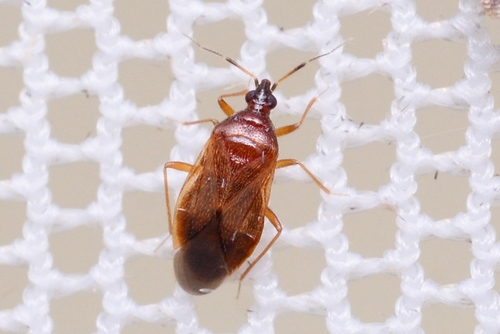
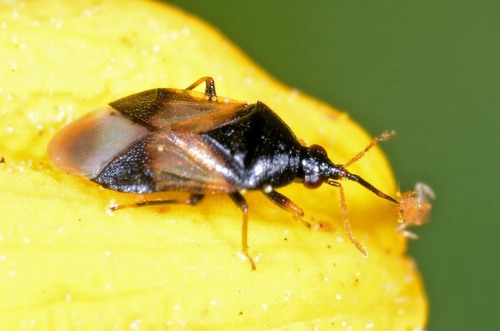
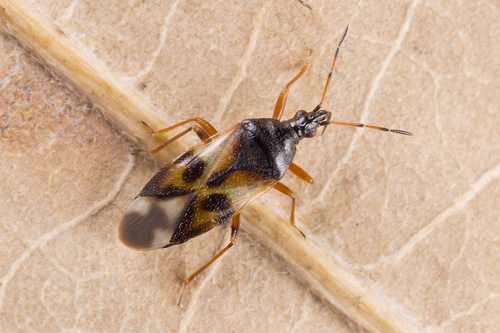
Anthocoris nemorum, commonly known as the common flowerbug, is typically 3–4 mm long. Individuals have soft, elongated, flat bodies, with reflective forewings and a black pronotum. Their legs are mostly orange-brown, with small dark patches near the tips of the femora. Their antennae are mainly orange with dark tips; specifically, antennal segments I and IV are usually dark, while segments II and III are pale with dark apices. The front wing is shiny transparent with a distinctive black dot at its center, and the wing membrane bears a characteristic hourglass-shaped black spot at the wing tip. Nymphs of this species are dark brown or reddish brown. The common flowerbug is distributed across Europe and the Palearctic as far east as China. It is common in Great Britain and Ireland, and in the Alps it occurs up to around 2000 meters above sea level. This species more commonly inhabits lower, moist, shaded vegetation than trees, and favors nettles especially during the second half of the growing season. It thrives in a wide diversity of habitats, ranging from hedgerows and deciduous forests to agricultural landscapes. It is frequently found on apple and pear trees in orchards, where its oviposition site preferences match areas of high prey availability. In cabbage fields, it preys on cabbage aphids and diamondback moth larvae to suppress pest populations, showing its ability to adapt to vegetable crops. It has also been recorded in strawberry crops, where it acts as a generalist predator that contributes to control of the two-spotted spider mite Tetranychus urticae.