About Anthocoris nemoralis (Fabricius, 1794)
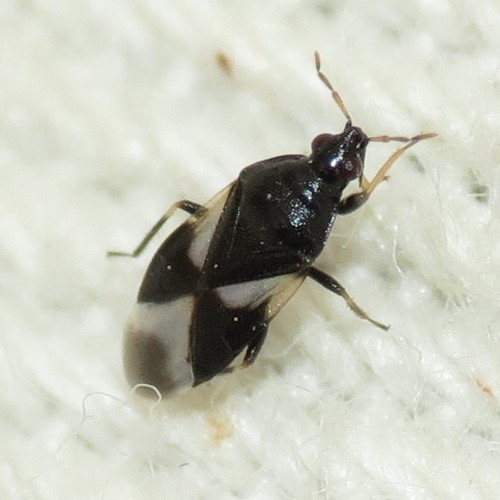
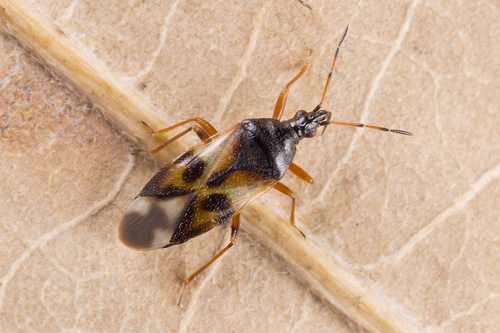
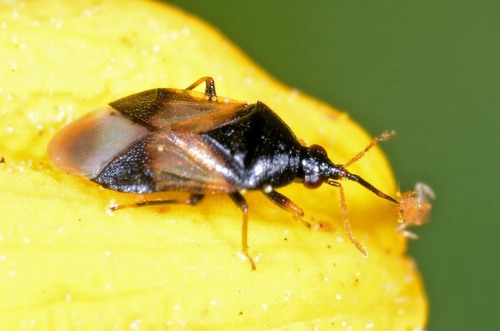
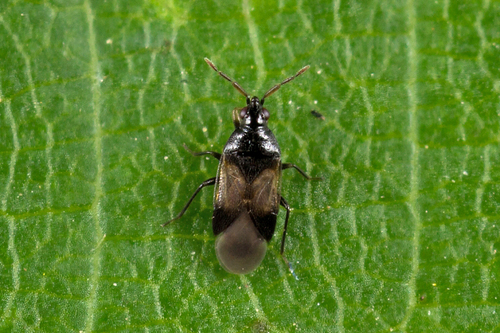
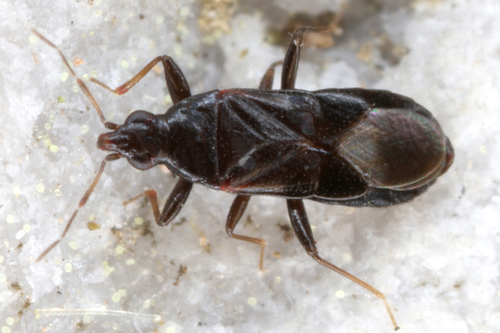
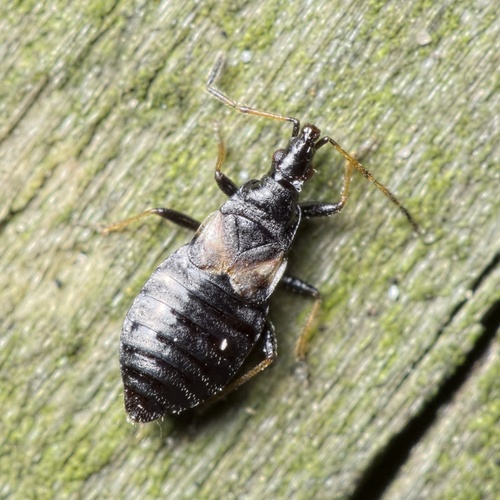
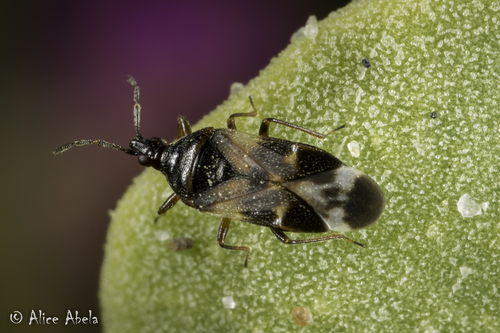
Description: Adults of this species are about 3 mm (0.12 in) long, mostly black with white markings on their wings. Nymphs grow to around 6 mm (0.24 in) long; smaller younger nymphs are yellowish to orange, while larger older nymphs have yellowish to orange heads and thoraxes and darker abdomens. Distribution: Anthocoris nemoralis is native to the West Palearctic, found from the British Isles across Western Europe east to the Caucasus and south to the Mediterranean basin. It is absent from Fennoscandia. It was accidentally introduced into Eastern Canada, then intentionally introduced into British Columbia in 1963 to control pear psylla. It later spread south to California, where it feeds on various exotic psylla pests of ornamental plants. Ecology: Both nymphs and adults of A. nemoralis are predaceous. They feed by plunging their proboscises into insect prey and sucking out body fluids. Adults overwinter under bark, in leaf litter, or other sheltered spots. They emerge in spring to lay eggs in the plant tissue of their host trees. When laid in leaves, eggs are inserted under the epidermis, creating a bulge on the leaf surface, and only the whitish operculum at one end of the egg is visible. The eggs soon hatch into voraciously feeding nymphs. The full developmental cycle takes around 15 days, and there may be up to four generations per year. These bugs can use a range of different trees and target a wide variety of prey, including aphids, spider mites, thrips, juvenile scale insects, pear psylla, and the eggs of many insects. In 1986, French entomologist Franck Hérard listed it as eating twelve insect species and five mite species. In Europe, it is considered one of the most important control agents for Cacopsylla pyricola and Psylla pyri, and has a density-dependent relationship with Cacopsylla pyricola.