About Anthochaera paradoxa (Daudin, 1800)
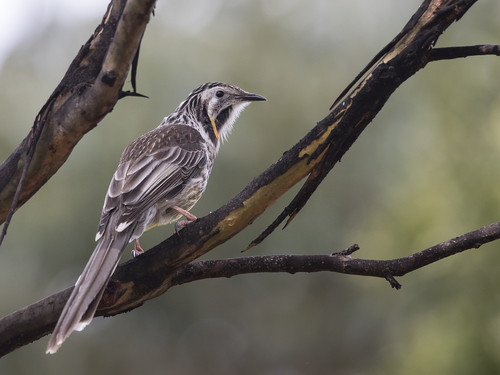
The yellow wattlebird, scientifically known as Anthochaera paradoxa (Daudin, 1800), is the largest honeyeater species and is endemic to Tasmania. Adults usually measure 37.5–45 centimetres (14.8–17.7 in) in length. Average body mass is 168 g (5.9 oz) for males and 123 g (4.3 oz) for females, with the largest recorded males reaching up to 260 g (9.2 oz). The species gets its name from the wattles that hang from its cheeks. Yellow wattlebirds are slim birds with a short, strong bill. They have a white face and a black-streaked crown, plus a long, pendulous yellow-orange wattle that brightens in color during the breeding season. They have dark wings, a yellow belly, and upperparts that range from grey to dusky brown. Females are much smaller than males. Juvenile yellow wattlebirds have much smaller wattles, a paler head, and a browner underbelly compared to adult birds. This species is similar in appearance to the little wattlebird and the red wattlebird. Yellow wattlebirds are common across Tasmania, especially in eastern and central parts of the island. They are uncommon on King Island, and there are two unconfirmed possible sightings with no material evidence from the southern Mornington Peninsula in Victoria. The species occupies a wide variety of habitats ranging from sea level to the subalpine zone, including both dry and wet forests. It can be found in coastal heaths, forests, and gardens near Eucalyptus trees, as well as mountain shrubberies and open woodlands, particularly those dominated by Banksia. It has also been recorded on golf courses, in orchards, parks, and gardens.