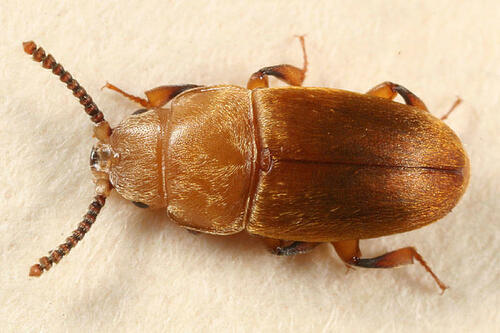
About Antherophagus ochraceus Melsheimer, 1844
Antherophagus ochraceus is a species of silken fungus beetle belonging to the family Cryptophagidae, native to North America. This species is one of the largest known members of the Cryptophagidae family. Adult individuals measure between 4 and 5 millimeters in body length. It can be told apart from similar related species by a combination of distinctive traits: its larger overall size, entirely yellow body, golden-colored pubescence, small eyes, and a smooth, curved pronotum. Adult A. ochraceus are typically found on flowers, where they feed on pollen and nectar and regularly interact with bumblebees. Active adults can be encountered from May through September each year. Like some other species in the Cryptophagidae family, A. ochraceus practices phoresy, a behavior where it hitches a ride on another animal for transport. The beetles attach to the legs, mouthparts, or antennae of bumblebees to be carried, and remain clamped in place using their mandibles. They do not detach from the bee until the bee returns to its nest. Adult A. ochraceus lay their eggs inside bumblebee nests, and eggs develop into larvae within the nest. During their larval stage, the beetles stay inside the bumblebee nest and feed on organic matter and detritus. They are specifically presumed to consume honey, bee feces, and comb debris.

