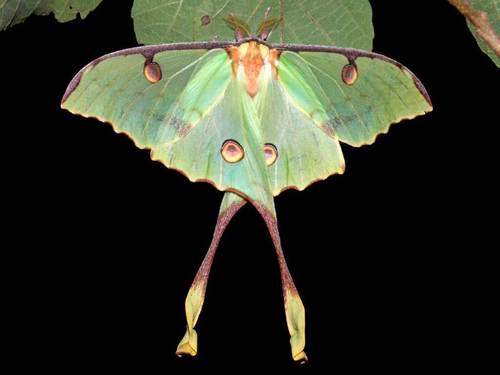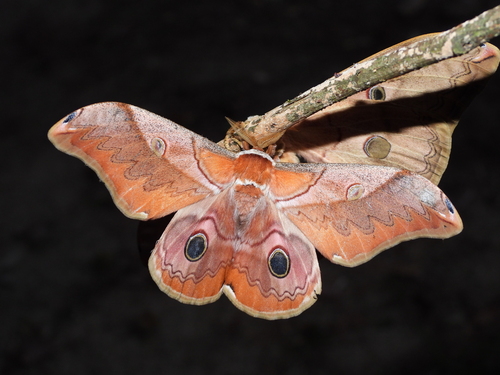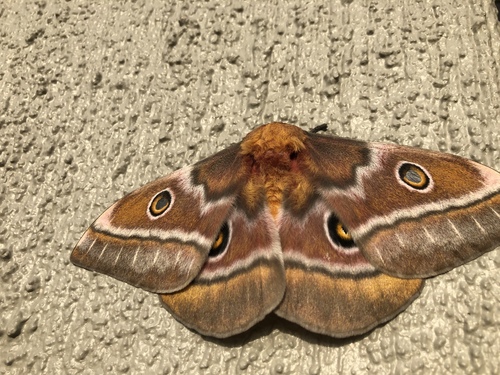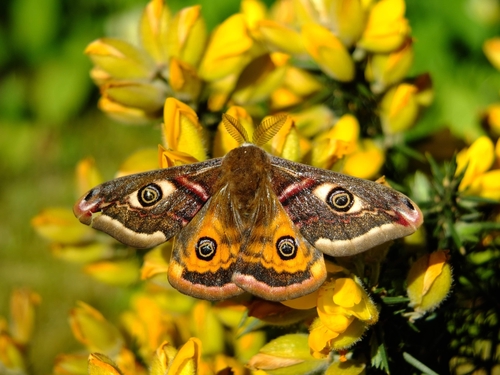
About Antheraea assamensis Helfer, 1837
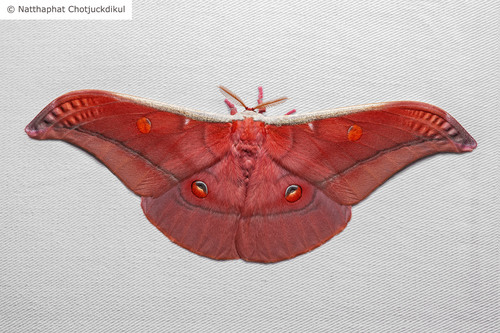
Antheraea assamensis is a moth species in the family Saturniidae; its larval stage is called the muga silkworm, and its adult stage is called the Assam silk moth. The species was first formally described by Johann Wilhelm Helfer in 1837. It is native to Assam in northeast India, where 99% of the species' production takes place. Larvae of this species feed on plants from the genera Cinnamomum, Funastrum (including species formerly classified in the genus Sarcostemma), Laurus, Litsea, Carpinus, Persea, Magnolia, Michelia, Quercus, and Symplocos. The silk produced by this species is a type of tussar silk, with a glossy golden hue that improves with age and washing. This silk is never bleached or dyed, and it is stain resistant. Historically, it was reserved for the exclusive use of elite members of society in Assam. Like other silk moth species, females have larger abdomens and more slender antennae than males. The larvae of Antheraea assamensis are vibrantly colored, and like other silk moths, they are monophagous. In 2015, Adarsh Gupta K, part of Nagaraju's research team at the Centre for DNA Fingerprinting and Diagnostics in Hyderabad, India, discovered the complete sequence and protein structure of muga silk fibroin, and published these findings in Nature Scientific Reports. In 2009, Utpal Bora and his team at the Indian Institute of Technology Guwahati in Assam reported that muga silk fibroin has potential as a promising biomaterial for tissue engineering applications. Antheraea assamensis is affected by pebrine, a destructive disease caused by Microsporidia, intercellular fungal parasites. This disease blocks the normal developmental processes of muga silkworms. A 2020 published article discusses a study of this moth that focused on cocoons collected from 11 different regions across the species' range in Northeast India, where researchers examined the weight and silk quality of the collected cocoons.