About Anthanassa tulcis (Bates, 1864)
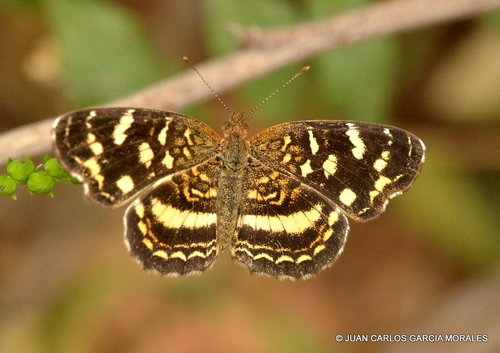
Anthanassa tulcis, scientifically described by Bates in 1864, has measurable size and flight season variation across its subspecies. The subspecies frisia has a wingspan ranging from 32 to 45 mm. In southern Florida, adult frisia can be seen on wing through most of the year, and they are active year-round in tropical regions. The nominate subspecies tulcis has a smaller wingspan of 32 to 35 mm; in southern Texas, adult tulcis are on wing from May through November. The nominate subspecies is native to the West Indies and southern Florida, with occasional stray individuals reaching as far north as northern Florida. Subspecies tulcis ranges from Argentina northward through Central America and Mexico to southern Texas, with strays occurring in west Texas and southern Arizona. All other recognized subspecies are permanent residents of South America. Different subspecies have different known host plants for their larval stage: larvae of subspecies frisia feed on Beloperone guttata, while larvae of the nominate subspecies tulcis feed on Dicliptera species. Ruellia species are also recorded as additional larval food plants. Adult Anthanassa tulcis feed on flower nectar.